
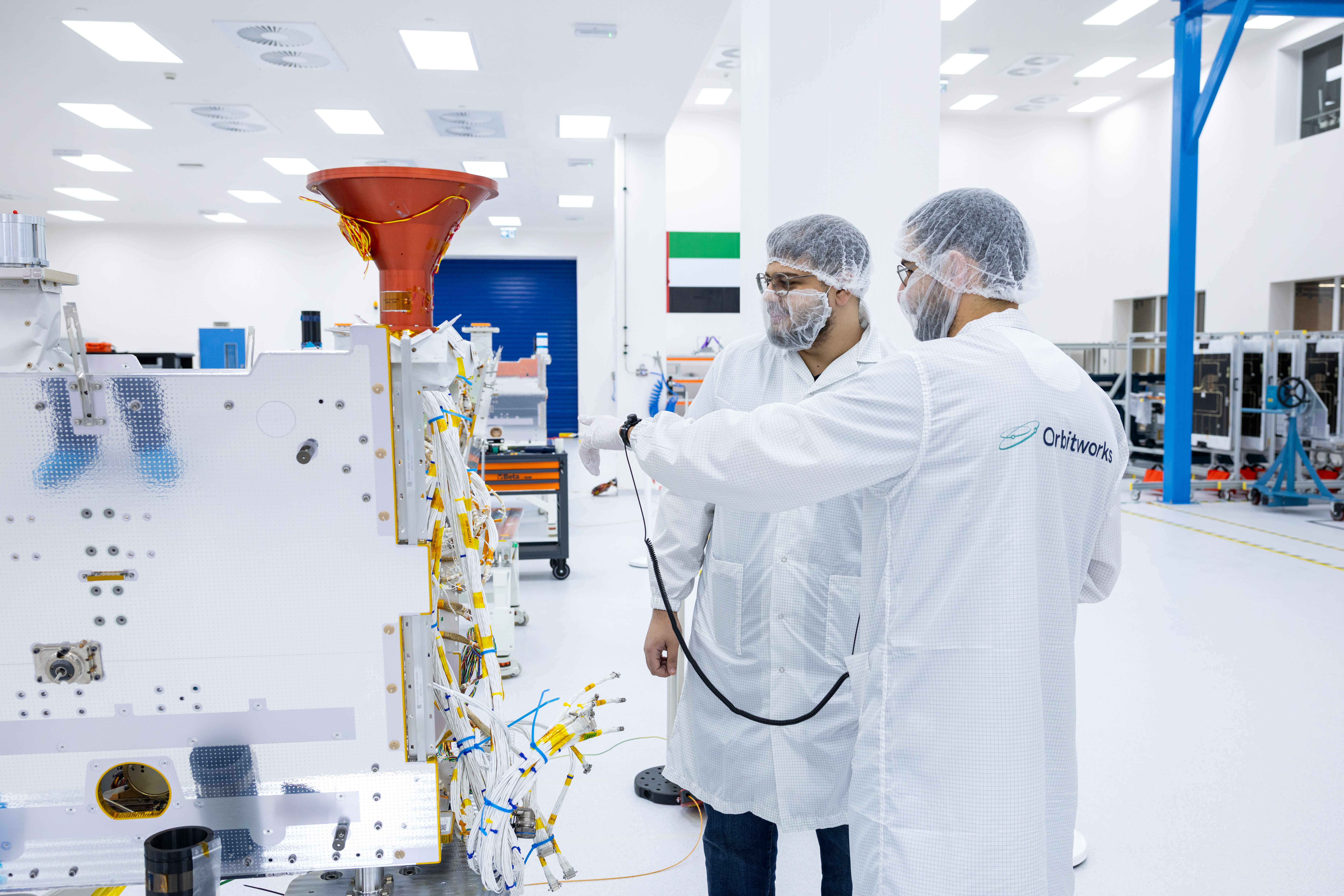
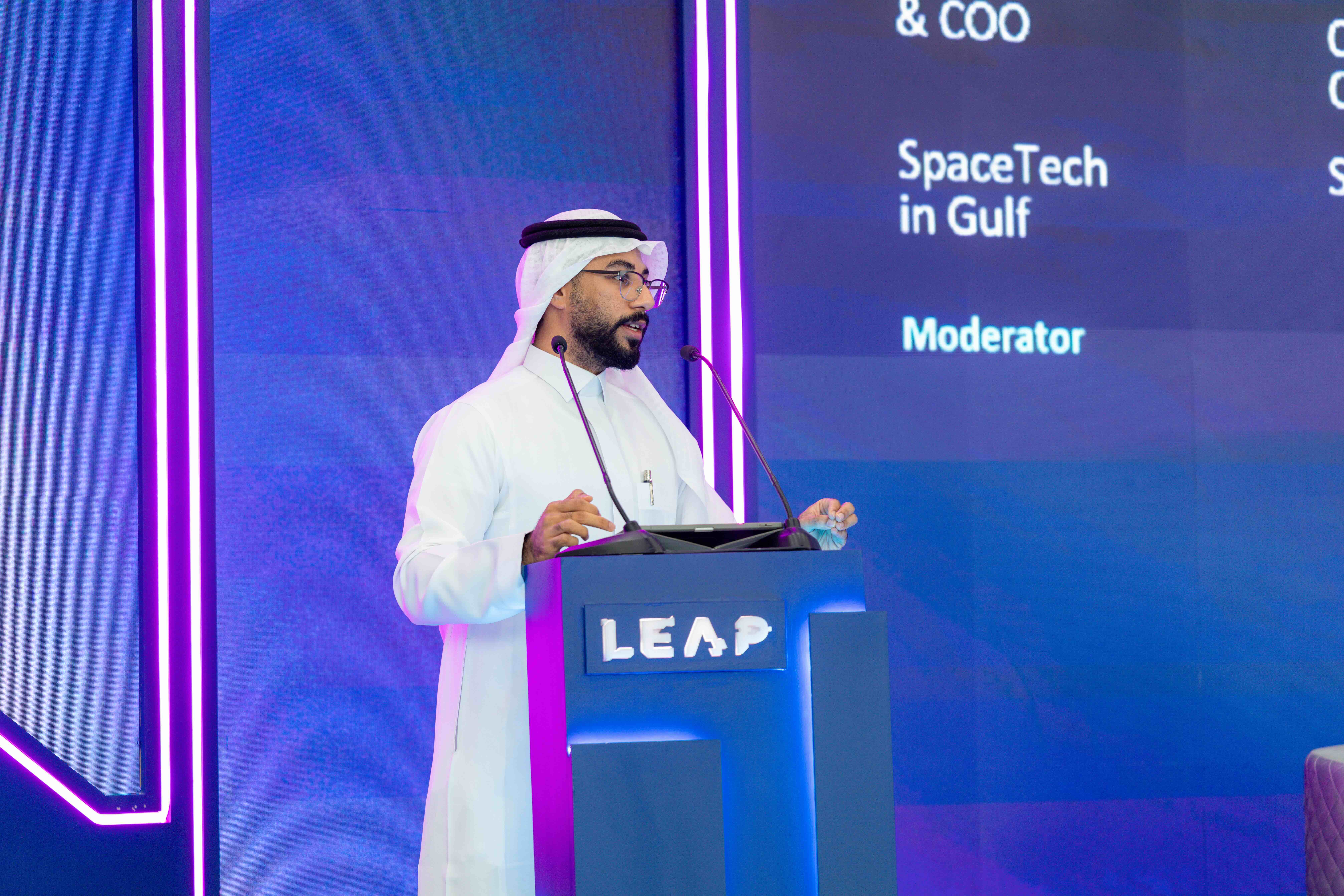


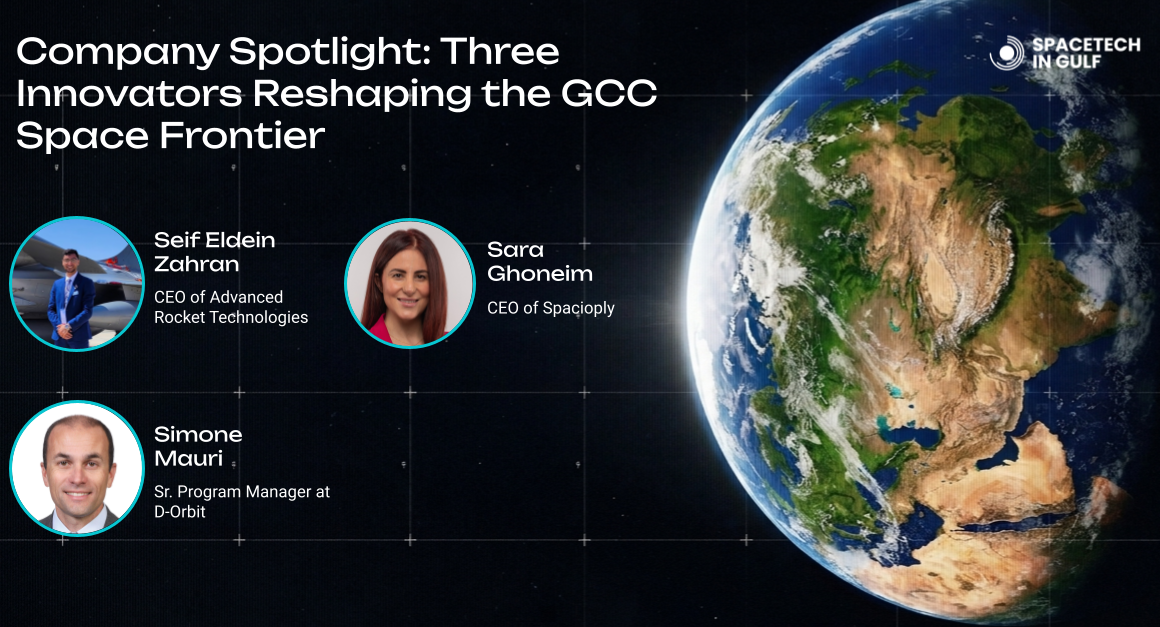
On the sidelines of the GCC Space & Security Online Conference 2026, three companies took to the virtual stage to present their visions for the future of the regional space economy. From ecosystem intelligence and orbital logistics to sovereign launch capability, the spotlights offered a rare window into the breadth of innovation now converging on the Gulf — and the growing conviction, shared across all three presentations, that the GCC is no longer simply a market to be served but a space power in the making.
Spacioply
When Sara Ghoneim spent 16 years navigating aerospace programmes at Boeing and British Petroleum, she kept running into the same wall: vast amounts of industrial data, and almost no structured way to make sense of it at an ecosystem level. The result was Spacioply, a strategic capability intelligence platform that aggregates supplier capabilities, certifications, geopolitical exposure, R&D activity, and financial health into a single unified layer.
For GCC governments targeting ambitious localisation benchmarks — Saudi Arabia’s 60–67% target by 2035, the UAE’s growing domestic manufacturing push — the platform directly addresses what Ghoneim calls the “localisation intelligence gap.” Its government module maps domestic capabilities, benchmarks them against international ecosystems, and surfaces partnership and investment opportunities in a structured, queryable format. As a conference offer, the first 20 companies to register their capabilities following the webinar receive a free trial subscription.
D-Orbit
D-Orbit arrived at the conference with a track record that speaks for itself: 24 completed missions, a 100% success rate, 210 payloads deployed to orbit, and €64 million in 2025 revenue — roughly triple the prior year. Its flagship ION orbital transfer vehicle takes small satellites from their launch orbit to their precise operational orbit, recovering months of operational life that would otherwise be lost. But D-Orbit’s presentation was as much about the Gulf as it was about hardware.
D-Orbit Saudi, incorporated in 2025 with commercial registration and industrial licence already secured, is designed from the outset to be a genuine regional manufacturing and ecosystem hub — not a sales outpost. Presenter Simone Mauri was explicit: the Saudi operation will not move work from Italy or the US. The philosophy is additive, a “grow the pie” model in which local demand, local workforce, and locally generated IP become the pillars of a self-sustaining operation. A strategic cooperation framework signed with ELT Group in Riyadh in February 2026 — covering RF spectrum monitoring, cyber capabilities, and in-orbit services — signals that this commitment is already translating into action.
Advanced Rocket Technologies (ART)
If D-Orbit represents a proven international player taking a long-term regional bet, Advanced Rocket Technologies (ART) represents something rarer: a startup building the Middle East’s sovereign launch capability from scratch, registered in Oman in 2026 by founder Seif Eldein Zahran. The ambition is direct — to become the primary launch service provider for new space players across the Middle East and Africa, offering access to orbit that is sovereign, rapid, and priced roughly 15–20% below Western launch hubs thanks to regional tax incentives and local fuel infrastructure.
The delayed 2025 launch of Horus 4 from Etlaq Spaceport is a chapter ART discusses with transparency: a supply-chain issue between the UK and Oman, not a technical failure, became the catalyst for building permanent solutions to the barriers the team encountered. The current roadmap includes a second vehicle programme centred on payload integration, alongside Horus 4’s focus on reusability — together feeding development of a full commercial launch system. Most notably, ART is developing what could become the first locally developed rocket motor from Oman, a milestone for regional space manufacturing. The ART Academy, which has already trained 380+ students across four countries, ensures that the human capital pipeline is being built in parallel with the hardware.
Taken together, these three presentations sketch a picture of a GCC space ecosystem that is maturing along multiple fronts simultaneously — in data intelligence, in logistics infrastructure, and in launch sovereignty. The Gulf is no longer waiting for the space economy to arrive. It is beginning to build it.