



What is D-Orbit’s long-term vision for the future of space logistics and the in-orbit economy?
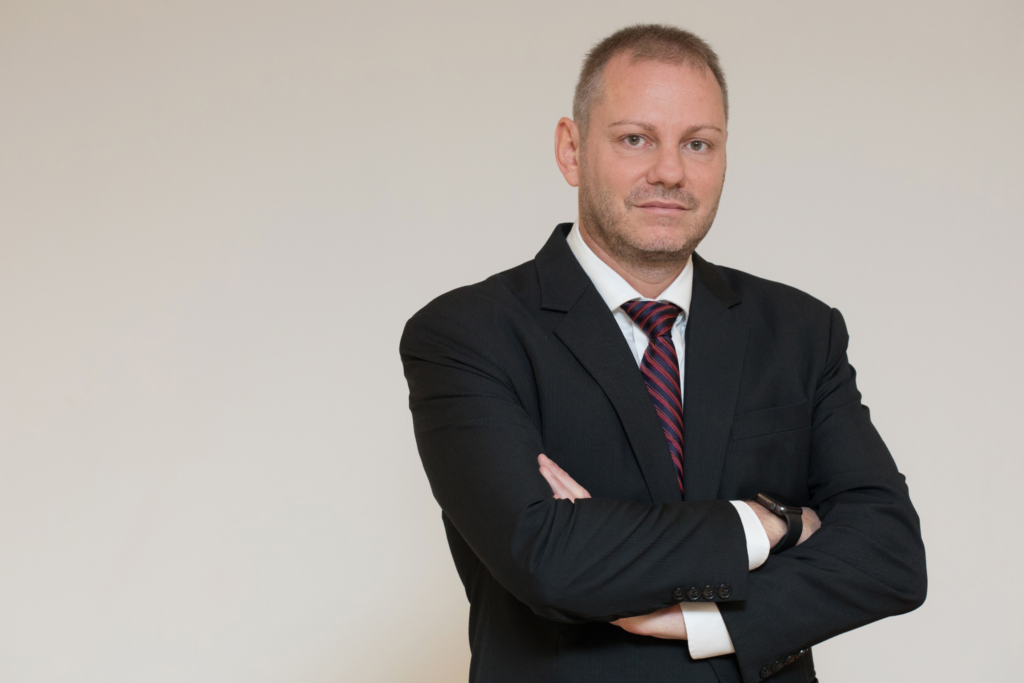
Our vision is to build the infrastructure that will enable the next phase of the space economy.
Today, there are over 14,000 satellites in orbit, projected to exceed 43,000 by 2032, but no coherent logistics layer to deploy, operate, service, and evolve them over time. What we are building is that missing layer, a persistent, scalable infrastructure in orbit.
This is not just about efficiency. It is about enabling a new economic system in space, including applications related to security, resilience, and protection of critical infrastructure.
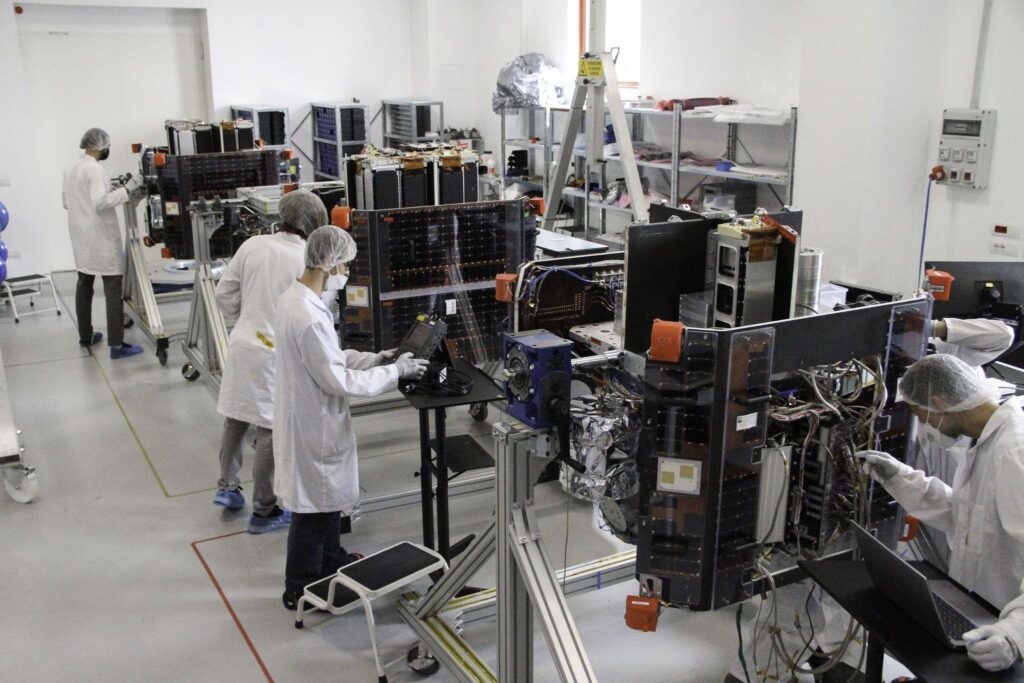
We are developing this infrastructure through a set of proven and evolving platforms: transportation with ION (22 successful missions and over 240 payloads brought to orbit, Europe’s third-largest fleet by size and first by investment efficiency), in-orbit servicing with GEA (under a EUR 120 million contract with ESA where Eutelsat is the first customer), satellite manufacturing with NOX (a high-performing SAR satellite designed and manufactured by D-Orbit for the IRIDE constellation), and in-orbit computing through our Space Cloud Services (built node by node entirely by us). Each of these capabilities is already validated in orbit and designed to integrate into a unified ecosystem.
But the broader vision goes beyond technology. We are moving toward a multi-polar space economy, where different regions of the world will play strategic roles. In this context, we believe regions like the Gulf have the potential to emerge as major global players alongside the US, Europe, China, and India.
Our role is to help building the infrastructure that connects these emerging ecosystems into a global network, ultimately extending beyond Earth, toward cislunar space and, in the longer term, interplanetary logistics.
Which markets (commercial vs. government / institutional) are the highest priority for D-Orbit in the next 3–5 years?
We see three priority areas, increasingly interconnected, and all critical to the evolution of the space sector.
First, institutional and defense applications. Space is now a strategic domain, and the demand for space-based intelligence, security, and protection capabilities is growing rapidly. Governments are not just investing in access to space, but in the ability to generate, process, and act on data in real time. This is an area where D-Orbit is already operational. Our platforms enable in-orbit data processing, autonomous operations, and rapid deployment of sensing capabilities. This allows us to support use cases such as situational awareness, environmental monitoring, and security applications, transforming space data into actionable intelligence that directly contributes to the protection of infrastructure, assets, and people.
Second, commercial operators, particularly constellation providers and technology developers, who require increasingly flexible, fast, and cost-efficient access to orbit.
Third, emerging space nations seeking sovereign capabilities.
This is where we see one of the most important global shifts. Regions like the Gulf are not simply entering the space sector, they are building integrated ecosystems with long-term strategic ambition across both civilian and defense domains.
Our role in these markets is not that of a traditional supplier. We act as partners, sharing heritage, platforms, and industrial capabilities to accelerate the development of local space infrastructure, including capabilities that are critical for national security and resilience.
This trend is accelerating globally. In countries like the Kingdom of Saudi Arabia, where security, stability, and protection of critical assets are strategic priorities, we see a strong and growing demand for space-based intelligence capabilities that are sovereign, scalable, and operational.
How is D-Orbit advancing capabilities in in-orbit computing, autonomy, and hosted payloads?
These capabilities are deeply interconnected and form the foundation of the next generation of space infrastructure.
For example, our ION platforms allow customers to deploy hardware and software directly in orbit without building their own satellites. This dramatically lowers barriers to entry and accelerates innovation. Our missions have hosted dozens and dozens of payloads spanning quantum computing, blockchain, AI processing, computers, radios, antennas, and propulsion systems.
With our Space Cloud Services, we are moving computation from the ground to space. Data is processed where it is generated, and only actionable insights are transmitted to Earth. This drastically reduces latency, bandwidth constraints, and operational complexity.
Autonomy is the next layer. As operations become more complex, for example in geostationary orbit, spacecraft must be able to navigate, make decisions, and execute missions independently.
The long-term vision is what we call intelligent orbital networks: multiple satellites working together, collecting, processing, and distributing data dynamically. This is where space transitions from infrastructure to intelligence.
What technical challenges remain in developing in-orbit servicing and satellite life extension?
The challenges are both technical and systemic. Most satellites in orbit today were not designed to be serviced. That requires us to develop solutions that can operate with existing structures.
Autonomy is another key challenge. In geostationary orbit, communication delays prevent real-time human control. The spacecraft must be capable of identifying, approaching, and docking with its target independently.
Then there is reliability. When operating near high-value assets, there is zero margin for error. This is where flight heritage becomes critical. You cannot simulate this level of complexity entirely on the ground — it must be proven in orbit.
Finally, the regulatory environment is still evolving. Standards for proximity operations and servicing are being defined, and we are actively contributing to shaping them based on real operational experience.
How do you approach integrating AI and edge computing into your space systems?
The exponential growth of satellite data is creating a structural bottleneck. Traditionally, data is sent to the ground for processing, but bandwidth is limited and latency can be significant. This model does not scale.
Our approach is to process data directly in orbit.
We run AI and machine learning algorithms onboard our platforms, transforming raw data into actionable intelligence before transmission. This enables use cases where speed is critical, from environmental monitoring to security and situational awareness. This is particularly relevant for applications related to security and situational awareness, where timely and reliable information can directly support decision-making and risk mitigation.
With the integration of Planetek, we have extended this capability into a full pipeline, from data acquisition to analytics.
We started already distributing processing across multiple satellites, creating the first network where intelligence is not centralized but orchestrated in orbit. This is a fundamental shift in how space systems operate.
How will the recently secured Series D funding be deployed across M&A, in-space computing, and expansion activities?
The industry is solving access to space. The challenge now is how to operate in space efficiently and at scale. This funding is focused on accelerating that transition.
We are investing in expanding our industrial capacity, strengthening strategic roadmap through targeted acquisitions, and advancing the next generation of in-orbit capabilities, including servicing and distributed infrastructure.
A key priority is also geographic expansion.
As new regions invest in space, particularly in the Middle East, we are scaling our presence to support local ecosystems: not just through services, but through long-term industrial partnerships. This reflects our broader strategy: building infrastructure that operates globally, while enabling local capability development.
How does the strategic cooperation framework with ELT Group support D-Orbit’s goals in the Middle East and globally?
Space is now a strategic domain, central to national defense, security, resilience, protection of critical infrastructure and technological sovereignty. These capabilities are no longer future concepts, they are already operational and increasingly required by governments worldwide.
The partnership with ELT Group brings together complementary capabilities to address this reality: combining advanced sensing, cyber intelligence, and orbital infrastructure into integrated space-based services. What makes this collaboration particularly important is its alignment with the strategic ambitions of the region.
In the Middle East, and especially in Saudi Arabia, we are seeing a clear intent to build sovereign capabilities in both space and defense. This requires more than technology. It requires ecosystem development. Our approach reflects that.
Through our local presence, we are not just delivering systems, but contributing to industrial development, technology transfer, and the creation of local competencies. This is how sustainable space ecosystems are built: through partnership, not procurement.
What opportunities do you see emerging from alignment with Saudi Vision 2030 priorities?
Saudi Arabia is laying the foundations of a new global space and defense ecosystem.
What makes this moment unique is the combination of long-term vision, strategic investment, and a strong focus on sovereignty and industrial development. This creates a rare opportunity.
The Kingdom is not looking to simply access space, it is building the capability to operate, manage, and evolve their own space infrastructure. Our role is to support the acceleration of that process.
Through our Distributed Space model, we enable partners to leverage our heritage, platforms, and operational experience to develop local capabilities much faster than traditional approaches would allow. At the same time, our infrastructure supports the growing demand for real-time data, autonomous operations, and secure communications across sectors such as energy, finance, and environmental monitoring. We do not see the Kingdom simply as a customer or anchor tenancy, but as a future pillar of the global space economy.
Can you describe your strategy for working with governments and national space agencies?
Institutional partnerships are fundamental because they enable the development of capabilities at a scale that no single actor can achieve alone. Our approach is always tailored to the maturity of the ecosystem.
In established markets, we work within structured programs and frameworks, contributing to large-scale initiatives alongside agencies and industrial partners.
In emerging space nations, the need is different. Governments are not just procuring systems, they are building industries. In these contexts, we position ourselves as infrastructure partners. We share technology, production capabilities, and operational know-how to accelerate the development of sovereign space capacity. This is not about delivering a satellite, it is about enabling a national capability.
Across all markets, the common principle remains the same: we build platforms that serve both institutional and commercial needs, creating a unified and scalable infrastructure.
What is your perspective on the evolving regulatory environment for space traffic management and debris mitigation?
A coherent regulatory framework is essential for the future of space operations. Space is inherently global. Satellites operate across borders, and fragmented or conflicting national regulations can quickly become a limiting factor.
We welcome the progress being made in areas such as space traffic management and debris mitigation, as these are critical for safety, security, and long-term sustainability.
However, alignment is key. Regulations must be developed on shared principles and designed to work together across jurisdictions. Without that coherence, we risk introducing inefficiencies into the very system we are trying to scale. As operators with real experience in orbit, we actively contribute to these discussions, helping ensure that regulatory frameworks are grounded in operational reality.