





Advanced Rocket Technologies has recently conducted engine testing in Oman. Could you tell us more about the test, its objectives, and the key results achieved?
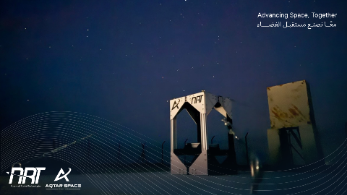
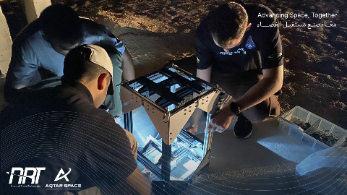
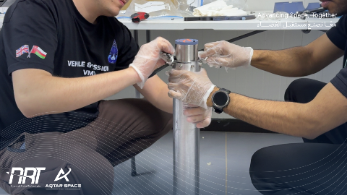
On July 21st, we ran the first static-fire test of our locally designed and built solid rocket motor, and the first commercially developed solid motor to be tested in Oman. It’s a critical validation step on our roadmap toward our next vehicle launch from Oman. We went in with clear objectives: achieve a full 4-second burn, validate the structural design and safety performance of our own test stand, and prove out our in-country propulsion manufacturing and testing capability from the ground up.
We got clean, reliable ignition and a stable, well-characterized burn for 2.6 of the planned 4 seconds — before the motor case failed. What matters most to us is what happened next: our test stand performed as designed, containing all debris within a 30-meter radius, a strong result for a motor producing over 1.5 kN of thrust. A first test’s real job is to tell you the truth about your hardware, and this one did that. We walked away with real burn data, a validated test-stand safety and material architecture, and a precise understanding of where to strengthen the motor for the next iteration.
What are the next steps following the recent test? Are you planning additional static-fire tests, flight tests, or further development of the propulsion system in Oman?
We’re here to execute our roadmap to orbit, and that roadmap doesn’t pause for a single test result, good or bad. Depending on when this interview is published, we’ll either have just completed or be about to run our second static-fire test on the same motor line — with design improvements drawn from the lessons of July 21st, and new objectives to match.
Every test we run is built to teach us something new and sharpen our edge over the field — we’re not repeating the same test twice; we’re compounding what we learn each time. Once the second static fire validates the motor, we move straight into full vehicle ground testing and integration ahead of launch. This motor isn’t a one-off: it’s the propulsion foundation we’re building on for our next generation of vehicles, and for the larger testing and launch infrastructure we’re establishing in Oman.
How important was Oman’s infrastructure and geographic location for conducting these tests, and what advantages does Oman offer for future testing?
Essential — not just useful, essential. Etlaq Spaceport gave us a place to test real hardware safely and quickly, without the queues, import delays, or bureaucracy that slow down new entrants. That speed matters in this industry: the faster we can test, learn, and re-test, the faster we compound engineering knowledge relative to companies still waiting for range time or approvals elsewhere.
Combined with the government’s clear, sustained commitment to building a national space sector, and Oman’s strategic geography for launch operations, we have something most companies spend years trying to secure: a home base where the development wheel never has to stop turning.
How does this recent engine test fit into Advanced Rocket Technologies’ broader plans for developing launch capabilities in Oman and building a regional commercial space ecosystem?
This test was about more than validating one motor — it proved out an entire in-country capability: propulsion design, manufacturing, and testing, done with regional partners, on Omani soil. That’s the real milestone. It also mapped exactly where our supply chain is already strong and where we need to keep investing, ahead of the bigger, more complex campaigns still to come.
Every lesson from a test like this compounds: it shortens the timeline and lowers the cost of everything that follows. That’s the model we’re building — not a single company chasing a single launch, but the foundation of a regional space ecosystem where testing, manufacturing, and launch all happen closer to home, on a timeline nobody importing a rocket from outside the region can match.
As Advanced Rocket Technologies moves toward its first vehicle launch, what do you want investors, partners, and the broader region to understand about what you’re building here in Oman?
That this is just the beginning — and that we’re building it the right way: methodically, transparently, and on the ground in Oman, rather than importing a finished product and calling it regional. Every test we run is public proof that we’re doing real engineering, not just slides.
We’ve shown we can design, build, and test propulsion hardware locally; contain and learn from an anomaly safely; and move straight into our next test within weeks, not months. That’s the pace and the discipline it takes to get a company to orbit — and it’s exactly the track record we want investors and partners to judge us on: not promises, but tests we’ve actually run, data we’ve actually collected, and a roadmap we’re visibly executing, month by month. If you want to back the team building the Middle East and Africa’s sovereign path to space, this is what that looks like in practice — not just in a pitch deck.