


How has the BAE Systems space offering evolved over recent years?

BAE Systems has been active in the space domain for a long time. Our US space division has 70 years of expertise supporting US space missions, while our UK space business has been at the forefront of space innovation for over 30 years, including supporting European Space Agency (ESA) deep space exploration missions.
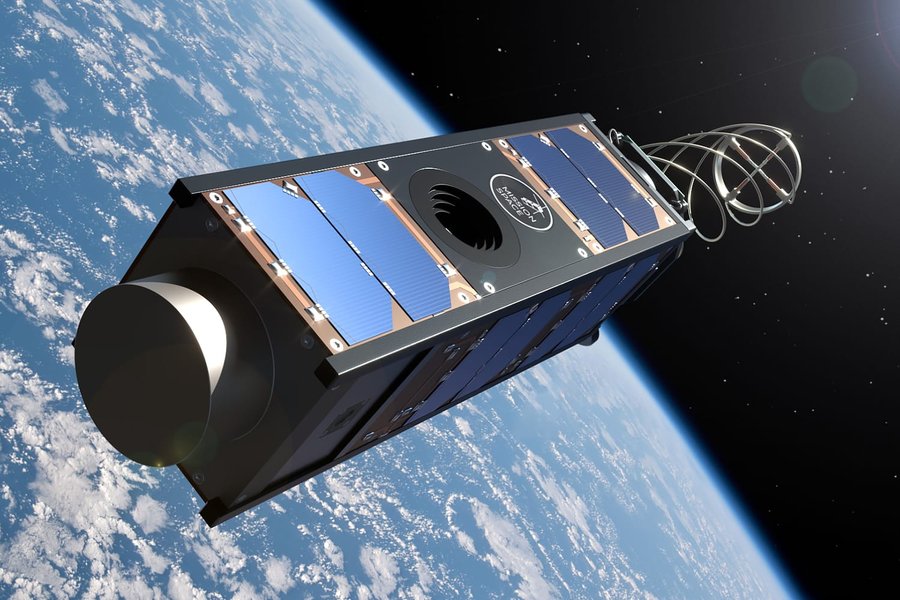
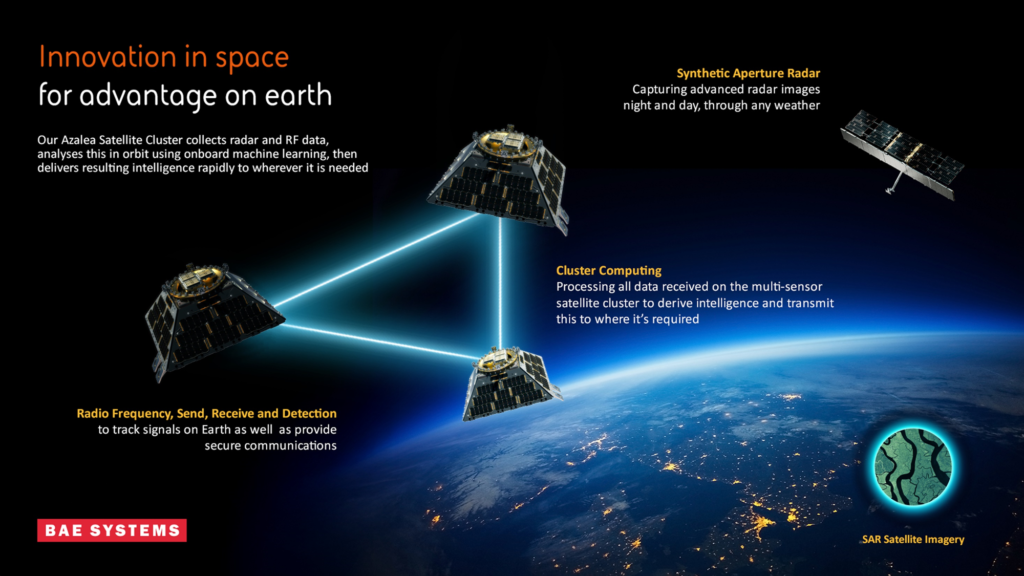
The BAE Systems Digital Intelligence business in the UK is currently focused on deploying Radio Frequency (RF) sensing technologies given the emergence of space as a critical operational domain alongside sea, land, air and cyber. A bold investment four years ago has resulted in the launch of our first Azalea satellite cluster into low Earth orbit, designed to deliver the timely, actionable intelligence required for military operations and disaster response.
The satellites are currently undergoing commissioning and we are excited to show our partners in the Kingdom what Azalea™ can do once this is completed.
What space capabilities do you think could add most value in the region?
Efficiently and effectively countering drone munitions and ballistic missiles will undoubtedly be at the forefront of decision maker’s minds in the region. Robust, high assurance space ISR capabilities can support governments in countering this threat as part of a layered approach to sense, decide and effect.
We have also recently seen some commercial space ISR operators restrict customer access to their data through time delays. Sovereign space capabilities are critical to those who need assured, unfettered access to insight from space at the speed of operational relevance. It is only by owning the means of data collection that one can provide a robust level of mission support when it matters most.
There has also been an increasing prevalence of radio frequency interference, often experienced as disrupting vital global navigation satellite system (GNSS) signals that the modern global economy fundamentally relies upon.
Relying upon a GNSS signal controlled by another actor opens up a variety of vulnerabilities, so assured position, navigation and timing (PNT) capability could add significant value to countries in the region.
Why has space become so important to national security?
Space has become indispensable to national security because nations like Saudi Arabia rely on orbital infrastructure across multiple dimensions of defence, resilience and economic strength.
What was once a niche enabler is now the backbone of global connectivity, intelligence and strategic awareness. Space underpins national sovereignty with secure satellite communications, resilient navigation and persistent Earth observation giving nations the ability to operate without relying on third-party controlled systems or external data pipelines.
Notably, threats have evolved beyond terrestrial boundaries. The likes of deniable cyber-attacks on satellites and contested orbits have elevated space to a critical operational environment. Protecting the space domain itself and maintaining security in orbit are now essential to maintaining stability on Earth.
Finally, space provides persistent, wide-area visibility that platforms in other domains can’t match. Whether monitoring climate-driven challenges, securing maritime routes or ensuring the integrity of critical energy infrastructure, space-derived intelligence is now indispensable for situational awareness. The co-sensing capability of Azalea™, for example, is designed to provide clarity in an ever more contested operating environment.
How is BAE Systems positioned to help the government of Saudi Arabia advance its space capabilities?
Saudi Arabia has already demonstrated a growing space capability through its SaudiSat satellite series developed in Kingdom – boasting excellent industrial facilities in country and growing private sector space companies like Neo Space Group, SARsatX and others.
BAE Systems is uniquely positioned to support Saudi Arabia as it accelerates its ambitions in space, providing the depth of expertise, technology and long-term partnership required to build a resilient, sovereign and globally competitive space ecosystem. Our decades of designing, integrating and sustaining some of the world’s most complex systems enable us to deliver space solutions that meet the highest standards of reliability, security and mission assurance. As Saudi Arabia expands its orbital infrastructure, this track record will be invaluable.
Something that distinguishes BAE Systems from the growing field of start-up companies is that we offer end-to-end capability across the space value chain – from satellite payload innovation and space-based intelligence systems like Azalea™, to ground infrastructure, secure networks and mission support. This will enable Saudi Arabia to develop integrated, multi-orbit capabilities that support a range of objectives.
Finally, we operate as a strategic partner, not simply a technology supplier. Our collaborative, mission-focused approach aligns directly with the Kingdom’s long-term vision for becoming a regional leader in advanced space technologies.
How does BAE Systems approach collaborating with key national stakeholders and partners to accelerate the development of the Saudi space ecosystem?
For me, the way BAE Systems collaborates in Saudi Arabia really begins with one simple idea: partnership comes first. Before we discuss any technology or capability in any great depth, we focus on building genuine relationships with the people and organisations shaping the Kingdom’s space ambitions. That is how you create momentum that lasts.
BAE Systems has spent decades working shoulder-to-shoulder with national stakeholders across the Kingdom, and that experience matters. It has taught us the importance of sovereign capability development. How to build strong local teams, establish real engineering depth in-country and deliver the kind of skills transfer that leaves a lasting legacy.
For the last 60 years, our relationships in Saudi Arabia have been built on trust, continuity and shared ambition – and that is exactly how we are approaching our key space partners. As the Kingdom expands its capabilities across satellites, ground systems and space-enabled services, BAE Systems will be that long-term mission partner every step of the way.
Looking ahead to 2030 and beyond, what role do you envision BAE Systems playing in the transformation of Saudi Arabia’s space industry?
I see BAE Systems playing a genuinely meaningful role in helping Saudi Arabia shape a world-class, sovereign and sustainable space industry. The Kingdom’s ambition is remarkable. For us, the opportunity is to be a trusted, long-term partner in making that vision a reality.
From my perspective, it starts with helping to build enduring national space capability. As a company, we want to be engaged in harnessing Saudi talent across satellite systems, space-based sensing, communications and mission support. Our experience in skills development and in-Kingdom engineering gives us a strong foundation to help nurture STEM talent and create the sort of technical depth that underpins a resilient space ecosystem.
Beyond that, I believe BAE Systems will play a crucial role as an ‘ecosystem enabler’ – co-creating the next generation of space solutions with local partners. Organisations like the General Authority for Defense Development and the General Authority for Military Industry are vital here. The Kingdom’s space sector will thrive when industry, academia, innovators and government are connected through shared research, development pathways and technology transfer.
Saudi Arabia aims to localise over 50% of its defence spending under Vision 2030. With space a vital operational defence domain, how is BAE Systems placed to meet this Vision 2030 goal?
Our role at BAE Systems is to be a long-term strategic space domain partner – one that brings global experience, local commitment and a genuine belief in the Kingdom’s potential.
When I consider Saudi Arabia’s defence spending ambitions, I see a natural alignment with the way we already operate in the Kingdom. Localisation is something we have been committed to in-Kingdom for decades. That experience places us in a strong position to support the evolution of the Saudi space sector alongside the Communications, Space and Technology Commission.
Over many years, we have helped develop a skilled aerospace workforce, engineering training centres and advanced industrial facilities across a wide range of constituent disciplines. That same model of transferring knowledge and enabling sustainable local capability translates directly into space.
We also understand that localisation is about more than manufacturing. It is about creating an ecosystem: nurturing local suppliers, supporting SMEs, partnering with universities and building research capacity. By strengthening the wider innovation community, and The Garage at KACST is a good example here, we help ensure that capability remains truly sovereign and resilient.