

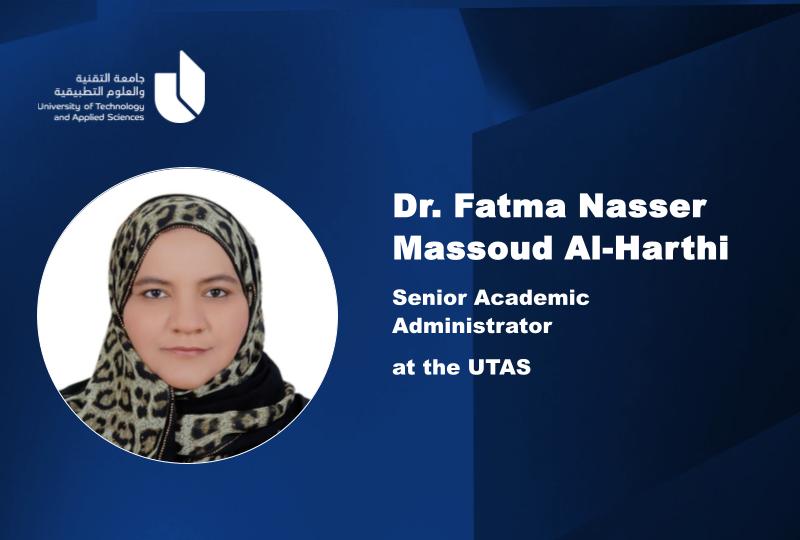
Senior Academic Administrator
at the UTAS
How can universities like UTAS play a stronger role in preparing Oman’s future workforce for emerging fields such as space technologies, geospatial intelligence, and data-driven decision-making?
Universities like UTAS have a vital role in preparing Oman’s future workforce for emerging fields such as space technologies, geospatial intelligence, and data-driven decision-making. This starts with equipping students with strong technical knowledge in areas such as artificial intelligence, remote sensing, GIS, and data analytics, while also developing critical thinking, teamwork, and innovation skills. A great example is UTAS’s role in hosting the NASA Space Apps Challenge each year. This global hackathon brings together not only students but also professionals, entrepreneurs, school students, and members of the wider community to collaborate on real-world challenges provided by NASA. By working in multidisciplinary teams, participants develop innovative solutions using space and Earth observation data, gaining valuable hands-on experience in solving complex problems. This initiative demonstrates how universities can extend learning beyond the classroom by creating opportunities for innovation, collaboration, and community engagement. It also helps inspire young people to pursue careers in STEM and exposes them to emerging technologies and global challenges.
What skills do you believe are most critical for students entering sectors related to Earth observation, remote sensing, and AI-based analytics?
The future of Earth observation, remote sensing, and AI-based analytics requires graduates who combine strong technical expertise with adaptability and an innovation-driven mindset. Students must develop a solid foundation in artificial intelligence, data science, programming, geographic information systems (GIS), remote sensing, and cloud computing to effectively analyze and transform complex data into actionable insights. Equally important are transferable skills such as critical thinking, problem-solving, communication, teamwork, and ethical decision-making. As technologies evolve rapidly, graduates must also embrace lifelong learning, creativity, and entrepreneurship to remain competitive and contribute to national priorities. At UTAS, we are committed to developing these competencies through applied learning, industry partnerships, research opportunities, and innovation initiatives, ensuring our graduates are well prepared to lead Oman’s digital transformation.
How can Higher Education Institutions further align its academic programs and applied research with Oman’s national priorities in digital transformation, industrial innovation, renewable energy, logistics, and environmental sustainability?
Higher Education Institutions can better align their academic programs and applied research with Oman’s national priorities by strengthening collaboration with government, industry, and community partners to ensure graduates have the skills needed for the future workforce. Expanding project-based learning, applied research, and innovation in areas such as digital transformation, industrial innovation, renewable energy, logistics, healthcare, and environmental sustainability will enable students to address real-world challenges. At UTAS, this approach is supported through industry partnerships, research collaboration, and experiential learning, ensuring graduates are well prepared to contribute to Oman Vision 2040 and the country’s transition to a knowledge-based economy.
What role does academic leadership play in fostering innovation, entrepreneurship, and applied research culture among students?
Academic leadership plays a key role in advancing innovation, entrepreneurship, and applied research in support of Oman Vision 2040. Through strategic leadership, innovation and entrepreneurship are integrated into academic programs and research activities, creating an environment that encourages students to develop practical solutions to real-world challenges. Initiatives led by the Partnership and Entrepreneurship Department and the Innovation and Technology Transfer Department provide opportunities for entrepreneurship, mentorship, innovation competitions, startup incubation, and applied research. UTAS also works closely with industry, government, and community partners to ensure education and research address national priorities and labor market needs. These collaborations offer students internships, applied research projects, and practical learning experiences while supporting faculty in interdisciplinary research, technology transfer, and innovation commercialization. UTAS develops graduates with strong technical knowledge, critical thinking, leadership, and entrepreneurial skills, enabling them to contribute to Oman’s transition toward a knowledge-based, innovation-driven economy.
How can UTAS strengthen collaboration with government and industry to ensure research outputs translate into real-world impact?
UTAS can enhance the impact of its research by strengthening technology transfer, startup incubation, intellectual property support, and industry mentorship. Connecting researchers and student innovators with investors and government innovation programs will help transform research into market-ready solutions that address national priorities. Sustained collaboration through innovation councils, industry advisory boards, and regular innovation challenges will foster continuous engagement between academia, government, and industry. This collaborative ecosystem will accelerate applied research, support Oman Vision 2040, and generate lasting economic and societal impact. UTAS can further strengthen these efforts by establishing challenge-driven partnerships where students, researchers, government entities, and private companies work together to solve real national challenges. Building on successful models such as hackathons, these partnerships can evolve into long-term collaborations through funded research, internships, and pilot projects.