





How do you see satellite communications contributing to Oman’s digital transformation and the development of space-enabled infrastructure?
I see satellite communications as an important part of Oman’s digital transformation, especially when they work alongside our existing fiber and mobile networks. They can help extend connectivity to remote areas, maritime environments, and locations where terrestrial networks may be difficult or costly to deploy. They can also provide reliable backup communication during emergencies, natural disasters, or network disruptions. Looking ahead, one of the most exciting developments is the integration of satellites with 5G and future 6G networks through Non-Terrestrial Networks (NTN). This will bring satellite and terrestrial networks closer together, creating more seamless, intelligent, and resilient connectivity. For Oman, this opens opportunities for IoT applications, smart infrastructure, maritime services, environmental monitoring, oil and gas operations, logistics, and disaster response. This direction is closely aligned with Oman Vision 2040, particularly its goals of accelerating digital transformation, strengthening innovation and research capabilities, developing national talent, and building a diversified, knowledge-based economy.
How is the integration of satellite, optical, and terrestrial communication systems being explored to improve connectivity across Oman’s remote and rural regions?
In Oman, I believe the best approach is not to depend on one communication technology, but to bring different technologies together based on where each one works best. Optical fiber can provide the high-capacity backbone, while 4G and 5G networks serve communities and populated areas. Satellite communication can then extend connectivity to remote, mountainous, desert, and maritime areas where deploying fiber or terrestrial infrastructure may be difficult or expensive. What is particularly interesting from a research perspective is how we can make these networks work together as one connected system. Technologies such as 5G/6G Non-Terrestrial Networks (NTN), satellite backhaul, IoT, and hybrid fiber -satellite networks are making this increasingly possible. For Oman, this approach is especially relevant because of our geography and widely distributed communities.
The aim is not to replace fiber or mobile networks with satellites, but to use each technology where it adds the most value in extending coverage, improving resilience, and ensuring connectivity when terrestrial networks are unavailable.
This direction is already part of the broader ambitions of Oman Vision 2040, which emphasizes digital transformation, advanced infrastructure, innovation, and inclusive access to technology across the Sultanate. By integrating terrestrial and space-based communication systems, we can contribute to building the resilient and future-ready digital infrastructure envisioned for Oman.
How can satellite-enabled IoT systems, as studied and developed within UTAS academic programs, support real-time monitoring in sectors such as agriculture, fisheries, water management, and environmental protection?
Satellite IoT systems can collect and send information in real time. They help farmers check crops, fishermen monitor the sea, manage water resources, and protect the environment
In agriculture, sensors can monitor soil moisture, temperature, humidity, and crop conditions to support precision irrigation. In fisheries, IoT devices can track vessels and monitor sea conditions and marine resources. For water management, sensors can measure water level, quality, flow rate, salinity, and leakage. For environmental protection, sensors can monitor air and water quality, marine pollution, weather conditions, and changes in ecosystems.
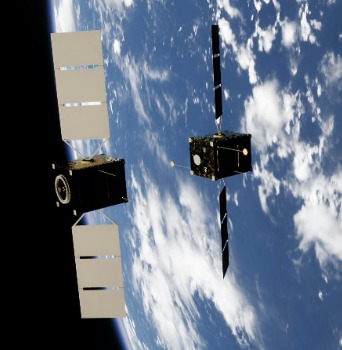
The main technical researchers and students can focus on areas such as low-power IoT devices, satellite IoT connectivity, sensor networks, edge computing, data analytics, and energy-efficient communication protocols. Combining these technologies allows data from remote locations to be transmitted in near real time, enabling faster detection of problems and better decision-making.
What are the main technological challenges that UTAS and Oman as a whole need to overcome to strengthen national capabilities in satellite communications and space-based connectivity?
The main challenges are developing specialized skills, research facilities, and strong industry collaboration. UTAS could offer more courses covering different areas of space and satellite technology and provide dedicated laboratories where students and researchers can develop and test satellite communication and IoT systems. More collaboration with terrestrial network operators and the space industry is also important to increase applied research and develop solutions for Oman’s connectivity needs. In addition, It needs more investment in research, infrastructure, skilled people, and access to satellite technologies to build strong national capabilities in space-based connectivity.
From your perspective at UTAS, how do you see the evolution of satellite communication technologies shaping the next generation of digital services and space-enabled applications in Oman?
Satellite communications will increasingly integrate with terrestrial networks, IoT, AI, optical networks, and future 6G systems. These technologies can support smart agriculture, maritime services, environmental monitoring, disaster management, and smart cities. From my perspective, I see satellite technology playing a major role in global network connectivity in space, rather than relying on undersea or underwater (oceanic) connectivity systems. UTAS can contribute through education, research, student projects, and industry collaboration. This supports Oman Vision 2040 and the National Space Program by helping Oman move from being a user of space technologies toward developing its own space-enabled solutions and national capabilities.