






What technical and commercial milestones do you commit to achieve within 6, 12, and 18 months after closing this round, and how do these reduce technical and market risk for the next round?

Over the next 18 months, we are executing a staged roadmap that progressively reduces both technical and market risk. Within the first 6 months, we scale a production-ready multi-sensor intelligence platform validated through real customer use cases, demonstrating repeatability and near-term revenue potential. In parallel, we are soliciting early pre-orders for upcoming SWIRSAT datasets, that will have very high Short Wave InfraRed (SWIR) resolution that is word-leading, with an initial focus on defence and other high-value sectors, helping to validate demand and inform mission tasking and product design. By around 12 months, SWIRSAT reaches pre-operational readiness, reducing dependency on third-party data sources and improving control over performance, availability, and margins. Within 18 months, SWIRSAT becomes operational, enabling proprietary datasets, stronger customer lock-in, and longer-term contracts. Alongside this, we continue development of a next-generation SWIRSAT sensor, with the aim of improving spatial resolution even further and spectral coverage over time, supporting future capability upgrades and sustained differentiation.
How is your multi-sensor fusion stack (optical, SAR, SWIR, GNSS-R) architected at a technical level, and which components are proprietary versus dependent on third-party data and models?
LatConnect 60’s multi-sensor fusion stack is designed as a flexible architecture that integrates optical, SAR, SWIR, and GNSS-R data into a single, consistent intelligence layer.
Core fusion logic and analytics are developed in-house, while third-party data is used selectively at the input level to ensure coverage and resilience. This approach allows the platform to evolve as new or sovereign datasets become available without changing the underlying system.
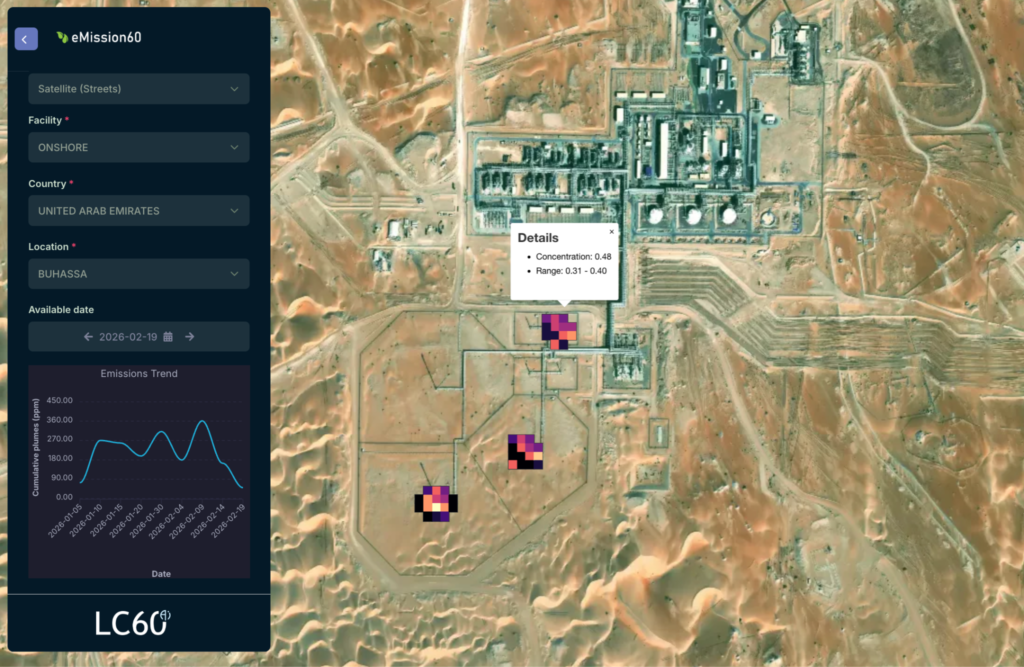
What are the key technological breakthroughs you plan to deliver over the next two years (e.g., real-time analytics, predictive modeling, autonomous tasking, edge processing), and which of these are directly enabled by this round?
Over the next two years, LatConnect 60 will deliver a set of advancements. These include sovereign satellite access and control via the SWIRSAT constellation, faster analytics pipelines, more robust predictive models built on multi-sensor time series, and increasingly automated satellite tasking to prioritise high-value areas.
This investment round directly supports the integration of SWIRSAT with our analytics platform, allowing us to move from reliance on third-party datasets toward a more controlled, responsive, and differentiated space-to-insight capability, with edge-enabled concepts introduced as the constellation matures. In parallel, we will continue development of a next-generation SWIRSAT sensor, aimed at progressively improving spatial resolution and expanding spectral coverage over time, supporting future performance upgrades and long-term platform evolution.
What regulatory, data sovereignty, and export-control risks could materially affect your operations in the UAE, Saudi Arabia, and neighboring markets, and how are these risks reflected in your technical architecture and operating model?
Operating across the UAE, Saudi Arabia and neighbouring markets requires careful attention to data sovereignty, regulatory, and export-control considerations. These risks primarily relate to how sensitive data is stored, processed, accessed, and shared across jurisdictions. We address this through a design-by-default approach: our technical architecture supports jurisdiction-aware data handling, clear separation between raw data and derived analytics, and controlled access to insights based on local requirements. Where appropriate, this approach is complemented by joint development of in-country receiving and processing capabilities, including on-premise deployments managed through country-specific JV or partnership arrangements. Together, this model allows us to remain compliant while scaling across neighbouring markets without re-engineering the platform.
How do you plan to evolve your platform from descriptive analytics to predictive and prescriptive decision-making tools for sectors such as energy, climate, and infrastructure?
LatConnect 60’s platforms are designed to mature in stages as data coverage and model confidence increase. We start with high-quality descriptive analytics that provide reliable monitoring across energy, climate, and infrastructure assets. As multi-sensor time series develop over time, we move into predictive analytics that identify trends, anomalies, and potential risks. In parallel, our data engineering team is developing a generative-AI-based querying engine to make these insights more accessible and to further support prescriptive decision-making. The upcoming SWIRSAT constellation is expected to strengthen this prescriptive stage by introducing very high-resolution SWIR data and closer integration between sensing and analytics, supporting scenario evaluation and decision prioritisation.
What role do you see for generative AI and foundation models in your future roadmap – for example, natural-language interfaces, automated reporting, or AI-driven scenario simulation?
We see generative AI and foundation models as a supportive layer that helps make complex Earth observation insights easier to access and use. This includes natural-language interaction with geospatial information, automated reporting for different audiences, and AI-assisted scenario exploration. In this context, our data engineering team is developing a generative-AI-based querying layer to enable more intuitive interaction with geospatial intelligence and to support scenario evaluation and decision-making. These capabilities are built on top of validated analytics with appropriate controls and transparency, allowing them to be adopted in a way that aligns comfortably with both sovereign and enterprise governance practices.
How do you ensure model accuracy, explainability, and trust for government and enterprise customers, and what investments in validation, benchmarking, and certification are planned in this round?
Ensuring accuracy, transparency, and trust is fundamental to LatConnect 60’s engagement with sovereign and institutional customers. Our analytics combine data-driven AI models with established geospatial and remote-sensing datasets.
They are supported by continuous validation against trusted reference data and the use of confidence indicators to enable informed decision-making at policy and operational levels. To support institutional adoption and regulatory confidence, our solutions are benchmarked and aligned, where applicable, with recognised international and sector-specific frameworks, including ISO standards, Verra methodologies, Bureau Veritas assurance practices, the UN REDD+ framework and OGMP 2.0 for methane and emissions reporting. As part of this investment round, we are further strengthening validation pipelines, formal benchmarking processes, and alignment with recognised assurance and certification pathways. This investment focus is intended to de-risk large-scale deployment, support sovereign oversight requirements, and ensure that LatConnect 60’s capabilities meet the expectations of long-term, state-backed investors seeking durable, auditable and policy-aligned geospatial intelligence platforms.
What is the exact size of the current investment round, what minimum and maximum ticket sizes are you targeting, and what post-money valuation range are you offering to investors?
The company is raising a Series A round of minimum US$5 million or more to accelerate commercial scale across MENA and advance the deployment of its SWIRSAT constellation. The minimum ticket size targeted is US$1 million, while larger allocations are flexible. Capital raised beyond the US$5 million threshold would be used to accelerate expansion into defence and natural resources markets. The round is structured at a pre-money valuation of US$18 million, implying a post-money valuation of approximately US$23 million at the US$5 million raise, increasing proportionally if additional capital is secured.
How will the proceeds of this round be allocated in percentage terms between AI platform development, data acquisition, SWIRSAT constellation design and deployment, regional team expansion in MENA, and sales and marketing?
Proceeds from the US$5 million round will primarily be directed toward the development and deployment of the SWIRSAT constellation, which will account for 60% of the capital. A further 40% will be allocated to team expansion and commercial scaling, with a strong focus on building regional capabilities in MENA.
What is your current revenue run rate, qualified pipeline, and conversion rate, and what ARR do you project over the next 24 months specifically from MENA customers?
The company currently operates at an annualized revenue run rate of approximately US$4 million, derived from a mix of multi-year commercial contracts and government grants. The qualified pipeline for 2026 stands at around US$6 million, spanning active tenders and opportunities at LOI and MOU stages.
Does this round fully finance the first operational phase of the SWIRSAT constellation, or will a separate infrastructure round be required, and what are the capital needs and deployment timelines to reach commercial orbit?
This funding round fully finances the first operational phase of the SWIRSAT constellation, specifically SWIRSAT-1 and SWIRSAT-2. The satellites are scheduled for launch in Q4 2026, with commercial operations commencing in Q1 2027. Total capital expenditure required for these two satellites is approximately US$8 million, largely subsidised by non-dilutive capital, i.e. grants from the Australian Space Agency and Western Australian state government.
What commercial traction do you already have in MENA (signed contracts, pilots, LOIs, government programs), and what percentage of next year’s forecast revenue is already contractually secured?
In the UAE, the company is currently at LOI and MOU stage with ADNOC, via Space42, for SWIRSAT capacity offtake supporting energy operations monitoring. A broader partnership with Space42 is also in place for advanced geospatial intelligence across multiple missions. In Saudi Arabia, the company is engaged in active bidding with government entities through the Saudi SpaceUp Challenge, aligned with the Saudi Green Initiative. In Qatar, a partnership has been established with Es’HailSat, while additional early-stage discussions are underway in the agriculture and natural resources sectors.
At present, contractually secured revenue is primarily concentrated in APAC markets. However, commercial visibility in MENA is expected to accelerate materially following the SWIRSAT launch in Q4 2026, converting current LOIs, partnerships, and pilots into long-term contracts.

What is the intended exit pathway for investors in this round and what level of revenue scale, technological differentiation, and market leadership is required to reach that outcome within 4–6 years?
The company is pursuing two primary exit pathways. The first is a potential IPO by the end of 2027, targeting a NASDAQ listing via SPAC following a successful SWIRSAT launch and early commercial scaling, with the option of a future dual listing in MENA. The second pathway is a strategic acquisition by defence primes, satellite operators, energy majors, or infrastructure-focused corporations seeking vertically integrated geospatial intelligence capabilities.
Within a four- to six-year horizon, the company is targeting US$100 million or more in ARR, supported by 70–80% gross margins. This outcome is underpinned by a strong and defensible moat created through full vertical integration, from proprietary SWIRSAT infrastructure to AI-driven analytics and SaaS delivery. The long-term objective is to establish clear market leadership in high-resolution SWIR intelligence across high-growth APAC and MENA markets.