


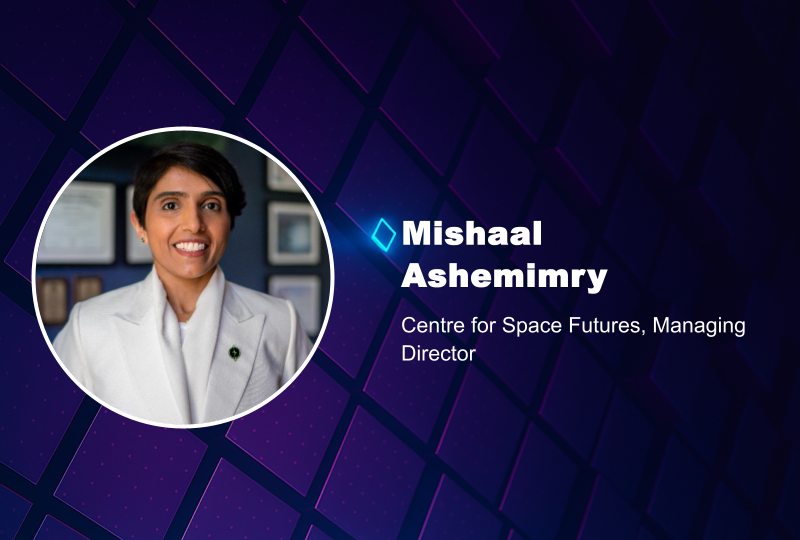

What motivated the creation of the Centre for Space Futures, and what gap in the global space ecosystem is it aiming to fill?
The Centre for Space Futures was created to address a growing need in the global space ecosystem: a trusted and neutral platform with the convening power to bring together stakeholders across geopolitical, sectoral, and economic boundaries. Space is becoming an increasingly strategic layer of the global economy, underpinning communications, navigation, climate monitoring, logistics, agriculture, financial systems, and national resilience. As its importance grows, so does the need for dialogue that can bridge East and West, established and emerging space nations, public and private actors, and both space and non-space industries. The challenge is not a lack of activity, innovation, or ambition. The challenge is the need for a trusted platform that can connect these efforts, build confidence among stakeholders, and help the sector address shared opportunities and risks before they become barriers to growth. The Centre was established to play that role.
The Centre’s location in Riyadh is a key part of its value proposition. Saudi Arabia occupies a unique position at the intersection of global markets and international partnerships, enabling constructive engagement across diverse regions and perspectives. Combined with the Kingdom’s growing role in technology, innovation, and economic transformation, Riyadh provides an ideal environment for convening global stakeholders around the future of space. Through its connection to the World Economic Forum’s Centre for the Fourth Industrial Revolution (C4IR) network, the Centre for Space Futures is uniquely positioned to bring together policymakers, industry leaders, investors, entrepreneurs, researchers, and international organizations from across the global space ecosystem. This convening power helps create dialogue and collaboration among stakeholders who may not otherwise have opportunities to engage in the same forum.
We do this through practical initiatives that connect policy, technology, sustainability, and investment. Future of Space Law white paper series examines how governance frameworks can evolve to support responsible and commercially viable space activities. Our Clear the Orbit, Secure the Future publication highlights the economic implications of space debris and reframes orbital sustainability as a market, investment, and resilience challenge.
Our Space Tech initiative identifies technologies with the potential to unlock new opportunities and helps connect them with the partnerships and ecosystems needed to scale.тIn that sense, the Centre is more than a convening platform. It serves as a bridge between perspectives, regions, and sectors, helping ensure that the global space economy develops in a way that is sustainable, inclusive, resilient, and commercially viable.
How does the Centre plan to shape the future of the global space economy over the next decade?
The Centre plans to shape the future of the global space economy by focusing on three areas where it can create the greatest impact: foresight, convening, and translating dialogue into action. The space sector does not simply need more reports or more discussions. It needs trusted institutions that can identify emerging challenges and opportunities, elevate them into shared priorities, and connect those priorities with the partnerships, capital, and policy frameworks required to drive meaningful progress. Over the next decade, we aim to contribute to a space economy that is more investable, sustainable, resilient, and globally inclusive. This includes identifying technologies that can unlock new markets, supporting policy discussions that enable responsible commercialization, advancing conversations around orbital sustainability, and helping stakeholders understand emerging risks before they become barriers to growth.
A key part of our role is connecting communities that often operate within different ecosystems and perspectives. Governments, startups, investors, operators, academia, and adjacent industries frequently approach the space economy through different lenses. The Centre helps align these perspectives so that policy, technology, investment, and market needs can move forward together.
Riyadh’s emergence as a global hub for innovation, investment, and international cooperation provides a strong foundation for this mission. By leveraging Saudi Arabia’s unique diplomatic reach and the global C4IR network, the Centre is able to convene stakeholders from across established and emerging space economies, including actors that may not typically engage within the same forums. This enables the Centre to foster trust, encourage collaboration, and accelerate partnerships that can help shape the future trajectory of the global space economy. Ultimately, our ambition is to help create the conditions for long-term growth by connecting ideas with action, fostering international collaboration, and ensuring that the benefits of the space economy can be shared more broadly across regions, industries, and societies.
Many forecasts suggest the space economy could reach $1 trillion to $2 trillion by 2040. Which segments do you believe will drive the most growth?
The largest growth will come from the areas where space becomes deeply embedded in the terrestrial economy. Communications, positioning, navigation and timing, and Earth observation will continue to be foundational. These are the services that already power large parts of our daily lives, from logistics and financial transactions to weather forecasting and digital connectivity. However, the next wave of growth will come from downstream applications. The real opportunity is not only in building satellites or launching rockets. It is in using space data and space-enabled services to solve problems in energy, agriculture, insurance, climate resilience, mobility, urban planning, maritime activity, and national infrastructure.
We also see major growth potential in in-space services, including space situational awareness, collision avoidance, life extension, servicing, debris mitigation, and eventually more advanced in-space manufacturing and logistics. As orbits become more congested, the market will increasingly reward companies that can protect assets, extend mission life, reduce operational risk, and make space activity more sustainable.
This is why the Centre took on the Space Tech initiative. We wanted to look beyond broad forecasts and identify the technologies that can actually unlock new market value. Through the Space Tech report, we are helping make these technologies easier to understand, assess, and connect to potential users, investors, and partners. The objective is not only to describe future technologies, but to create a bridge between foresight and ecosystem action.
What are the biggest policy or regulatory barriers currently slowing the commercialization of space?
One of the biggest barriers is regulatory uncertainty. Companies and investors need clarity on licensing, liability, spectrum access, data policy, insurance expectations, export controls, safety standards, and long-term sustainability obligations. When rules are fragmented or unclear, innovation becomes slower and capital becomes more cautious.
Another challenge is that many legal and regulatory frameworks were designed for an earlier era of space activity. Today, we have small satellites, mega-constellations, commercial human spaceflight, lunar missions, in-orbit servicing, private space stations, and increasingly complex public-private models. These developments require policy thinking that is adaptive, practical, and internationally informed.
Another challenge is that many legal and regulatory frameworks were designed for an earlier era of space activity. Today, we have small satellites, mega-constellations, commercial human spaceflight, lunar missions, in-orbit servicing, private space stations, and increasingly complex public-private models. These developments require policy thinking that is adaptive, practical, and internationally informed.
This is exactly why the Centre launched The Future of Space Law white paper series. The purpose of the series is to examine how space governance can evolve by learning from other domains, including air law, maritime law, the Antarctic Treaty system, telecommunications, and other international frameworks. We are not suggesting that these models can simply be copied into space. Rather, we are asking what lessons can help improve coordination, responsibility, commercial confidence, and long-term sustainability. A key part of this work, especially in the third paper of the series, is looking at how space governance can be operationalized. The challenge is not only to define principles, but to understand how they can be translated into practical mechanisms, institutional arrangements, standards, incentives, and decision-making processes that work for governments, industry, and the wider space ecosystem.
How can emerging space nations and private startups engage with the Centre and contribute to its initiatives?
The Centre is designed to be inclusive. Emerging space nations and startups are central to the future of the space economy. Many of the most important use cases will come from new markets and from companies that are applying space capabilities to real economic and societal needs.
They can engage with the Centre through our research, workshops, ecosystem consultations, technology initiatives, and policy dialogues. For startups, the Space Tech initiative is particularly relevant because it is designed to identify promising technologies, explain their relevance through accessible factsheets, and connect them to broader ecosystem needs.
For countries, engagement can include collaboration on policy dialogue, sustainability frameworks, technology foresight, and capacity-building initiatives. The Centre is especially interested in working with actors who want to contribute to the responsible growth of the space economy, whether through technology, regulation, investment, or applied use cases.
Space sustainability and orbital congestion are becoming critical issues. What concrete initiatives is the Centre developing to address these challenges?
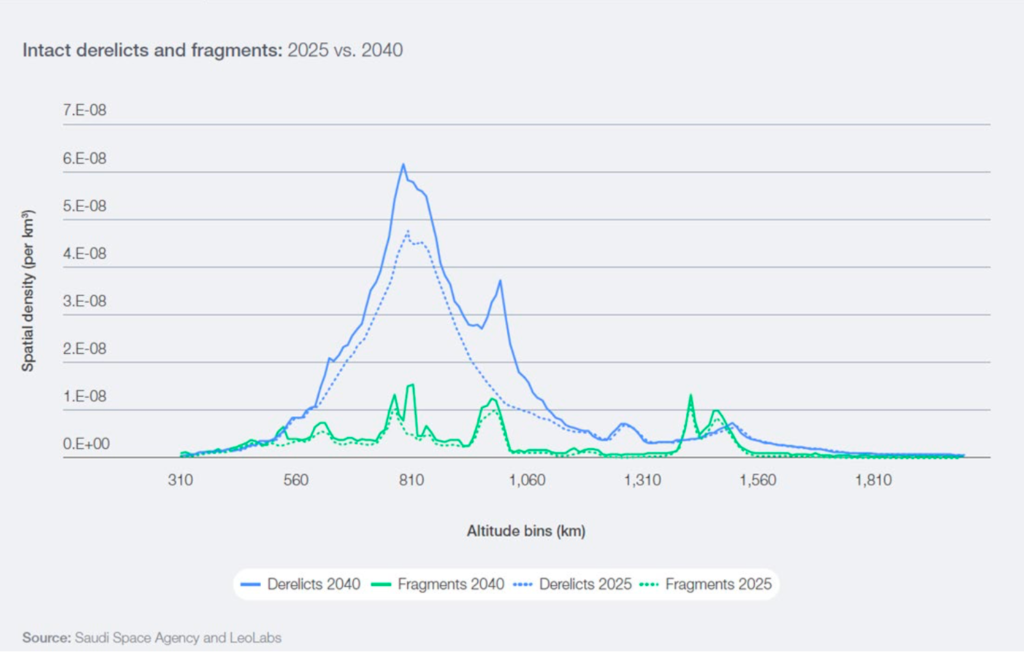
Space sustainability is one of the Centre’s core priorities because the future space economy depends on the long-term usability of orbits. If orbital risk is not addressed, it can affect mission continuity, insurance costs, investor confidence, asset protection, and the reliability of services that people and economies depend on every day.
This is the reasoning behind Clear the Orbit, Secure the Future. We wanted to move the debris conversation beyond a purely technical or environmental framing and show that orbital congestion is also an economic issue. Debris risk affects commercial viability, operational costs, due diligence, financing, insurance, and long-term market resilience. Through this work, the Centre is helping frame space sustainability as a shared economic priority. We are focused on areas such as space situational awareness, collision avoidance, active debris removal, post-mission disposal, on-orbit servicing, risk modeling, standards, and incentives. The goal is to support a stronger market and policy environment for responsible space activity.
What unique opportunities does the Middle East bring to the global space ecosystem?
The Middle East brings three important strengths. The first is strategic ambition. The region is investing in future industries, digital infrastructure, advanced technologies, and economic diversification, which creates a strong foundation for space-sector growth.
The second is geography and connectivity. The region sits at the crossroads of Asia, Africa, and Europe, and can act as a bridge between established space powers and emerging space markets. This is valuable because the next phase of space growth will depend on broader participation, not only activity from traditional space nations.
The third is demand. The region has strong needs in climate monitoring, water management, desertification, energy, logistics, maritime security, smart cities, agriculture, and disaster response. These are all areas where space-enabled solutions can create immediate value.
Looking ahead to 2035, what major shifts do you expect in the space industry, and how is the Centre preparing for them today?
By 2035, space will be much more integrated into the global economy. It will not be viewed only as a standalone sector, but as an enabling layer for many industries. The most successful space companies will be those that can turn space capabilities into measurable value for governments, businesses, and citizens.
We will also see greater emphasis on resilience, sustainability, and governance. As more actors enter orbit, responsible operations will become essential to commercial success. Investors, insurers, regulators, and customers will increasingly ask whether space activities are reliable, sustainable, and aligned with long-term market stability.
The Centre is preparing for this future through its current portfolio of work. The Future of Space Law series addresses the governance questions that will shape responsible growth. Clear the Orbit, Secure the Future addresses the sustainability and economic risk questions that could define the next decade. The Space Tech initiative identifies the technologies that can unlock future value and helps connect them to the ecosystems that can advance them.
Together, these initiatives reflect the Centre’s purpose: to serve as an impartial global platform that bridges policy, technology, sustainability, investment, and international collaboration to support the future of the space economy.