



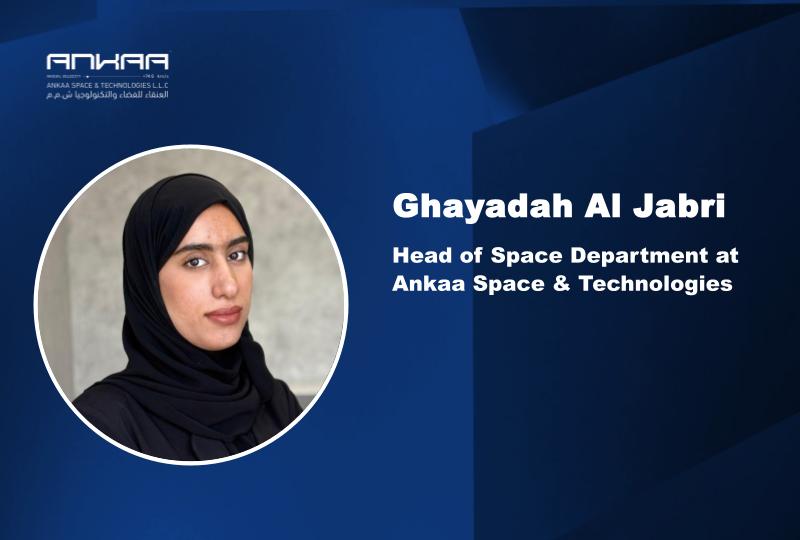
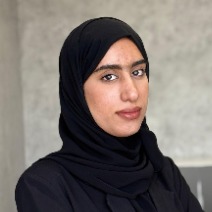
Head of Space Department at Ankaa Space & Technologies
Ankaa Space has rapidly established itself as one of the key players in Oman’s emerging space ecosystem. What is the company’s long-term vision, and what role do you aspire to play in shaping the future of Oman’s and the region’s space industry?
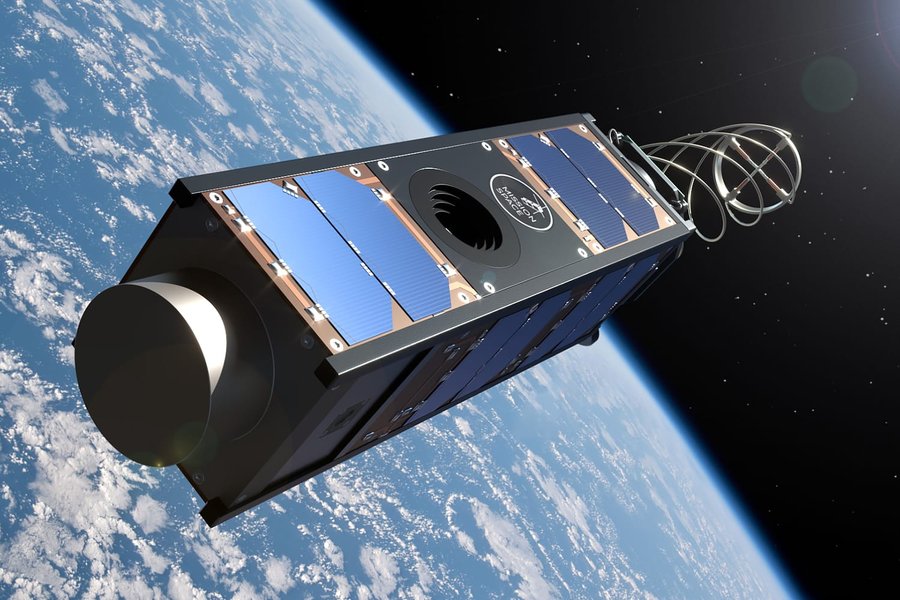
Ankaa’s long-term vision is to be a cornerstone of Oman’s space and advanced-technology ecosystem, not simply a service provider, but a builder of sovereign national capability. We see our role as an integrator, one that brings earth observation, artificial intelligence, unmanned systems, and cybersecurity together into a coherent national capability rather than a set of disconnected technologies. In practical terms, that means continuing to grow a 100% Omani workforce, developing local manufacturing capacity for satellites, sensors, and drones, and ensuring that the value generated by space activity in Oman is captured locally rather than imported.
We aspire to help position Oman as a credible, competitive player in the regional space economy, in direct support of Oman Vision 2040’s goals around economic diversification and a knowledge-based economy. Ultimately, our ambition is for Ankaa to be remembered not only for the technology we build, but for the ecosystem we helped create: the startups we mentored, the engineers we trained, and the policy and investment confidence we helped build around Oman’s space sector. The Oman Space Accelerator Program’s first cohort, seven graduated companies, over 25 partnerships, and more than OMR 90,000 in confirmed investment inside six months is the clearest early proof of what that role can look like in practice.
Over the past year, what have been Ankaa Space’s most significant achievements and milestones? Which projects do you believe will have the greatest long-term impact on the Omani space ecosystem?
If I’m honest, the single achievement I’m proudest of this year is seeing OSAP’s first cohort through to graduation. OSAP is a national initiative launched by the Ministry of Transport, Communications and Information Technology, represented by the National Space Program, with Ankaa as the executing partner responsible for programme delivery and Exotopic as our international commercialisation and accelerator-design partner.
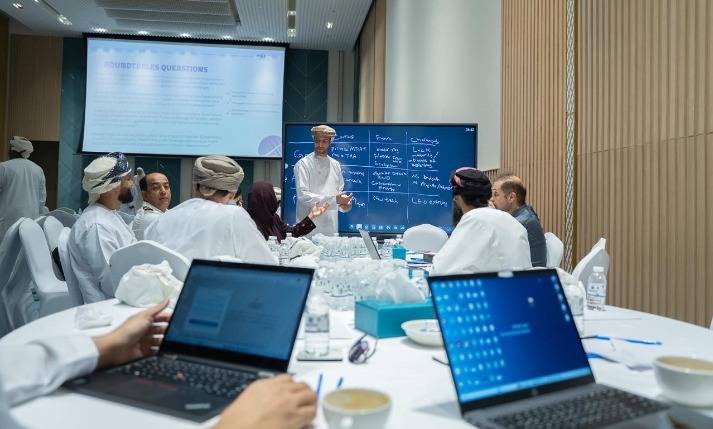
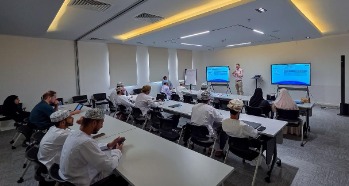
From 34 applications, we shortlisted 15 and selected 10 companies for a 15-week programme combining technical training, business and finance modules, 600 hours of one-to-one mentorship, a Dubai Airshow trade mission for six companies, and a UK trade mission to Harwell Space Campus, Airbus Defence & Space, and Imperial College London for three companies. Seven companies graduated in January 2026, and all seven presented at the Middle East Space Conference, where OSAP had a booth and winning companies were announced.
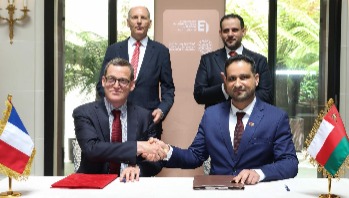
By the numbers: more than OMR 90,000 in confirmed investment, with additional amounts under negotiation. Beyond OSAP, we also signed our air traffic surveillance radar agreement with Thales, announced during His Majesty Sultan Haitham bin Tarik’s state visit to France in the presence of President Emmanuel Macron, were honoured with the Youth Excellence Award 2025 in the Digital Economy category, and entered a strategic green hydrogen partnership with Hydrom.
If I had to single out the project with the greatest long-term impact, it is OSAP without question; it is the first hard evidence that Oman can take a founder from an idea to an investable, revenue-facing company within a single national programme.
Ankaa Space has been a key partner in launching the Oman Space Accelerator Program (OSAP). What motivated your involvement in this initiative, and what are its primary objectives?
When I was asked to lead OSAP’s delivery for Ankaa, I did not have all the answers; if anything, I had more questions than answers. How do you build a space ecosystem in a country where the industry is still emerging? How do you support startups in a sector that is complex and expensive, and not yet fully understood locally? And, most importantly, how do you make sure this is not just another programme, but something that creates real impact?
On paper, the objectives were straightforward: from a pool of 34 applications, select around ten Omani startups, SMEs, and academic teams; run an intensive 15-week curriculum covering both the technical and commercial sides of building a space venture; and connect participants with mentorship from local and international experts and access to investor networks. In reality, it became something closer to a responsibility: to build something new, to create opportunities for founders who often started with little more than an idea, and to prove that a space sector can genuinely exist here.
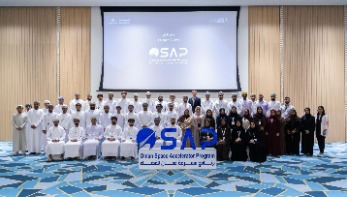
OSAP’s first cohort has now graduated. What did that class actually go on to achieve?
Seven of the ten companies that graduated in January 2026, and each of them has a concrete story. Smart Manufacturing, our Smart Manufacturing Centre graduate, is building Oman’s first space-grade 3D printing facility and has already finalised a joint venture with a Chinese aerospace manufacturer, along with pre-orders from major clients. Elyoun Drone paired satellite analytics with drone-based field verification for oil and gas exploration and safety monitoring, and engaged five oil and gas operators around pilot commitments. Astronomical Solutions Company, trading as Dar Al-Falak, is building what would be one of the world’s few dual-revenue dark-sky observatory and astro-tourism campuses, and came out of the programme with eleven formal registrations of interest from clients across eight countries.
AR Technology built Oman’s first licensed hybrid IoT network, combining LoRaWAN and LEO satellite connectivity, secured Oman’s first LoRaWAN network ID, and received investment from the Oman Future Fund. RE&T started the programme as a single aerospace engineer with a proof-of-concept idea for rocket turbopumps and left it as a five-person team with a signed manufacturing MoU and pre-seed backing from the Oman Investment Authority. IntelliEast, an AI-powered satellite analytics platform for desert solar plants, is now revenue-ready and in conversation with pilot customers. GeoWatSpace, which builds geospatial intelligence for groundwater and agriculture, completed its proof of concept and is close to finalising a government grant from the Ministry of Agriculture, Fisheries and Water Resources.
Across the cohort, one hundred percent of graduates ended the programme either fundraising, holding confirmed investor interest, or already generating revenue, which is exactly the signal we needed that this model works.
Following the first edition of the Oman Space Accelerator Program, what insights have you gained about Oman’s startup ecosystem? What qualities and technologies have stood out among the participating startups?
The honest answer is that we followed up individually with each of the ten companies, not just as participants but as founders trying to build something real: understanding where they were stuck, what they needed, and who they needed to meet.
Three of the ten companies did not make it to graduation, a 30 percent attrition rate. I see that as a sign of selective advancement rather than programme failure not every idea is ready to become a company in fifteen weeks, and it is better to learn that during an accelerator than after raising capital. The clearest lesson from that is the need for a preparatory stage: half of our 34 applications came from early-stage entrepreneurs and academic teams whose ideas were strong but not yet investment-ready, which is exactly why we are now designing a Pre-OSAP pipeline in partnership with universities.
Technologically, demand clustered heavily downstream: AI and data analytics and earth observation together accounted for over 40 percent of all applications, while upstream hardware and propulsion made up under 12 percent, a rational reflection of where capital, capability, and commercialisation timelines currently sit in Oman. In terms of qualities, the founders who progressed fastest were the ones comfortable with uncertainty and quick to adjust based on feedback, rather than the ones who arrived with the most polished pitch. The biggest personal lesson for me was that success is not Demo Day; it is what happens in the months after the programme ends, which is why structured post-acceleration support is now one of our top priorities for the next cohort.
Collaboration is essential for building a sustainable space economy. How is Ankaa working with government entities, academia, and international partners to strengthen Oman’s space capabilities?
Collaboration sits at the centre of how we operate, and OSAP is the clearest illustration of that. On the government side, we worked with the Ministry of Transport, Communications and Information Technology and the National Space Program as the programme owner, alongside the Civil Aviation Authority, the SME Authority, and the Oman Society of Astronomy and Space, each contributing sessions or outreach activities. Makeen, MTCIT’s platform, handled applications and onboarding, and Innovation Park Muscat hosted our workshops.
On the academic side, Sultan Qaboos University supported student outreach on space entrepreneurship, and three OSAP companies represented Oman at the NASA Space Apps Hackathon. Internationally, our UK trade mission gave three companies direct exposure to ESA BIC, Orbit Fab, and Oxford Space Systems at Harwell Space Campus, to Mott MacDonald and Imperial College London in London, and to Airbus Defence & Space in Stevenage; and six companies represented Oman at the Dubai Airshow, with SpaceTech in Gulf acting as our official media and press partner throughout.
On the investment side, Sharakah and the Oman Investment Authority both delivered dedicated funding sessions during the programme, which is part of why every one of our seven graduates left OSAP either fundraising, holding investor interest, or generating revenue. No single organisation could have built any part of that on its own; it took government, academia, industry, and international partners working to the same fifteen-week clock.
What are the biggest opportunities and challenges facing Oman’s space sector today, and what steps should be taken to further strengthen the national ecosystem?
The biggest opportunity is one OSAP has already started proving out: using space-enabled data and infrastructure to solve problems Oman already cares about water security, agriculture, energy, and logistics rather than treating space as disconnected from national priorities. The biggest challenges are the ones our own first cohort surfaced directly. Entry-level readiness varied enormously; half our applicants were early-stage entrepreneurs or academic teams whose ideas were not yet investment-ready. There was no direct link between OSAP graduates, investment funds, and government customers, so promising companies still had to build that bridge themselves. And most graduates still need a proof-of-concept or MVP, along with access to training data and development facilities, before they can convert investor or government interest into signed contracts.
Looking to the future, what are Ankaa’s and OSAP’s strategic priorities, and what message would you like to share with organizations and investors considering entering Oman’s growing space sector?
Our immediate priority is turning OSAP from a single successful pilot into a sustained national capability. That means launching a Pre-Accelerator pipeline with university partners such as Sultan Qaboos University, establishing an incubator facility so graduates have a professional home and government-funded support after Demo Day, building a structured pipeline of government demonstration and pilot projects, and working with government and private investors toward a dedicated space and deep-tech venture investment mechanism. We are also continuing to scale Ankaa’s own capabilities from our Drone & Robotics R&D Centre to our advanced manufacturing partnerships so the infrastructure exists to support the companies OSAP produces.
To organisations and investors considering Oman’s space sector, our message is straightforward: this is no longer a speculative bet on potential. Oman’s space sector now has a proof point. We would encourage anyone evaluating the region to engage with it directly, and we are glad to be the partner that helps them do that.