




At LEAP 2026 in Riyadh, SpaceTech in Gulf participated in a series of conversations examining some of the key forces shaping the next phase of the space economy: Earth observation, human capability, dual-use technologies, and sustainability.
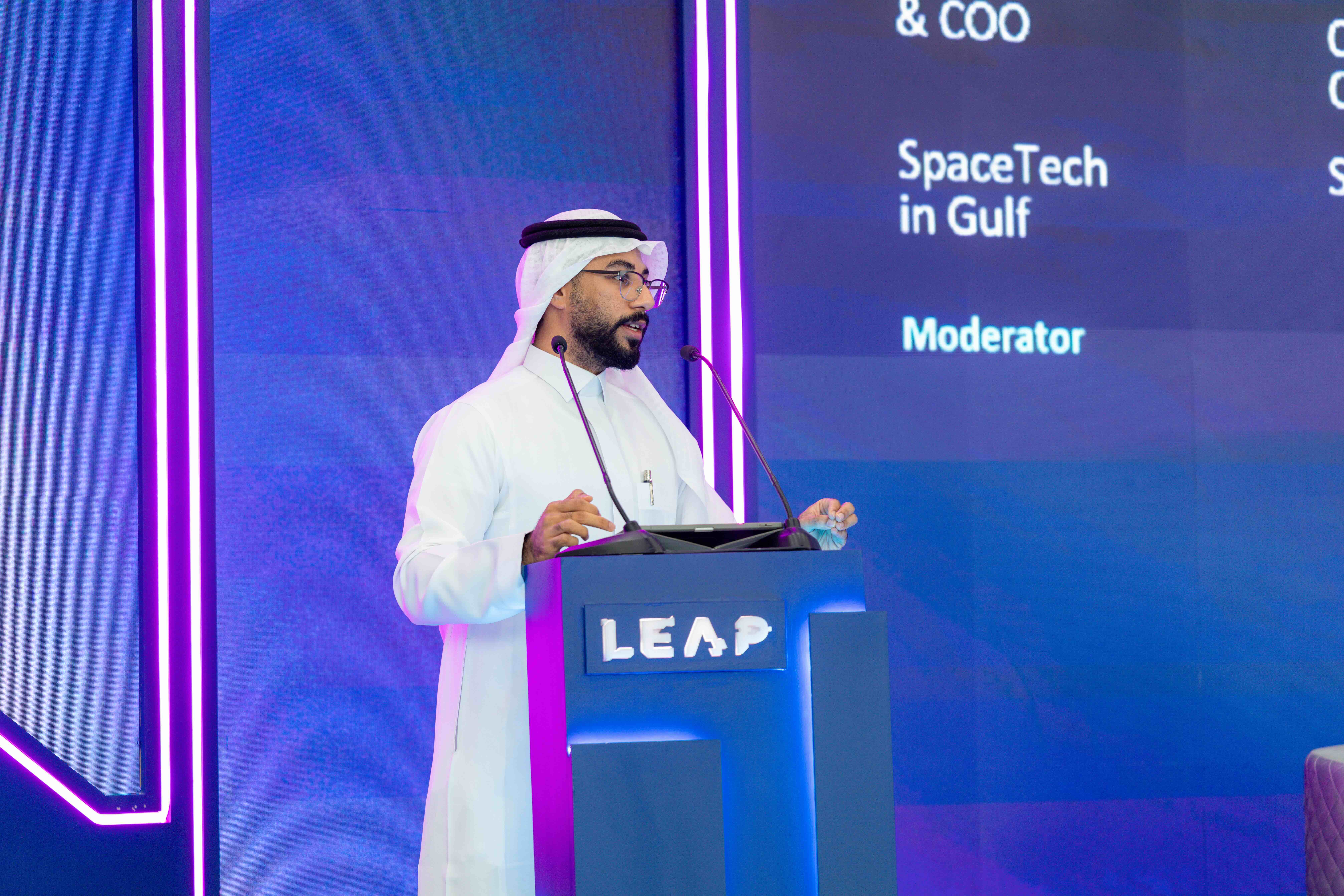
Across four panel discussions moderated by SpaceTech in Gulf Co-Founder & COO Abdullah AlGharrash, speakers from industry, government, academia, investment, and entrepreneurship explored not only where space technology is heading, but what is required to translate technological progress into sustainable economic and societal value.
From Earth observation data to decisions
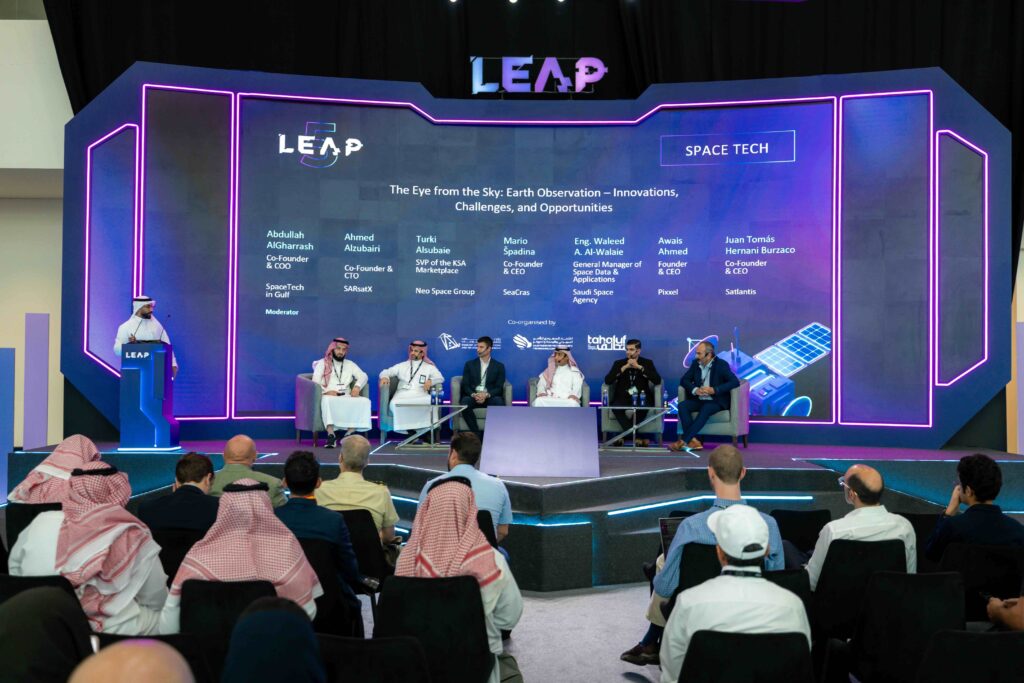
The panel “The Eye from the Sky – Earth Observation: Innovations, Challenges, and Opportunities” explored the continued evolution of Earth observation from an imagery business into a broader intelligence infrastructure.
The discussion brought together perspectives spanning SAR, hyperspectral and optical systems, geospatial marketplaces, environmental applications, national space-data capabilities, and responsive satellite architectures.
A central theme was that resolution alone will no longer define the value of Earth observation.
Revisit frequency, responsiveness, access to data, analytics, confidence in the resulting insight, and integration into customer workflows are becoming equally important.
The next stage of EO will increasingly be defined by the ability to turn multiple sources of space-based information into trusted and actionable decisions.
Building the people behind the space economy
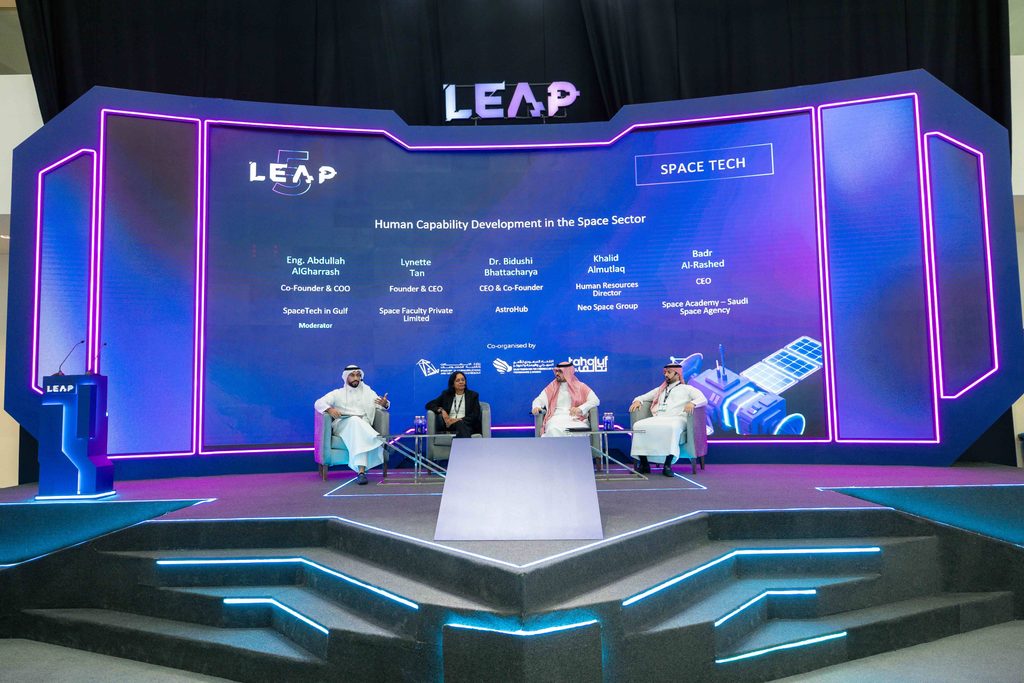
Technology alone cannot build a space sector.
The Human Capability Development in the Space Sector panel examined how growing space economies can move from generating interest in space to producing professionals capable of contributing directly to missions, companies, research programmes, and national priorities.
The discussion addressed the gap between education and industry, the importance of practical experience, employer expectations, internships and real projects, retention, and the role of national capability-development programmes.
One consistent message emerged: talent development cannot remain the responsibility of educational institutions alone.
Employers, government programmes, universities, training providers, and the wider ecosystem all have a role in creating clearer pathways from education to experience, employment, retention, and eventually leadership.
Finding the real dual-use sweet spot
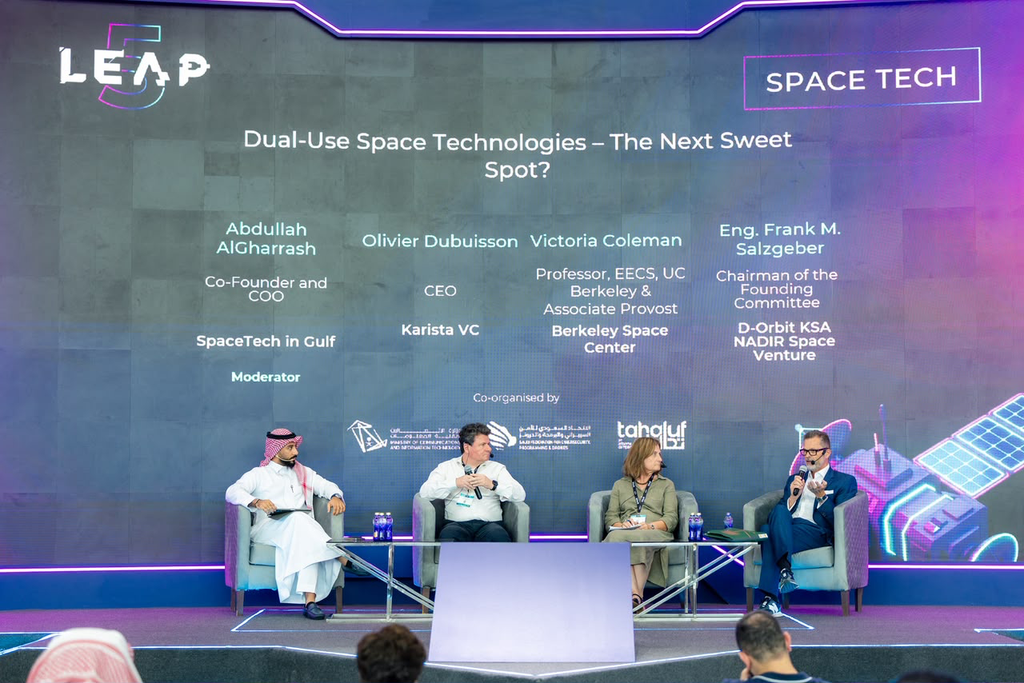
The panel “Dual-Use Space Technologies – The Next Sweet Spot?” examined how a single technological foundation can serve both commercial and strategic markets.
The discussion explored dual-use from several perspectives: investor confidence, technical architecture, security and resilience, commercialization, government procurement, and market entry.
A dual-use technology is not simply a commercial product with a second government application attached to it.
To scale successfully, companies need genuine demand in both markets, architectures capable of satisfying higher-assurance customers without destroying commercial economics, and a realistic path from demonstration into deployment.
The discussion also looked at emerging opportunities across EO, Satcom, PNT, cybersecurity, space situational awareness, autonomy, and in-orbit services.
Making sustainability operational
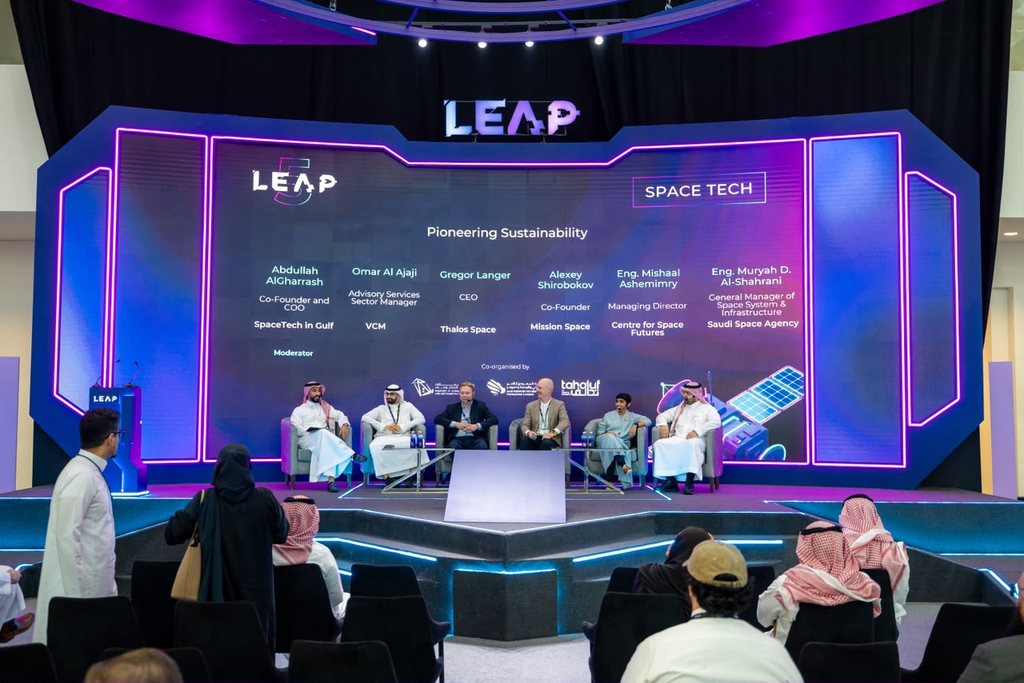
The final discussion, “Pioneering Sustainability,” approached sustainability as a systems challenge rather than an environmental target alone.
Perspectives across finance, environmental intelligence, space-weather resilience, infrastructure, and governance highlighted the different components required to move sustainability from ambition into measurable action.
The discussion addressed what makes sustainability strategies credible and investable, how environmental information can support decisions, why resilience must be considered alongside efficiency, how future space infrastructure should be designed for long-term maintainability, and why governance and sustainability criteria need to be considered from the beginning of programmes.
The larger takeaway is that sustainable growth requires more than one technology or policy.
It depends on measurement, trust, resilience, infrastructure, finance, governance, partnerships, and accountability working together.
Viewed together, the four conversations highlight an important direction for the space economy.
The sector needs better technology, but it also needs people capable of deploying it, markets capable of sustaining it, infrastructure capable of supporting it, and institutions capable of scaling it responsibly.
That intersection — technology, talent, markets, infrastructure, and ecosystem development— will increasingly determine which space economies translate ambition into lasting capability.