


Research Assistant Aerospace Engineering at Khalifa University
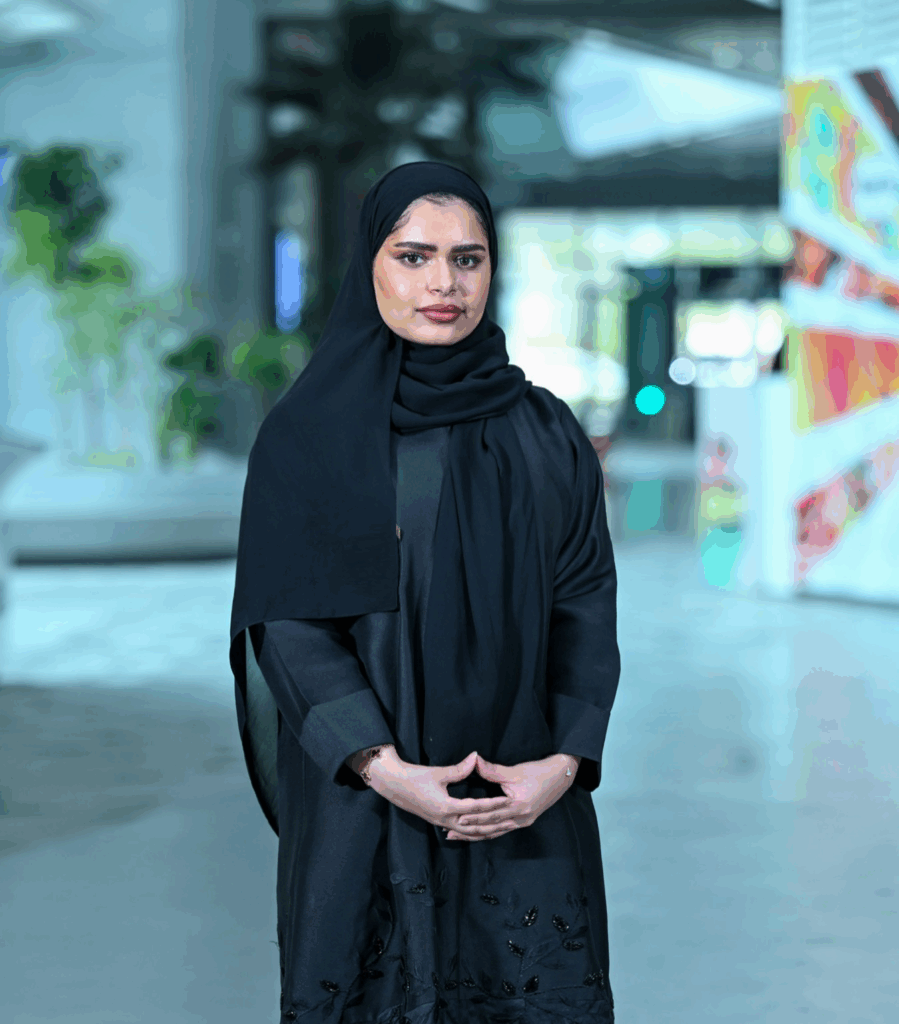
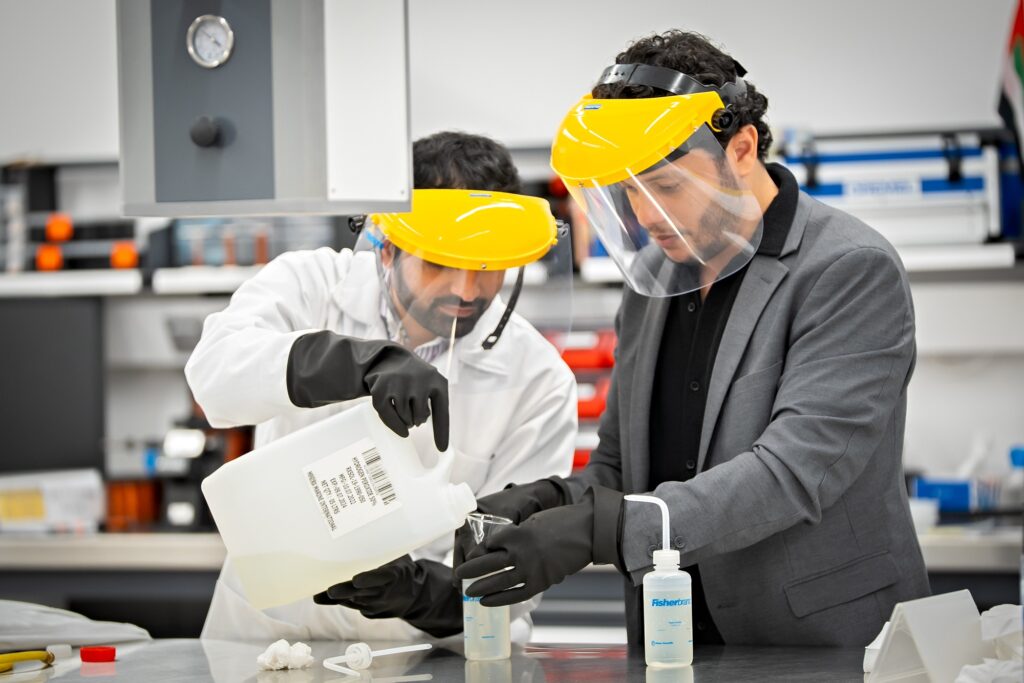
Fatima is a dedicated aerospace engineer with a solid educational background and hands-on experience in Space Systems and UAV technologies. Currently working as a Research Assistant at KUSTIL Lab, she focuses on CubeSat propulsion systems, with an emphasis on developing environmentally friendly micro-propulsion systems using green monopropellants. These green monopropellants offer a safer, more sustainable alternative to traditional chemical propellants, which are often toxic and harmful to the environment. Her work involves researching and testing propulsion technologies that aim to reduce the environmental impact while maintaining high efficiency for small satellite missions. This innovative approach supports the growing demand for sustainable space exploration and aligns with the industry’s move towards greener propulsion technologies. Through her research, she is contributing to the future of space missions by participating in the development of propulsion systems that not only perform well but also minimize the ecological footprint of space operations. During her senior design project at Khalifa University, she developed an electric unmanned aerial vehicle (UAV) designed to fly on Mars. This involved extensive research into the Martian atmosphere and challenges related to flight and aerodynamics in that environment.
What is the long-term vision for Khalifa University’s space program and how does it align with the UAE’s national space ambitions?
The long-term vision of Khalifa University’s space program is to establish itself as a leading technology hub for advanced space research, with a strong focus on areas such as novel satellite payload development, space materials, astro-biomedical engineering, and space mobility systems. At the same time, the program is centered on building skills and developing local capabilities in the design and integration of complete space systems.
By emphasizing key subsystems—including structure, ADCS, propulsion, and power—the program ensures that students and researchers gain valuable hands-on experience while directly supporting the UAE’s national space ambitions. This approach not only prepares highly qualified engineers to contribute to the country’s growing space sector but also strengthens local industry with advanced technology solutions, creating a sustainable legacy for future generations.
How has the partnership with the UAE Space Agency shaped the development of your space technology roadmap?
The partnership with the UAE Space Agency has been fundamental in shaping Khalifa University’s space technology roadmap. As the national umbrella organization and strategic driver of the country’s space program, the Agency provides the overarching direction and priorities that guide our efforts. Within this framework, KUSTIL’s objectives are fully aligned with the Agency’s mission to build national space capabilities and establish a lasting technological heritage in the sector.
Through this collaboration, we have been able to develop key space technologies—including advanced power management systems, micro-propulsion units, and navigation sensors—that directly support the UAE’s national space ambitions. The Agency’s funding and strategic guidance allow us to pursue projects that not only advance research and innovation but also prepare highly skilled engineers who contribute to the growth of the UAE’s space ecosystem.
What distinguishes Khalifa University’s approach to space education and R&D compared to other institutions in the region?
What sets Khalifa University apart is its ability to combine rigorous academic training with direct involvement in real-world space missions. Our students are not limited to classroom learning—they actively contribute to high-profile UAE space projects such as the Emirates Lunar Mission (Rashid Rover) and the Emirates Mission to the Asteroid Belt. This hands-on participation allows them to experience the entire lifecycle of space systems, from design and integration to testing and operations.
For researchers, KU provides access to some of the state-of-the-art facilities, including an ISO Class 4 cleanroom and a dedicated environmental testing laboratory. These world-class resources enable advanced experimentation and ensure that our work meets international standards. By bridging academic knowledge with practical application, Khalifa University ensures that both students and researchers are prepared to make meaningful contributions to the UAE’s space sector and the wider global space community.
Could you walk us through the main objectives and outcomes of missions like MYSat-1, DhabiSat, MeznSat, and Light-1?
Since 2016, Khalifa University has worked on and launched four CubeSats, each with its own purpose:
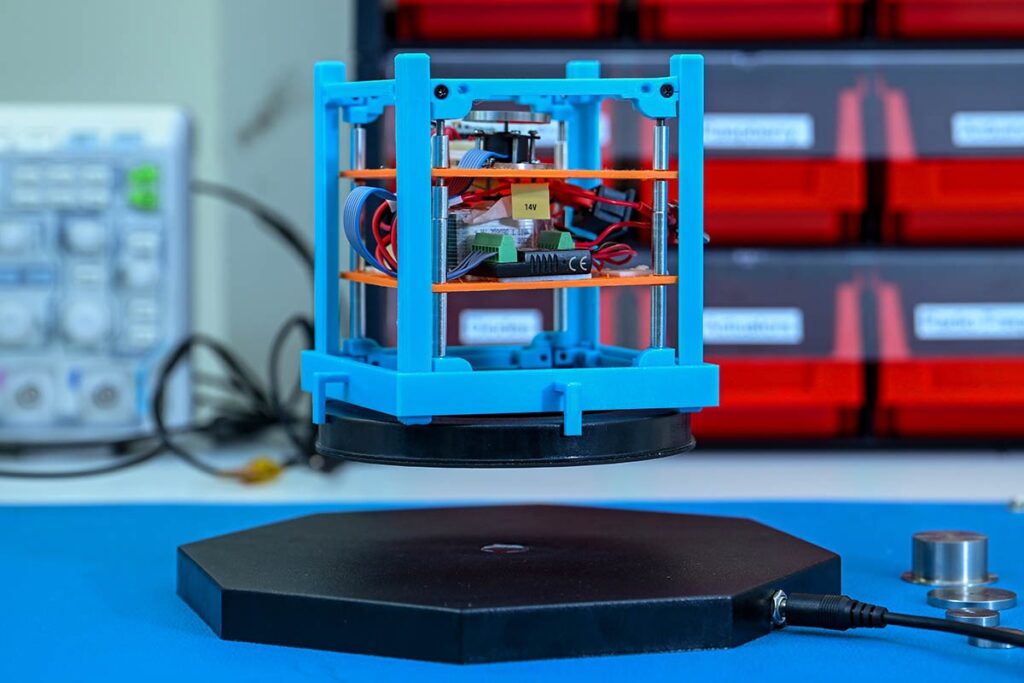
- MYSat-1 (1U, 2018) – Built to test a small camera and an experimental lithium-ion battery that we developed in-house.
- MeznSat (3U, 2020) – Used to measure greenhouse gas concentrations above the UAE, helping provide useful data for climate and environmental research.
- DhabiSat (2U, 2021) – Focused on testing our own attitude determination and control algorithms in orbit.
- Light-1 (3U, 2021) – A joint mission with NYU Abu Dhabi and Bahrain’s National Space Science Agency, carrying a payload from NYUAD to detect gamma-ray flashes caused by thunderstorms.
These missions gave us valuable technical experience and taught our students and researchers what it takes to design, build, launch, and operate satellites. What we learned from them directly feeds into our current and future projects.
How do students participate in end-to-end satellite development – from design to launch and operations?
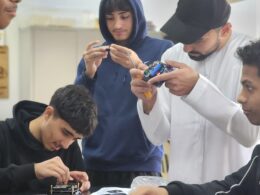
At KUSTIL, students are immersed in the full satellite development lifecycle through a unique blend of academic coursework, practical training, and direct involvement in real space missions. From the earliest design phases, students work alongside faculty, researchers, and industry partners to define mission objectives, design subsystems, and perform simulations.
They then move into integration and assembly, working hands-on in the university’s space labs to build and integrate components such as structure, ADCS, propulsion, and power systems. This is followed by environmental testing in the dedicated test laboratory, where students gain experience with thermal-vacuum, vibration, and other qualification tests in compliance with space industry standards.
When the satellite is ready for launch, students participate in pre-launch preparations, interface with launch providers, and, after deployment, engage in mission operations including tracking, telemetry analysis, and payload data handling.
This end-to-end exposure ensures that graduates leave with both theoretical knowledge and real-world experience, fully prepared for roles in the UAE’s growing space sector.
What technical lessons have you learned from operating CubeSats in orbit, and how have they informed future missions?
A key lessons-learned is that there is no substitute for thorough testing. The more we test subsystems and payloads under realistic conditions, the more reliable the mission becomes. These experiences have reinforced the need to strengthen our testing and validation processes for future CubeSat projects.
What motivated the development of the eco-friendly micro-propulsion system for a 6U CubeSat, and what challenges did your team face?
Recent United Nations Office for Outer Space Affairs (UNOOSA) assemblies have highlighted the growing congestion in Low Earth Orbit (LEO) and the associated risks to long-term space sustainability. As a result, new regulatory measures are being proposed one of the most significant being the mandatory inclusion of propulsion systems for all mission types, regardless of size or scope. For KUSTIL, this reinforces the strategic importance of investing in propulsion system development.
Also, satellite constellations, in particular, demand intensive station-keeping capabilities to maintain precise orbital positions, making propulsion an essential subsystem for more complex missions and multi-satellite networks. Our decision to focus on green propellants is driven by two key factors:
Sustainability: Green propellants minimize environmental impact and support the long-term viability of space operations.
Accessibility & Reduced Complexity: Unlike traditional toxic propellants, green propellants simplify handling and integration processes, lowering safety requirements and making the technology more accessible to a wider range of developers and mission planners.
Through this approach, KUSTIL aims not only to meet emerging regulatory requirements but also to contribute to the responsible and sustainable use of space.
How does your hydrogen peroxide propulsion compare to traditional chemical systems in performance and safety?
The initial test results of our HTP (High-Test Peroxide) propulsion system are highly encouraging, demonstrating only a minimal performance gap compared to existing hydrazine-based systems. This performance difference can be effectively narrowed through ongoing optimization of catalyst formulations and careful selection of advanced materials, areas in which KUSTIL is actively investing. From a handling and safety perspective, HTP offers significant advantages over toxic propellants like hydrazine. Its benign nature reduces operational hazards, simplifies ground procedures, and greatly lowers the complexity and cost of developing test facilities. Moreover, the use of HTP facilitates the selection of compatible components, as stringent toxic-propellant handling requirements are not necessary.Overall, HTP is an optimal choice for developing high-performance, safe, cost-effective propulsion for small satellites, supporting mission efficiency and sustainable space operations.
What other innovations are being pursued at the KUSTIL such as AI in space, robotics, or advanced sensors?
At KUSTIL, we are pursuing a diverse range of innovations to support the next generation of space missions. This includes the development of sustainable and eco-friendly materials, such as graphene-infused wood, for future space structures, as well as research into advanced mobility systems for the Moon and Mars that move beyond traditional wheeled rovers. Another key area of focus is the advancement of Attitude Determination and Control Systems (ADCS), one of the most complex and mission-critical subsystems for satellites. We are actively developing high-precision components such as reaction wheels and star trackers, while also integrating artificial intelligence into ADCS algorithms to improve performance, autonomy, and fault tolerance. AI and edge computing more broadly are also central to our research, enabling smarter data processing and communication both between satellites and from space to ground.
How does Khalifa University integrate space missions into its curriculum?
A hands-on space systems engineering course based on CubeSat development has been introduced as a core course for senior undergraduates, giving students practical exposure to real mission design. This unique approach in the region ensures graduates gain both theoretical knowledge and direct project experience, preparing them for immediate contribution to the space sector.
What support encourages Emirati students to pursue space careers?
A number of internship opportunities in space sectors; both domestic and international, are made available for Emirati students to pursue.
Can you share details about your collaborations with NYU Abu Dhabi, Bahrain’s NSSA, or other global institutions?
Light-1, a 3U CubeSat, was a successful collaboration with NYU Abu Dhabi and Bahrain’s NSSA, carrying a payload from NYUAD to detect gamma-ray flashes caused by thunderstorms. Additionally, KUSTIL hosted graduate students from Bahrain, who participated in the development and testing of CubeSats.
What opportunities do you see for expanding international partnerships in research, satellite co-development, or space science?
KUSTIL is actively engaging both domestic and international partners in jointly developing advanced payloads and seeking flight opportunities for in-orbit demonstrations. Looking ahead, there is strong potential to expand these collaborations into full satellite co-development and joint research programs that address global challenges in space science.
What upcoming missions, technologies, or launches can we expect from Khalifa University in the next 3–5 years?
We are expecting to launch a 6U CubeSat within the next two years, featuring in-house developed payloads. Khalifa University is also a key partner in the Emirates Mission to the Asteroid Belt (EMA) Lander Mission, contributing to its development and technologies. With more focus on locally developed space systems, KUSTIL aims to strengthen future mission capabilities.
How is Khalifa University contributing to the UAE’s growing role in space sustainability, regulation, and capacity-building?
Khalifa University is focused on expanding its space-related capabilities to directly support the UAE space industry, while also creating new R&D opportunities that strengthen the country’s role in future space exploration and sustainability.
You can find more interviews and articles on the UAE space ecosystem in our latest magazine.