



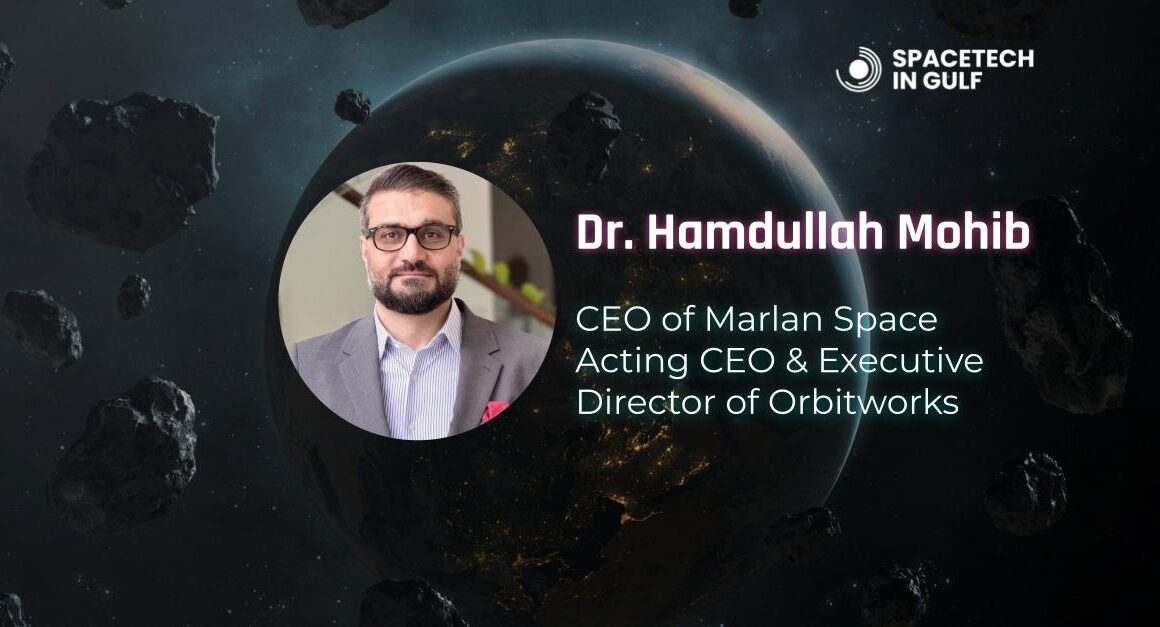

CEO of Marlan Space
Acting CEO & Executive Director of Orbitworks
Dr. Hamdullah Mohib is the CEO of Marlan Space, a startup in Abu Dhabi focused on developing the commercial space sector in the UAE. Before leading Marlan Space, Dr. Mohib held significant public service roles, including Afghan Ambassador to the United States and National Security Adviser to the President of Afghanistan. He started his government service as Deputy Chief of Staff to the President, where he was instrumental in shaping national policies.
Prior to his government service, Dr. Mohib held several technical roles, including serving as an Assistant Professor and Chief Technology Officer at the American University of Afghanistan and as an Analyst at Intel.
Dr. Mohib has a long-standing commitment to the Afghan community. While an undergraduate student, he founded the Afghan Students Association of the UK, which became the largest Afghan youth organization in Europe.
During his PhD studies, he established the Afghan Professionals Network (APN) and served as its Chairman. Through APN, he launched the think tank “Discourse Afghanistan” and initiated programs to support special needs orphans in Kabul and to highlight the achievements of Afghan women.
Dr. Mohib holds both a BEng and a PhD in Computer Systems Engineering from Brunel University. His dissertation was titled “End-to-End 3D Video Communications over Heterogeneous Networks.”
Dr. Mohib’s diverse background in diplomacy, technical expertise, and public service guides his work at Marlan Space, where he is dedicated to fostering innovation and collaboration in the space industry.

What inspired the creation of Orbitworks, and how does the joint venture between Marlan Space and Loft Orbital uniquely position you in the global satellite market?
Orbitworks was born out of the UAE’s vision to build sovereign space capabilities, and the need for rapid, simplified access to space infrastructure. By uniting Marlan Space’s regional strategic depth with Loft Orbital’s heritage in the Satellite-as-a-Service arena, we have created a unique platform: a UAE-based satellite integrator with global operational maturity and flight-proven technology—offering AI-enabled, multi-mission spacecraft ready to launch in under 18 months.
How does Orbitworks align with the UAE’s national priorities, such as the UAE Space Strategy 2030 or Operation 300bn?
Orbitworks directly supports Operation 300bn and the UAE Space Strategy 2030 by localizing satellite design, manufacturing, and AI-powered mission operations in Abu Dhabi. As a national strategic enabler, we complement the UAE’s industrial and defense ecosystems, deliver sovereign Earth observation infrastructure, and continue to strengthen the UAE’s position as a global hub for advanced, export-ready space technology.
Can you walk us through the technical specifications and AI capabilities of the Altair constellation?
Altair is a 10-satellite, AI-native Earth observation constellation launching from 2026. The constellation features multiple sensors – from optical to thermal and infrared – and couple these with onboard edge computing. It is designed to autonomously process and react to events on orbit, supporting use cases such as real-time ship detection, environmental monitoring, wildfire alerts, and border monitoring. Altair represents the convergence of software-defined missions and sovereign control.
What makes the Altair constellation stand out from other Earth observation systems currently in orbit?
Unlike traditional Earth observation systems, Altair is built around flexibility, artificial intelligence, and speed to orbit. Our standardized platform and integrated AI stack enable faster reaction times, dynamic tasking, and onboard data processing—providing actionable insights with minimal latency. Altair is not just another constellation—it is a sovereign, modular platform designed for next-generation missions.
What role does edge computing play onboard your satellites, and what types of real-time applications are you enabling for clients?
Edge computing allows our satellites to analyze, filter, and act on data before it reaches the ground—reducing latency and bandwidth requirements. This enables real-time capabilities such as automatic change detection, anomaly flagging for critical infrastructure, and onboard data fusion for intelligence missions. Customers can expect faster insights and mission autonomy, even in disconnected environments.
Orbitworks plans to build up to 50 satellites per year—what markets do you plan to serve with this production volume?
We are targeting a diverse mix of government and commercial markets: from UAE defense and civil sectors to international ministries of defense, African and Asian space agencies, and critical infrastructure clients in energy and sustainability. The goal is to serve both sovereign satellite buyers and customers seeking shared capacity or hosted payloads through our modular infrastructure.
What are the key geographic regions or industry sectors you’re targeting for satellite sales?
First and foremost, we are focused on serving the UAE and GCC ecosystems. In addition to this, we are having significant tractions in emerging markets in Africa and Asia, especially in geographies that are building long-term relations with the UAE. Sector-wise, our space infrastructure can be leveraged for a wide variety of customer missions. As a result, we can serve most sectors, from defense to energy, infrastructure, environmental monitoring, agriculture, and civil space. Our goal is to fast-track space programs without legacy burdens.
What types of clients are you engaging—government agencies, commercial operators, or research institutions—and how do their needs differ?
We serve a full spectrum. Ministries of Defense and national space agencies need sovereignty and security, commercial operators prioritize ensuring their return on investment and speed, while research institutions tend to focus on mission adaptability and access. Our flexible model—satellite-as-a-service—lets us meet each customer where they are.
Do you plan to offer hosted payload or “space-as-a-service” solutions, especially for emerging space nations or regional startups?
Absolutely. Satellite-as-a-Service is a central model for our mission, whether we are talking about a single hosted payload or the deployment of an entire, dedicated constellation. This allows startups, civil agencies, and emerging nations to access orbital infrastructure while lowering entry barriers and accelerating space capabilities.
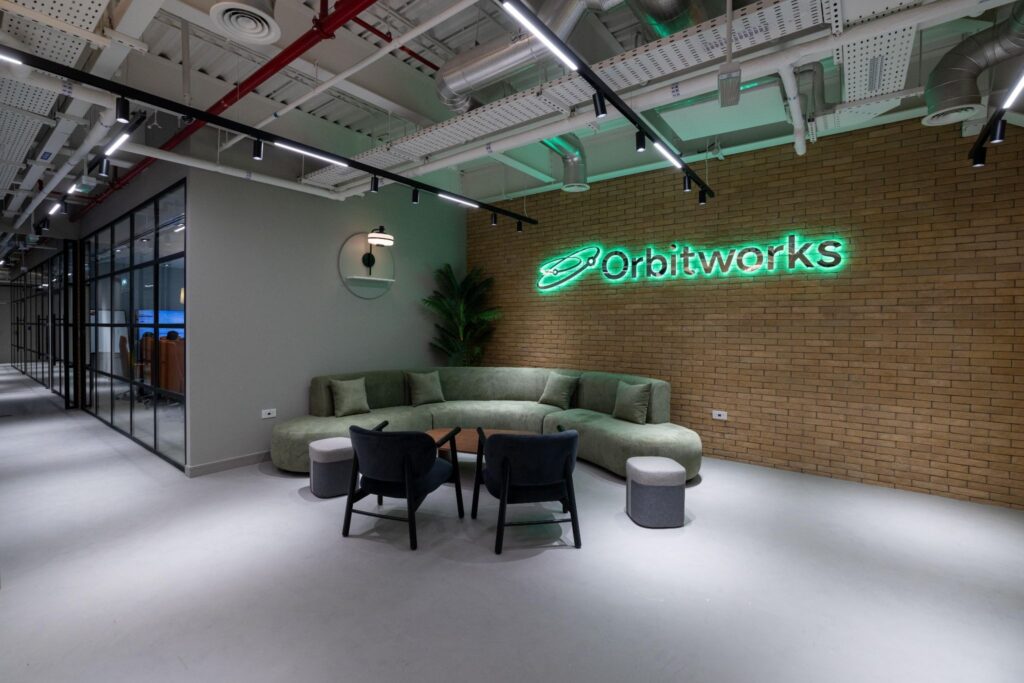
What are the biggest challenges you’ve encountered in establishing a commercial satellite production facility in the Middle East?
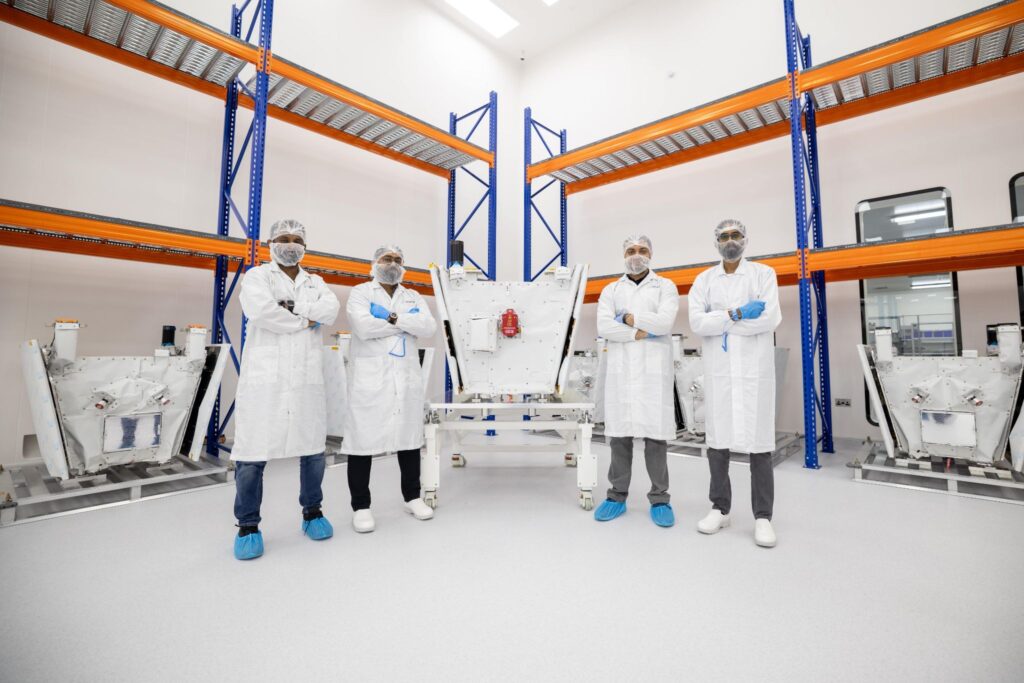
The primary challenge was integrating global standards with a fast-moving regulatory and industrial landscape. Fortunately, we found in the UAE an agile regulatory environment that allowed us to move quickly in partnership with institutions. By aligning closely with the UAE’s strategic goals and building a multinational, expert team, we are establishing our satellite production facility—built in under 12 months—that meets both sovereign and international expectations.
What is your approach to talent development and building a long-term space engineering capability in the UAE?
We are committed to becoming the magnet for space and aerospace talent in the region and beyond. That means blending local capacity-building with international recruitment, hands-on mentorship, and real flight programs—not just R&D. Our message is clear: If you want to build real space missions, come to Abu Dhabi.
Looking ahead 5–10 years, how do you see Orbitworks contributing to regional and global space infrastructure? Are there plans to expand beyond Earth observation?
In the next decade, Orbitworks will be a cornerstone of sovereign space capability across the region and a go-to global partner for rapid, scalable space infrastructure. Beyond Earth observation use cases, we are actively exploring communications, climate science, and other missions—always with a focus on agility, autonomy, and strategic enablement.
You can find more interviews and articles on the UAE space ecosystem in our latest magazine.