




Vice President of Geospatial
Solutions at Space42
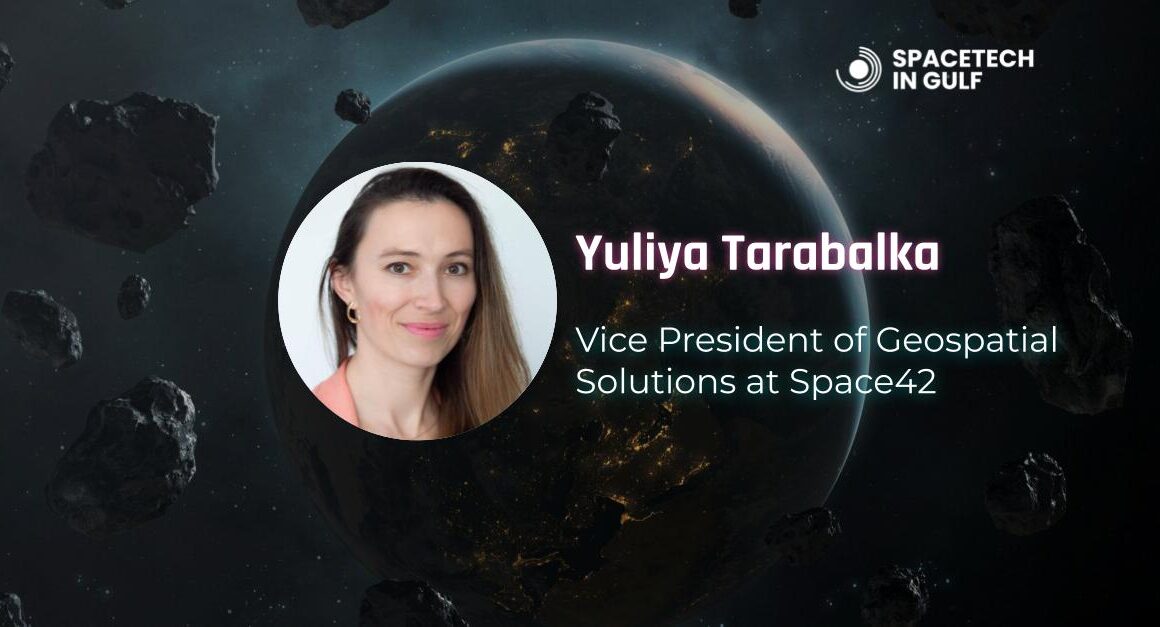
Yuliya Tarabalka is the Vice President of Geospatial Solutions at Space42, where she leads the development of cutting-edge geospatial intelligence platforms that are transforming decision-making across governments, industries, and humanitarian sectors.
She holds a European PhD from the Institut Polytechnique of Grenoble and the University of Iceland (2010), and an Habilitation to Direct Research (HdR) from the University Côte d’Azur (2017), focused on AI-driven classification of remote sensing imagery. Her research journey spans leading institutions including the Norwegian Defence Research Establishment (FFI), NASA, CNES, and Inria, where she pioneered AI tools for the reconstruction and update of the Digital Earth.
From 2019 to 2024, Yuliya served as Head of R&D at LuxCarta, spearheading the development of automated cartography solutions and the creation of a Digital Earth Twin. She has co-authored over 150 international scientific publications, cited more than 10,000 times, and is recognized globally for her contributions to geospatial AI.
At Space42, Yuliya is driving the vision behind platforms like gIQ, which received the Future Fit Seal Award in May 2025, and initiatives such as Map Africa, which are redefining how satellite data and AI can be used to build a smarter, safer, and more equitable future. Her leadership is also shaping the next generation of Emirati talent through programs like the Space Academy – Earth Observation Training, developed in partnership with the UAE Space Agency.
How do you see Space42’s geospatial solutions transforming decision-making for governments and businesses in the next five years? What is your vision for integrating AI with geospatial intelligence at Space42?
Geospatial intelligence is shifting from a support tool to a strategic asset. Space42 is driving this transformation by merging satellite imagery with AI-powered analytics to deliver real-time, decision-ready systems. Governments will use our platforms for urban planning, environmental monitoring, and national security. Businesses will gain a competitive edge through supply chain optimization, market intelligence, and precision asset management.
By integrating AI with geospatial data, we’re moving from static maps to dynamic systems that deliver live insights—enabling proactive planning, faster decisions, and smarter investments.
Our vision is global. Through initiatives like Map Africa, we’re expanding access to advanced geospatial capabilities across emerging markets.
Ultimately, our mission is to leverage space-based insights to enhance societies and economies. By making AI-powered geospatial intelligence widely accessible, Space42 is contributing to the development of a more informed, proactive, and resilient world.
How does Space42’s geospatial strategy align with the UAE’s National Space Strategy 2030 and AI Strategy 2031?
Space42’s strategy closely aligns with the UAE’s global ambitions to lead in both space innovation and artificial intelligence. We support the National Space Strategy 2030 by extending space-based capabilities to serve economic and societal goals.
Our AI platform, GIQ, advances the AI Strategy 2031 by enabling real-world applications across key sectors. By integrating satellite data with machine learning, our tools deliver actionable insights in agriculture, urban planning, and disaster response – priority areas for both strategies.
Beyond product development, we invest in the UAE’s AI ecosystem through proprietary algorithms, talent development, and academic partnerships. GIQ reflects the UAE’s vision as a scalable, AI-powered platform built for evolving national needs.
Space42 doesn’t just implement national strategies – we help shape them. By aligning innovation with national priorities, we’re advancing the UAE’s global leadership in space and AI.
What unique value proposition does Space42 bring to the global geospatial market compared to other leading players?
Space42 delivers intelligence, not just data. While others focus on data collection and conventional analytics, we offer end-to-end solutions that transform raw data into decision-ready insights through our AI-powered system, GIQ, which embeds machine learning into geospatial workflows.
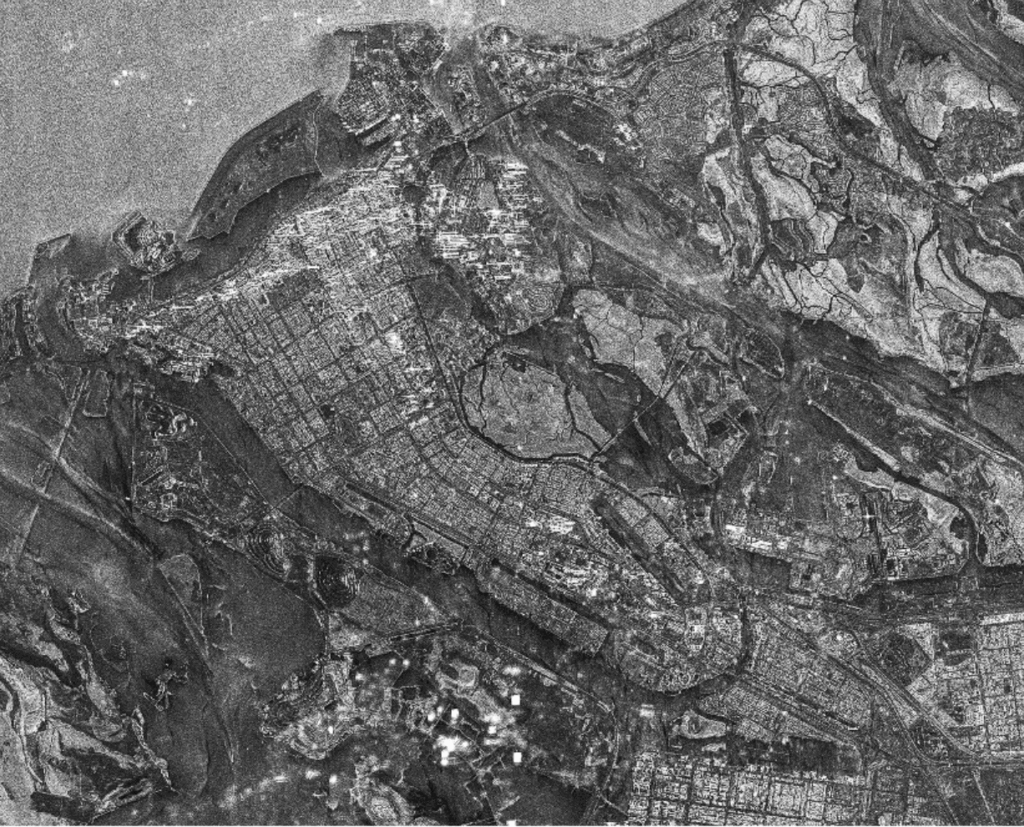
Our Foresight SAR constellation adds further value with high-resolution, all-weather imaging for time-sensitive missions like disaster response, infrastructure monitoring, and national security.
However, technical capability alone isn’t enough. Through initiatives like Map Africa, we expand access to geospatial intelligence, empowering governments and communities to drive sustainable development and climate resilience. By combining innovation with accessibility, Space42 stands out in a crowded market – delivering technological excellence, global relevance, and meaningful impact.
Can you tell us more about the “GIQ” platform and how it differentiates itself from traditional geospatial analytics tools?
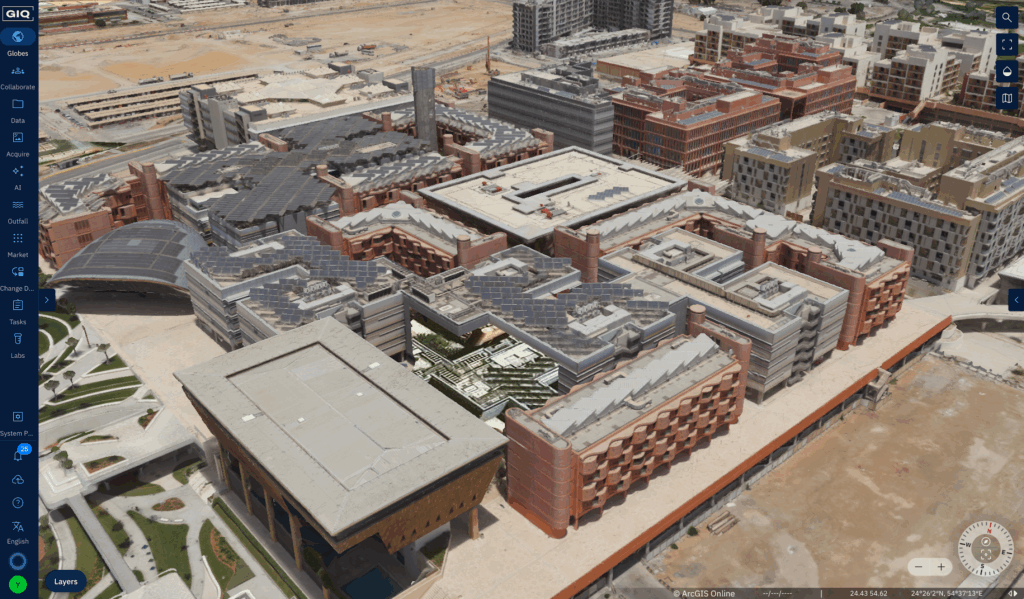
GIQ is Space42’s geospatial intelligence platform, designed to bridge satellite data and real-world decision-making. Unlike traditional tools that require specialized expertise, GIQ delivers automated, AI-powered insights that are intuitive, scalable, and ready for action.
It integrates multi-source imagery with advanced AI to detect patterns, forecast change, and trigger alerts across sectors like agriculture, urban planning, and environmental monitoring. Users can access live dashboards, run custom analytics, and receive real-time updates – no geospatial expertise needed.
GIQ’s modular, user-centric design adapts to diverse use cases, from policy planning to field operations. It integrates with external data feeds and APIs, with AI powering every layer – from smart data acquisition and analysis to visualization and reporting. The result is fast, accurate, context-specific intelligence.
More than a tool, GIQ is a strategic enabler for governments, businesses, and humanitarian organizations. In May 2025, it received the Future Fit Seal Award, recognizing its role as a next-generation force in geospatial intelligence.
With GIQ, Space42 makes geospatial intelligence faster, smarter, and accessible at scale.
What role does real-time Earth observation play in your current service offerings, and how do you plan to scale that?
Timely insights are central to Space42’s value proposition. In an era defined by rapid change, through satellite proliferation and AI breakthroughs, real-time insights are essential.
We partner with leading data providers for immediate access to fresh imagery. Our AI models process it in near real time, delivering actionable insights for disaster response, infrastructure monitoring, and environmental surveillance. To scale, we’re pursuing two strategies: investing in our own satellite constellation and accelerating AI systems.
Upcoming launches will enhance sovereign imagery capabilities, while ultra-efficient AI will reduce latency from capture to insight. The result: faster, more precise intelligence—empowering users to act confidently when timing matters most.
What are some emerging use cases where Space42’s geospatial solutions are already making an impact—and have the potential to transform sectors like disaster response, agriculture, or urban planning in the near future?
One of the most impactful emerging use cases is the Map Africa initiative. In partnership with Esri and Microsoft, we aim to deliver high-resolution, AI-powered base maps and analytics to support sustainable development, climate resilience, and infrastructure planning across Africa. Designed for adaptability, Map Africa is being developed to serve national governments, humanitarian agencies, and local communities – providing timely, actionable insights once operational.
Similar deployments are underway in the UAE and other regions, supporting disaster preparedness, smart city planning, and environmental surveillance. These examples show how geospatial intelligence can address real-world challenges.
Globally, the goal remains the same: turning satellite data into insights that drive action.
What types of partnerships is Space42 looking for to expand its geospatial capabilities – for example, local governments, research institutions, or startups?
Partnerships are central to Space42’s mission. Collaboration is key to scaling capabilities, accelerating innovation, and delivering globally relevant solutions.
Globally, we work with leading tech partners like Microsoft and Esri to enhance cloud scalability, analytics, and integration. Locally, we collaborate with government entities to align our tools with national priorities. Our public-private partnership with the UAE Space Agency (UAESA) is a prime example, instrumental in shaping the GIQ platform to deliver real value to public sector stakeholders.
We also engage with startups that bring fresh ideas and domain-specific innovations, expanding GIQ’s capabilities and accelerating its evolution. In parallel, our work with research institutions drives deeper innovation across AI, Earth observation, and planetary-scale analytics.
Together, these partnerships form a dynamic ecosystem powering Space42’s mission to deliver intelligent, inclusive, and future-ready geospatial solutions.
How is Space42 investing in developing local Emirati talent in geospatial and Earth observation?
Developing Emirati talent is a strategic priority for Space42. Beyond recruitment, our focus is on building a strong pipeline of future space leaders.
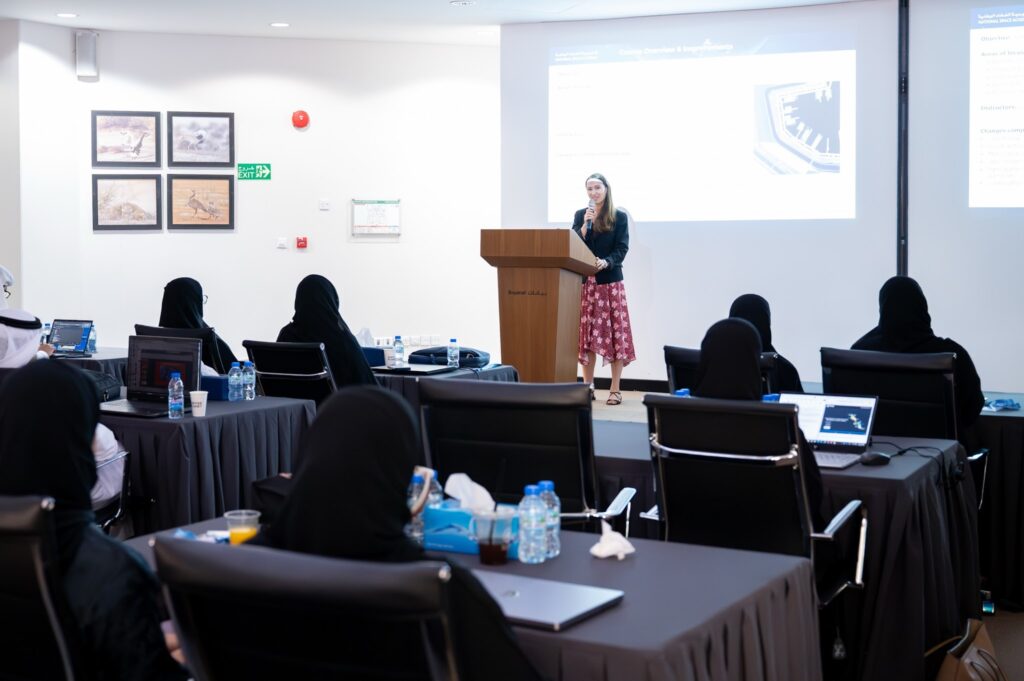
In partnership with the UAESA, we have co-developed and delivered two successful cohorts of the Space Academy – Earth Observation Applications Training Program. This ten-week initiative equips Emirati professionals and graduates with hands-on experience in remote sensing, AI, and geospatial analytics. The curriculum blends lectures, workshops, and real-world applications to introduce participants to the practical convergence of space data and intelligent systems. Over 70% of the first cohort have already transitioned into roles within the UAE’s growing space sector.
We see this initiative not just as technical training, but as a launchpad for the next generation of UAE space innovators – engineers, scientists, and analysts who will lead national projects and shape the future of geospatial intelligence.
If we look ahead 10 years, what impact do you hope Space42’s geospatial solutions will have had on the region and the world?
Over the next decade, we aim for Space42’s geospatial intelligence to become a foundational tool for global resilience, sustainability, and innovation. We envision a world where satellite data and AI-powered insights are embedded in everyday decision-making across governments, industries, and communities.
Our solutions will support smart cities, climate adaptation, and national security through real-time, predictive intelligence. Initiatives like Map Africa will scale, helping nations build infrastructure, manage resources, and respond to environmental challenges with speed and precision. We also aspire to cultivate the next generation of geospatial leaders. By investing in talent and fostering innovation, we’re building an ecosystem for sustained impact.
Ultimately, our success will be measured by how effectively we apply space-based intelligence to enable faster responses, better planning, and a more sustainable future. As former UN Secretary-General Ban Ki-moon said, “We are the first generation that can end poverty, and the last that can end climate change.” At Space42, we’ve embraced that challenge – transforming vision into action through smarter, faster, and inclusive geospatial solutions.
You can find more interviews and articles on the UAE space ecosystem in our latest magazine.