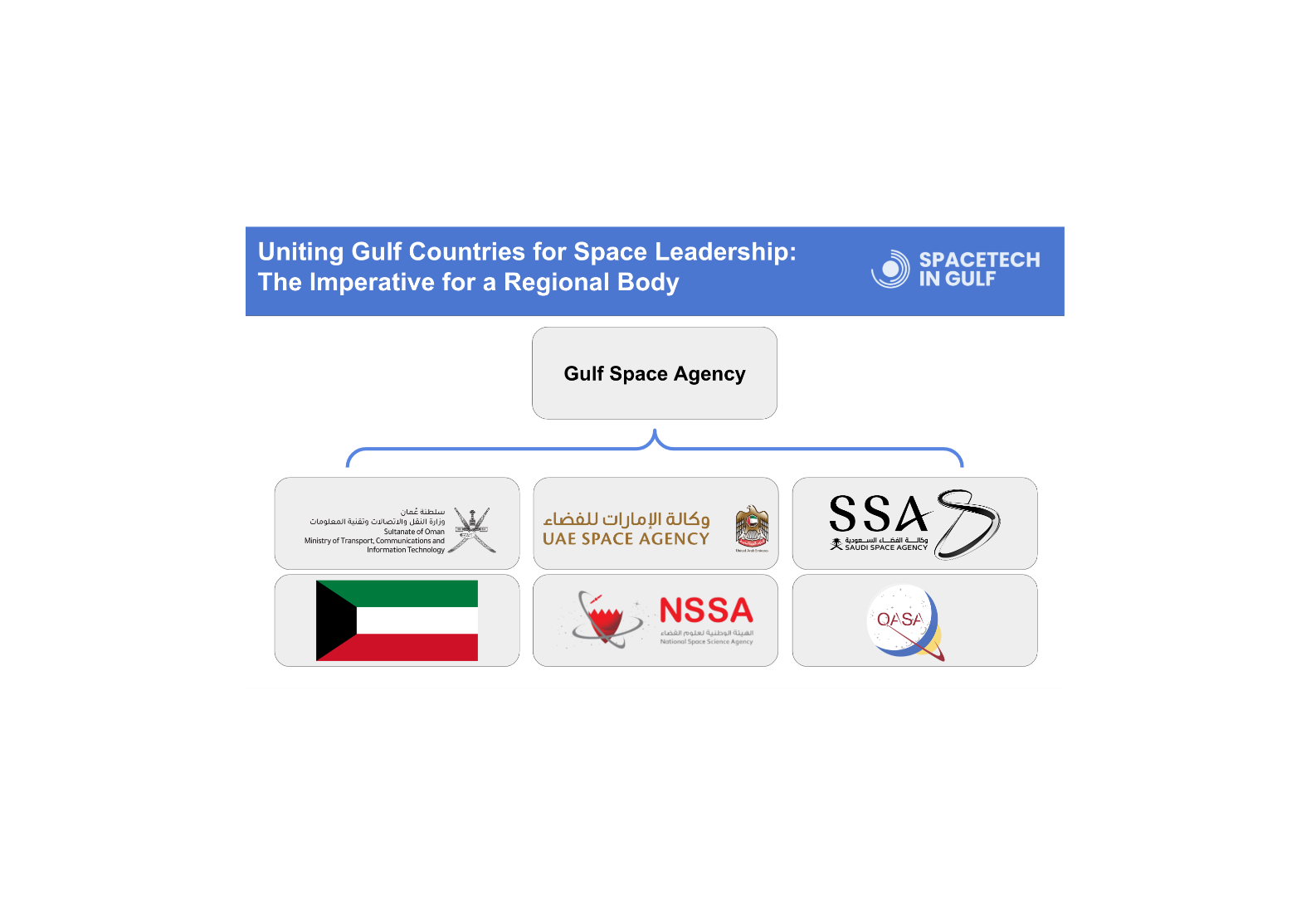


In 2025, the GCC countries reached a pivotal moment in their journey into space, transforming ambition into tangible achievements. What began as pioneering, nationally driven initiatives matured into a region-wide strategic posture, with each GCC member state contributing a distinct chapter to a shared narrative of sovereign space capability. Space is no longer pursued as a symbol of prestige alone; it has become a core pillar of national power, where commercial logic, technological autonomy, data sovereignty, and infrastructural independence converge into strategic advantage.
This transformation did not begin with a rocket launch, but with boardroom decisions and institutional design.
Saudi Arabia’s Strategic Geospatial Push
In 2025, Saudi Arabia positioned itself as a linchpin of regional space capability, transitioning from aspiration to actionable leadership in sovereign geospatial intelligence and data infrastructure. At the center of this evolution is Neo Space Group (NSG), the national space company wholly owned by the Public Investment Fund (PIF), tasked with anchoring the Kingdom’s space sector within the broader goals of Vision 2030. In a defining move, NSG completed its acquisition of UP42, a leading cloud-native Earth observation (EO) and geospatial analytics platform formerly part of Airbus Defence and Space. This acquisition instantly brought world-class geospatial infrastructure under Saudi sovereign control and signaled a deliberate strategic shift toward data-centric space capability.
By August 2025, NSG had launched Saudi Arabia’s first Earth Observation Marketplace, powered by UP42, providing streamlined access to high-resolution satellite imagery and advanced analytics for government, industry, and international users. Hosted on secure national infrastructure, the platform supports sectors ranging from infrastructure development and resource monitoring to agriculture and environmental resilience.
The main event of 2025 in Saudi Arabia was the SpaceUp Competition, organised by the Communications, Space and Technology Commission (CST), the Saudi Space Agency, and Neo Space Group, brought together global and local startups across six challenge tracks focused on applying space technologies to real‑world problems in sectors like environment, infrastructure, and urban planning. Offering around USD 28 million in contractual opportunities and direct engagement with end users, the competition aimed to accelerate the adoption of space solutions and support localisation of technology development.
Saudi Arabia also introduced a Space Technologies Track as part of the Entrepreneurship World Cup 2025, one of the world’s largest startup competitions, attracting thousands of global applicants. Four startups received awards for innovations in crowd management, smart construction, public safety, and mining, further expanding the Kingdom’s role in global space entrepreneurship.
Building on this digital foundation, NSG unveiled NeoMaps, a fully national geospatial intelligence platform developed, hosted, and operated by Saudi talent. NeoMaps provides a unified gateway for exploring, visualizing, and analyzing diverse satellite data streams, significantly strengthening digital sovereignty and strategic decision support across security, economic planning, and resource management.
Together, these advancements reflect a broader strategic doctrine: sovereignty in space is increasingly defined by digital infrastructure, analytical capability, and secure national platforms that deliver operational insights across civil and defence domains.
The UAE’s Multi-Pillar Space Agenda
In 2025, the UAE’s trajectory was defined by large-scale capability building, deep-space science, sovereign technology development, and international partnerships.
A key partner in this ambition has been the Technology Innovation Institute (TII), the applied research arm of Abu Dhabi’s Advanced Technology Research Council. TII’s Earth Observation team exemplifies the UAE’s multidisciplinary approach to space science and technological innovation. By combining expertise in remote sensing, photonics, artificial intelligence, and geospatial analytics, TII has built sophisticated end-to-end pipelines that integrate satellite imagery from optical, multispectral, SAR, LiDAR, and other sensors into unified analytical frameworks. These systems support critical national and international projects, empowering stakeholders with timely, accurate, and decision-ready data across domains ranging from environmental monitoring to infrastructure stability.
TII’s work impacts how Earth is observed and understood at scale. Its pipelines ingest diverse sensor data—optical imagery for surface mapping, SAR for all-weather insight, and LiDAR for high-resolution topography—transforming raw inputs into fused geospatial intelligence that supports national planning, hazard response, and strategic situational awareness.
In parallel, the UAE Space Agency launched the next generation of the GIQ Analytics Platform in October 2025. Designed to fuse data from more than 300 satellites worldwide, GIQ enables users to task, retrieve, and analyze imagery with machine efficiency—supporting applications from environmental management to infrastructure monitoring and strategic situational awareness. GIQ’s integration with space data sources and AI tools reflects the UAE’s approach to democratizing access to high-value geospatial intelligence.
In Earth observation operations, UAE space strategy also includes indigenous satellite capabilities. Space42, the UAE-based AI-powered SpaceTech company formed through the merger of Bayanat and Yahsat, continued to expand its Foresight EO Constellation, including multiple Synthetic Aperture Radar (SAR) satellites that provide persistent, all-weather imaging for climate monitoring, emergency response, and national security. For this reason HURAYA 4 was launched in January 2025. Space42 also leads international partnership initiatives. Notably, it joined with Esri and Microsoft to launch the Map Africa Initiative, a five-year program to develop accurate and accessible base maps for all 54 African countries. In this collaboration, Space42 provides satellite imagery and geospatial expertise, Esri contributes GIS workflows and GeoAI tools, and Microsoft supplies scalable cloud infrastructure.
Together, this initiative aims to strengthen geospatial capacity across Africa, underlining how GCC space actors are extending their impact into global development and governance infrastructure.
On the exploration front, the UAE’s lunar ambitions progressed from planning to rigorous engineering validation. The Rashid 2 rover, destined for the Moon’s far side in 2026, completed environmental testing replicating the vacuum, temperature cycles, and radiation exposure of deep space. These tests, critical for mission success, demonstrate how the UAE has built systems engineering expertise with crossover relevance to defence applications requiring autonomous and ruggedized platforms.
Simultaneously, the Emirates Asteroid Belt Mission passed its final design review for a multi-target deep-space expedition, reflecting the UAE’s long-term commitment to scientific discovery and advanced propulsion technologies. Both missions underscore the UAE’s transition from regional contributor to a globally ambitious actor in exploration science.
Perhaps the most strategically consequential development of 2025 was the UAE’s embedded role within the NASA-led Lunar Gateway program. Through a deepened partnership with Thales Alenia Space, the Emirates secured responsibility for developing and operating the Crew and Science Airlock, ensuring Emirati engineers remain integral to sustained operations at humanity’s first permanent lunar orbital outpost. This multi-decade engagement embeds the UAE within critical architecture shaping future exploration and international space governance.
Reinforcing these ambitions was a surge in human capital development. The National Space Academy, in partnership with the EDGE Group, expanded programmes that moved students from classroom theory directly into subsystem design, testing, and mission operations, building a sustainable pipeline of engineers crucial for long-term sovereign capability.
Operationally, the UAE consolidated its orbital presence with the launch of four major satellites in 2025: the THURAYA 4 mobile communications platform; MBZ-SAT, an advanced optical Earth imager; ETIHAD-SAT, an all-weather radar satellite; and the pan-Arab hyperspectral mission ARAB SATELLITE 813, each reinforcing connectivity, EO, ISR coverage, and cooperative data-sharing across the Middle East and beyond.
Oman’s Infrastructure-First Approach
Oman, meanwhile, pursued a partnership-driven path to space sovereignty in 2025 with the signing of a definitive agreement for OmanSat-1, developed with Airbus. As the Sultanate’s first dedicated telecommunications satellite, OmanSat-1 represents a strategic step toward sovereign control over vital communications infrastructure for government, commercial, and maritime operations—strengthening national resilience in an increasingly contested spectrum environment.
One of Oman’s key achievements in 2025 was the Space Accelerator program, led by Ankaa Space and supported by the Ministry of Transport, Communications and Information Technology. The initiative guided 10 startups through an intensive 15-week mentorship and training program, providing both technical and commercial expertise from local and international specialists to accelerate the development and deployment of innovative space solutions.
Bahrain’s Craftsmanship and Institutional Maturation
Bahrain authored a story of disciplined craftsmanship and capability realization with the successful launch of Al Munther, the Kingdom’s first fully domestically built satellite. Designed and engineered by Bahraini scientists, and equipped with AI-enabled imaging systems, the mission showcased that even smaller GCC states could achieve technological self-reliance through focused investment in human capital and institutional development.
BSA also celebrated its first hosted payload, Aman, deployed through the UNOOSA/MBRSC Payload Hosting Initiative, marking Bahrain’s entry into international collaborative space operations. Contributions to Satellite-813 and lunar exploration missions further expanded Bahrain’s upstream footprint, demonstrating growing technical maturity and ambition.
2025 also saw the inauguration of Bahrain’s national ground station, securing sovereign command, telemetry, and control (TT&C) capabilities for AlMunther and future LEO missions. Meanwhile, R&D and capacity-building programs strengthened the domestic talent pipeline, mentoring students and young professionals in geospatial analytics, AI, and satellite systems engineering. BSA’s global engagement included leadership roles in the IAF, COPUOS, and ASCG, and participation in 50+ international forums, positioning Bahrain as an emerging regional and international space actor.
Qatar and Es’hailSat’s Strategic Continuity
In neighboring Qatar, space strategy has prioritized operational resilience and communications sovereignty. A leading force in this ecosystem, Es’hailSat, the Qatar Telecommunication Company, has built a fleet of communications satellites (Es’hail-1 and Es’hail-2) that ensure secure broadcasting, government connectivity, and regional digital infrastructure, reinforcing the nation’s strategic autonomy in space-based services. With services that extend direct-to-home television and high-capacity data links, Es’hailSat’s operational focus underscores the strategic value of dependable space infrastructure in supporting national security communications, emergency response, and digitally enabled economies.
Conclusions
Taken together, the developments of 2025 reveal a clear and unified trajectory: the GCC is no longer a peripheral participant in the global space domain—it is an active architect of its future. From Saudi Arabia’s data-centric sovereign platforms to Bahrain’s engineering achievement; from the UAE’s multi-layered space strategy and international partnerships to Qatar’s communications resilience and Oman’s infrastructure-focused collaborations, each nation is pursuing a distinct yet complementary path.
These predictions suggest that GCC nations must continue investing in human capital, sovereign data infrastructure, and cross-border regulatory frameworks to maximize strategic returns. Defence and economic planners should anticipate an environment where space-derived intelligence becomes integral to national security, disaster response, and economic planning, and where regional collaboration will define resilience against global technological disruptions.
In short, space is no longer an aspirational frontier for the GCC—it has become a strategic domain of power, collaboration, and global influence. By 2030, the Gulf’s constellation of satellites, analytics platforms, and exploration initiatives will not only underpin national sovereignty but also reshape the region’s role in the global space order.

Alex Cresniov
CEO of SpaceTech in Gulf
Alex Cresniov is a serial entrepreneur, investor, and socio-economic expert who has spent over a decade at the forefront of the Middle East’s deep-tech landscape. As the Co-Founder and CEO of SpaceTech in Gulf, Alex is a leading figure in driving the commercial penetration and global visibility of space companies within the GCC. His work focuses on transforming the region from a consumer of space technology into a global hub for orbital innovation and investment.His ability to bridge the gap between complex technical capabilities and practical, actionable business plans has made him a trusted advisor for leadership teams navigating the rapidly evolving “New Space” era.