


The Technology Innovation Institute (TII), the applied research arm of Advanced Technology Research Council (ATRC), has successfully launched the UAE’s first domestically developed hybrid sounding rocket, propelling the nation into a new era of sovereign space capability.
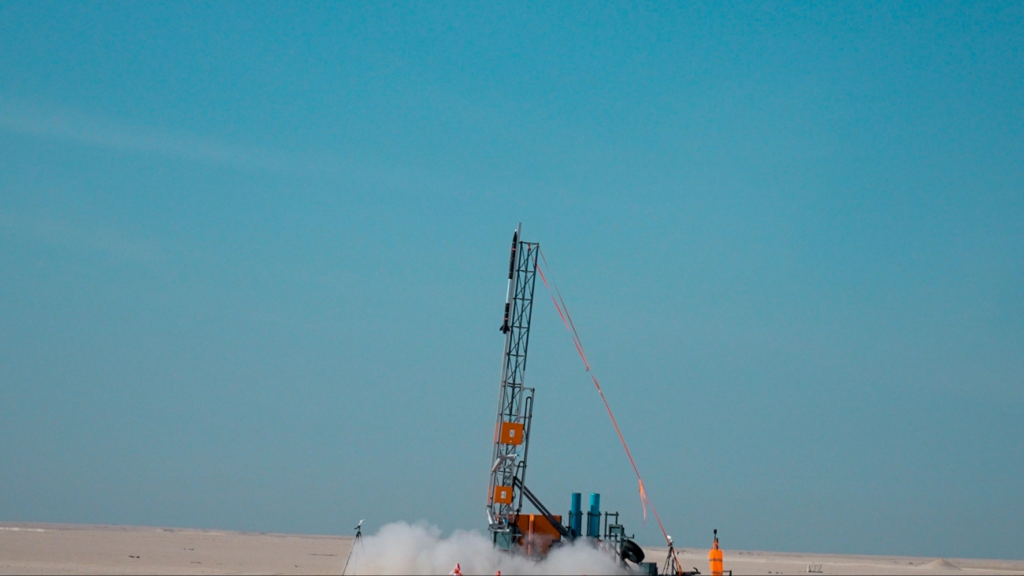
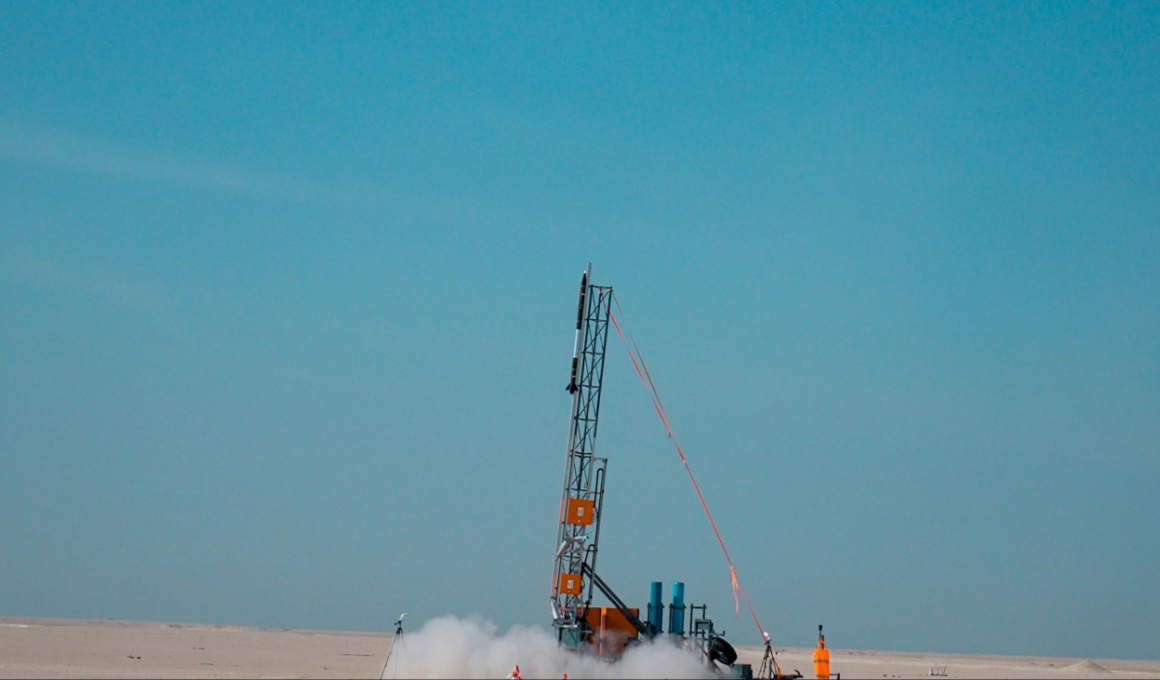
The rocket lifted off at 12:21 PM on February 13, reaching an altitude of 3 kilometers above the UAE desert before safely descending for recovery. The mission marked the country’s first successful flight of a fully UAE-designed, tested, and operated hybrid propulsion system.
A Defining Moment for UAE Space Ambitions
Dr. Najwa Aaraj, CEO of TII, described the launch as a turning point for the nation’s scientific and engineering ecosystem.
“This launch is a defining moment for science and engineering in the UAE. It demonstrates that we can lead in the development of breakthrough technologies, not only in labs, but in real-world, high-stakes environments. This is the first step in building a national launch capability powered by UAE talent and ambition.”
The successful flight validated the rocket’s propulsion system, control architecture, and structural integrity under real operational conditions, completing a comprehensive development and testing program led entirely within the UAE.
Inside the UAE’s First Hybrid Rocket Engine
At the core of the mission was a hybrid propulsion system using nitrous oxide (N₂O) as the oxidizer and high-density polyethylene as the solid fuel. This combination blends the simplicity of solid propulsion with the controllability of liquid engines.
Hybrid systems are considered safer, more cost-effective, and environmentally responsible compared to traditional propulsion technologies. TII’s self-pressurizing design removes the need for complex ground infrastructure or cryogenic handling, enhancing both safety and operational efficiency.
The engine — including its injectors, tanks, avionics, and control systems — was fully designed, built, and tested in the UAE. Prior to flight, it underwent an extensive series of cold-flow and hot-fire static trials to ensure performance reliability.
The rocket structure was manufactured using advanced composite techniques common in modern aerospace programs. Carbon-fiber materials were used for the main body and fins to withstand intense aerodynamic forces, while a glass-fiber composite nosecone allowed radio and navigation signals to pass without interference. These methods minimized material waste while ensuring structural strength and flight stability.
Dr. Elias Tsoutsanis, Chief Researcher at TII’s Propulsion and Space Research Centre, emphasized the long-term significance of the achievement:
“This achievement is the result of years of disciplined research, engineering, and iteration, all driven by the ambition to move from theoretical models to practical, flight-tested technology. That capability is the foundation for everything that follows – higher altitudes, heavier payloads,
and more complex missions, all from the UAE.”
Building the Foundation for Sovereign Launch Capability
Sounding rockets of this class are typically used to validate propulsion, avionics, structural, and recovery technologies before scaling to more complex systems. This mission successfully demonstrated end-to-end lifecycle management — from propulsion development and systems integration to countdown, lift-off, and recovery — all led by UAE-based teams.
The flight establishes a technical baseline for future suborbital systems, high-altitude research missions, and advanced aerospace programs. TII’s roadmap includes scaling up to larger motors, more sophisticated flight architectures, and higher-altitude launches, supported by a growing national ecosystem of infrastructure and engineering talent.
With this milestone, the UAE strengthens its position as an emerging regional leader in aerospace R&D and sovereign launch systems, reinforcing its ambition to develop fully independent space capabilities powered by homegrown innovation.