



Shaping the Future of Space: The UAE Space Agency’s 2025 Achievements and 2026 Vision
In 2025, the UAE Space Agency reinforced its position as a leading space actor in the region through a series of remarkable achievements that spanned Earth observation, deep-space exploration, and global engagement. These accomplishments reflected the maturity of the UAE’s national space ecosystem and its commitment to fostering regional and international collaboration.
One of the defining achievements of 2025 for the UAE’s rapidly advancing space sector was the successful launch of several satellites, including Thuraya-4, MBZ-SAT, Al Ain Sat-1, and HCT-SAT1, significantly strengthening the nation’s communications and Earth-observation capabilities. On the regional front, the launch of Arab Satellite 813 in December 2025 was a particularly historic milestone, symbolising regional cooperation and providing a platform to cultivate Arab talent in space science while promoting joint contributions in Earth observation.
As a strategic partner of the 19th Dubai Airshow, the UAE Space Agency unveiled the event’s largest-ever Space Pavilion, underscoring the nation’s growing leadership in space. Over two days, a dedicated Space Conference offered insightful panel discussions, interviews, workshops, presentations, and networking sessions. The exhibition also served as a platform for the UAE Space Agency to sign strategic agreements with both national and international entities, strengthening partnerships and cementing the UAE’s role as a hub for space innovation.
Continuing to push the boundaries of space science, the Emirates Mars Mission (Hope Probe) delivered remarkable results, producing valuable scientific data and advancing the nation’s deep-space aspirations.

In 2025, the probe remained fully operational in orbit around Mars, generating up to 9 terabytes of data thus far. This data was shared in 16 releases with over 200 research institutions worldwide, contributing to global studies of Martian atmospheric dynamics, seasonal variations, and climate processes, and underscoring the UAE’s growing role in international planetary science.
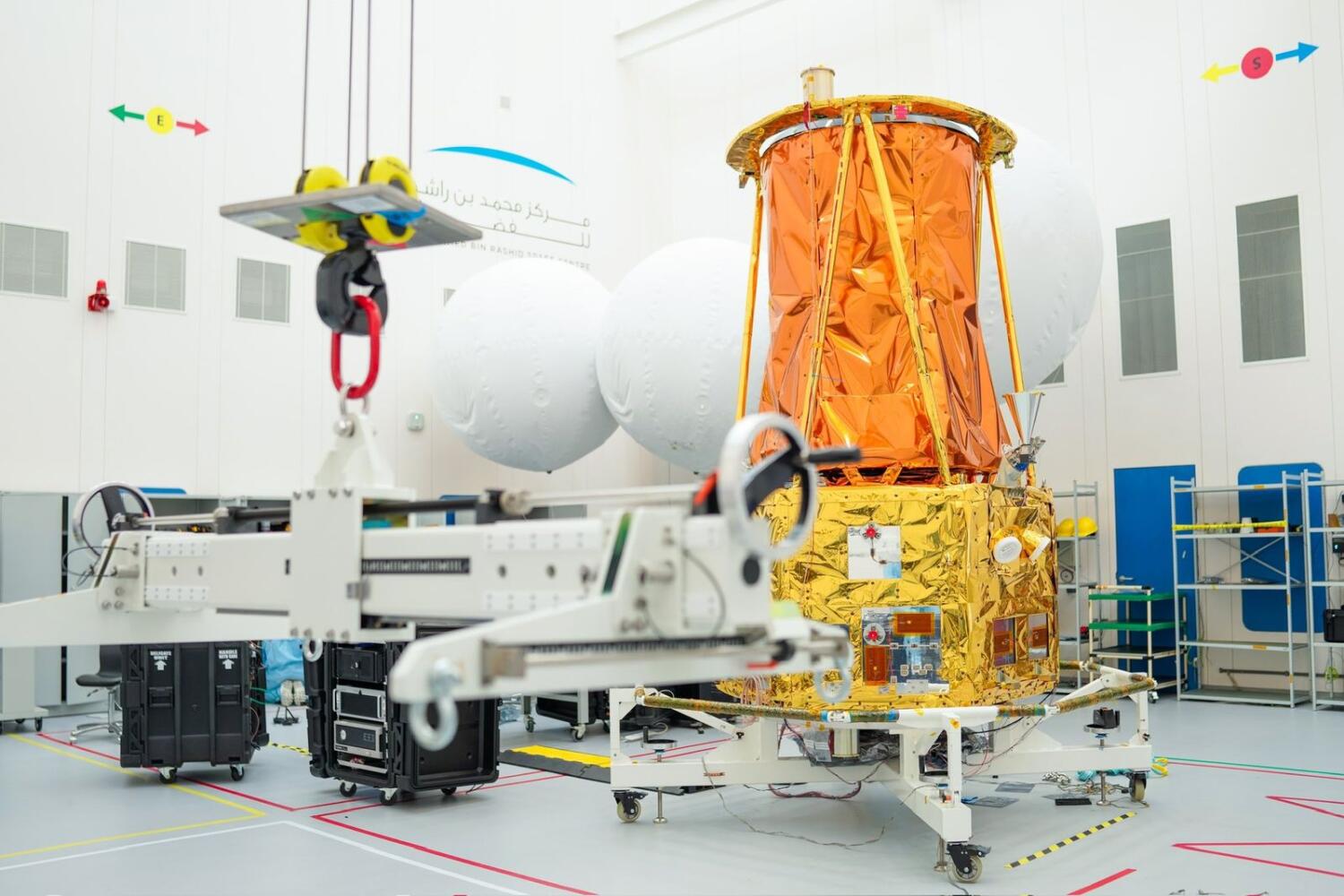
The Emirates Mission to the Asteroid Belt (EMA) marked a significant leap forward in the UAE’s deep-space ambitions, successfully completing the Critical Design Review of the MBR Explorer spacecraft. Conducted with the participation of Emirati and international experts, the review confirmed the mission’s readiness to move into the Assembly, Integration, and Testing (AI&T) phase, where conceptual designs will be transformed into flight-ready hardware. The mission also hosted the Planet X Challenge during the Dubai Airshow, inspiring youth and startups in STEM to engage directly with the EMA and explore new opportunities in space innovation.

Recognising that human capital is a fundamental pillar of a sustainable space programme, the UAE has invested significantly in developing national talent. In 2023, the National Space Academy proudly graduated 77 participants from the first and second phases of its Space Exploration Program. These graduates now play vital roles across various agencies, contributing to national space missions and advancing the UAE’s space ambitions. In 2025, the Academy expanded with its second and third cohorts. Through collaborations with leading industry players like Space42 and EDGE Group’s subsidiary, Fada, the Academy provides top-tier education and hands-on training to young Emiratis.
In 2025, the UAE Space Agency further strengthened its international leadership.

During the UN Fourth Committee meetings, the Agency reaffirmed the UAE’s commitment to the peaceful and responsible use of outer space and highlighted the nation’s proposal to establish an International Expert Group on Space Situational Awareness, approved during the 68th session of COPUOS. Representing the UAE at the First Committee on the Control of Disarmament in Outer Space, the UAE Space Agency emphasised the importance of responsible behaviour in space to ensure its sustainability and safety for future generations. The Agency also highlighted the peaceful use of outer space as a key driver of scientific advancement, sustainable development, and global security.
The UAE’s international presence was further amplified at the 76th International Astronautical Congress in Sydney, where the UAE Space Pavilion brought together leading space entities. The pavilion showcased pioneering projects and innovative initiatives, reinforcing the UAE’s position as a global leader in space exploration. During IAC, the UAE Space Agency co-chaired the Artemis Accords annual meeting alongside NASA and the Australian Space Agency, presenting outcomes from the historic Abu Dhabi Workshop and exploring new collaborations to tackle challenges such as space debris management.
Looking ahead, 2026 is set to be a transformative year for the UAE Space Agency. The Sirb programme, a constellation of three advanced synthetic aperture radar (SAR) satellites, is poised to complete its Critical Design Review—a crucial milestone that will signal the next stage of development, including assembly and integration. Meanwhile, the Emirates Mission to the Asteroid Belt (EMA) will enter its Assembly, Integration, and Testing (AI&T) phase, transitioning from conceptual designs to the construction and rigorous testing of the spacecraft and its instruments, a vital step on the path to its planned 2028 launch.
At the same time, Arab Satellite 813 will move from orbit into full operational use, as the UAE activates its data utilisation across the Arab Space Cooperation Group (ASCG). This step will establish the necessary frameworks, systems, and collaborative processes to enable Arab countries and institutions to harness the satellite’s Earth-observation data for research, policymaking, and sustainable development initiatives. The National Space Academy will continue to nurture the next generation of Emirati space professionals, offering cohorts in Space Applications and Space Mission and Satellite Engineering, alongside a new course scheduled to be announced in the second quarter of 2026.

Public engagement and global dialogue will also feature prominently, with preparations underway for the Abu Dhabi Space Debate (ADSD) 2026, aimed at addressing pressing challenges facing space policymakers and promoting responsible space activities.
The UAE Space Agency will continue to implement its new strategic approach for the space sector, focusing on positioning the UAE as a hub for an agile, investment-friendly space ecosystem, establishing global leadership in partnerships and market access, and providing competitive space infrastructure and facilities. This strategy reaffirms the UAE’s commitment to developing an advanced space ecosystem built on robust infrastructure and effective collaboration with the private sector. The active participation of companies in national projects reflects confidence in the country’s economic and legislative environment and demonstrates the UAE’s ability to cultivate a space sector that drives development and diversifies the economy. By aiming to double the returns of the space economy, the new strategy sets a clear path to position the UAE among the world’s top 10 space economies by 2031.
Together, the achievements of 2025 and the ambitious plans for 2026 highlight a UAE space ecosystem that is collaborative, visionary, and strategically positioned to shape the future of space exploration regionally and globally.