



2025 stands as a pivotal year in Bahrain’s space journey, marked by sovereign achievements in space segment development, impactful downstream applications, and strengthened international leadership. From AlMunther’s successful deployment, to Bahrain’s inaugural hosted payload (Aman) and contributions to Satellite-813 and lunar exploration, BSA expanded its upstream footprint while delivering 25+ EO-driven solutions across climate, urban, and resource sectors. The inauguration of the national ground station solidified infrastructure independence, while robust R&D output, capacity-building programs, and high-level global representation underscored Bahrain’s rising influence. Looking ahead, 2026 will build on this momentum – scaling outreach, deepening technical expertise, enhancing data infrastructure, and advancing collaborative missions in sustainability, security, and lunar science. Through integrated upstream-downstream strategies and sustained investment in human capital, BSA is positioning Bahrain not just as a regional space actor, but as a responsible, innovation-driven contributor to the global space ecosystem, aligned with national priorities and the UN’s Sustainable Development Goals.

The Bahrain Space Agency (BSA), formerly the National Space Science Agency (NSSA), was established by Royal Decree in 2014 as the national authority mandated to lead, coordinate, and advance Bahrain’s space activities. The following outlines key space-related initiatives and milestones for 2025:
Space Segment
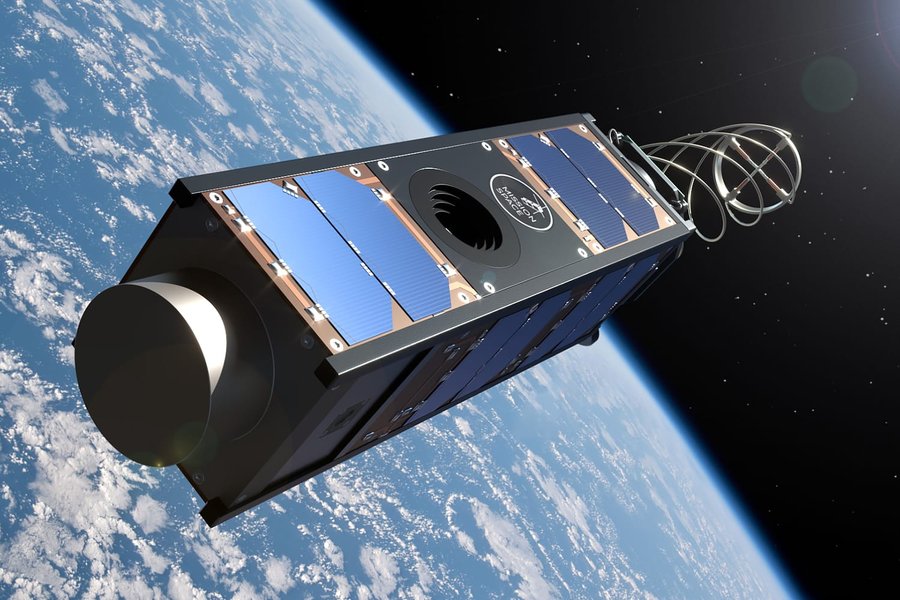
- AlMunther Nanosatellite (Mar 2025): Bahrain’s first satellite with nationally developed payloads and onboard AI for real-time image processing—successfully launched, operated, and celebrated nationally. The mission advances Earth Observation (EO) objectives aligned with Bahrain’s Sustainable Development Goals (SDGs).
- Satellite-813: BSA contributed technically to this landmark Arab joint EO mission (launched late 2025), supporting environmental and resource monitoring.
- Aman Payload (Q4 2025): Deployed via UNOOSA/MBRSC’s Payload Hosting Initiative—Bahrain’s first hosted payload, featuring advanced space cybersecurity.
- AI Cloud-Masking Algorithm (Q3 2025): Validated in orbit via rideshare program—BSA’s first flight-proven AI model, enhancing EO data quality and efficiency.
- CO₂SAT Engineering Model (Q1 2025): Completed with UK partners; targets high-resolution CO₂ emission monitoring for climate action.
- Lunar Payload Development: Advanced Bahrain’s first lunar navigation camera suite (for rover deployment) and co-developed an AI-enabled hyperspectral imager with EgSA for lunar water/ice detection onboard a lunar orbiter.
Earth Observation (EO) Applications:

Delivered 25+ EO solutions across 8 sectors including climate, urban planning, water, agriculture, security for 32+ national stakeholders—using AI/ML, GIS, and multi-source data. Key studies: air quality, urban heat islands, mangrove carbon mapping, marine monitoring, solar irradiance analysis, and health impact assessments.
Also, BSA was active in UNOOSA Space4Water, leading projects on groundwater recharge (with Brazil) and hydrocarbon contamination mapping (with Nigeria). National EO Capacity Building: Mentoring university and high school students by presenting them with real-world challenges and equipping them with the practical skills needed to address thems. This initiative effectively connects their knowledge in geospatial analysis and remote sensing with their respective fields of study.
Infrastructure & Operations:
Inaugurated BSA’s first national ground station—enabling sovereign TT&C and data downlink for AlMunther and future LEO missions.
Strengthening Scientific Output through Structured Research Governance:
- Advanced talent pipeline via PhD/MSc sponsorships, international training, and internships.a
- Published 23 peer-reviewed papers (30.4% international co-authorship); established internal Research Publications Committee.
- Executed 70+ outreach initiatives: hackathons, competitions, space camps, school visits, and workshops (e.g., Space Medicine with ESA, ISESCO, AGU).
Global Engagement & Leadership
Signed MOUs with JAXA and ASI; maintains membership in 7+ international bodies (UNOOSA, IAF, COPUOS, ASCG, etc.). Held leadership roles:
- IAF Vice President (2024–2027)
- COPUOS Second Vice-Chair (2025)
- Chaired ASCG Strategic Planning Committee (2025–2026)
Represented Bahrain at 50+ forums, including IAC 2025 (Sydney); submitted bid to host IAC 2028. Mentored young professionals (IAF IPMC, SGAC); contributed to WEF space governance foresight tools.
2026 Space Activities
In alignment with the BSA Strategic Plan (2024–2028) and national and global space priorities, the following outlines BSA’s planned space activities for 2026. These initiatives are designed to strengthen national space capabilities, advance research and innovation, enhance public engagement and human capital development, and deepen regional and international cooperation. Collectively, they support the sustainable growth of Bahrain’s space ecosystem while ensuring that space-derived data, infrastructure, and expertise deliver tangible value to national development objectives and global challenges.

Public Engagement & Space Literacy
Scale outreach, engaging schools, universities, and the public via exhibitions, talks, and hands-on activities, showcasing national missions (e.g., AlMunther).
Human Capital & Technical Capacity
BSA will strengthen in-house technical expertise through targeted capacity-building initiatives aligned with upcoming mission needs. This includes specialized technical training, and structured internship programs focused on priority domains such as satellite systems engineering, mission operations, onboard AI, data analytics, and ground segment operations, ensuring sustainable growth of national capabilities.
R&D & Innovation
- Continue publishing peer-reviewed research and case studies at leading international forums (e.g., International Astronautical Congress).
- Launch joint research projects with international partners—focusing on EO analytics, small sat systems, and space sustainability.
- Foster innovation through challenge-based programs (e.g., participation in NASA Space Apps).
Foundational Infrastructure
BSA will continue operating the AlMunther satellite, ensuring stable mission performance, data continuity, and operational readiness.

In parallel, the Agency will expand its ground station and data-processing infrastructure to support multi-mission operations, higher data rates, automation, and redundancy, positioning BSA to accommodate upcoming national, hosted, and collaborative satellite missions.
Data & Analytics for National Priorities
BSA plans to strengthen partnerships with key stakeholders to embed space-based data into policy and decision-making cycles.
The organization will also conduct applied studies using open-source datasets and AlMunther’s capabilities to address stakeholder needs, including environmental monitoring and urban planning.
Regional & International Partnerships
Pursue membership or deeper engagement in global space bodies.
Advance upstream and downstream collaborations:
- Hosted-payload initiatives (e.g., AI-enabled maritime surveillance payload)
- Joint mission development (e.g., continued contribution to Lunar Rover mission)
- Space4Sustaianibility and Space4Water initiatives
- Joint working groups with UAE Space Agency and Mohammed Bin Rashid Space Centre (MBRSC).
- Co-organize workshops and technical exchanges with regional and international partners.
- Maintain and actively contribute to memberships in key space organizations and working groups including key positions.