



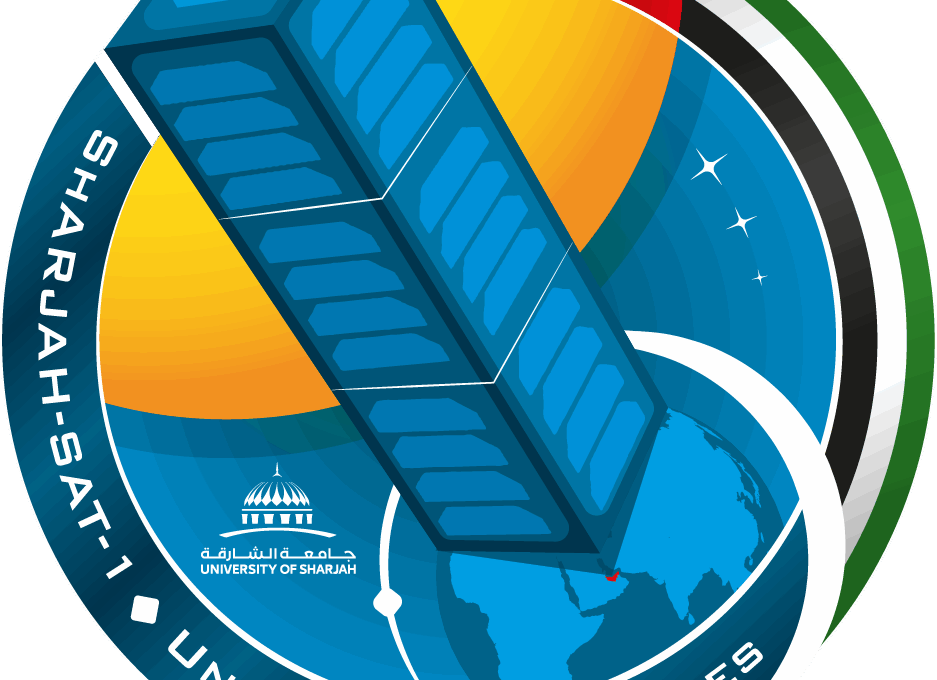
The CubeSat Laboratory at the Sharjah Academy for Astronomy, Space Sciences, and Technology (SAASST) has become a cornerstone of the UAE’s growing space research ecosystem. Established to provide hands-on experience in satellite design, integration, and operations, the lab has already achieved a major milestone with the launch of Sharjah-Sat-1, Sharjah’s first CubeSat dedicated to astrophysics. In this interview, the SAASST CubeSat team shares insights into the scientific objectives of Sharjah-Sat-1, the challenges faced during its development, international collaborations that shaped the mission, and their vision for upcoming projects such as Sharjah-Sat-2.

What were the main scientific objectives behind launching Sharjah-Sat-1?
The main scientific objectives behind launching Sharjah-Sat-1 were to observe bright galactic X-ray sources and monitor transient high-energy events, such as gamma-ray bursts, using the onboard improved X-ray Detector (iXRD), developed in collaboration with international partners. Operating in the hard X-ray range of 20 to 200 keV, the detector also supports solar studies, including observations of coronal holes. Complementing its astrophysical mission, the satellite carries a low-resolution dual camera system for capturing images of the Earth.
How does the improved X-Ray Detector (iXRD) onboard Sharjah-Sat-1 function and what makes it unique?
The iXRD (Improved X-Ray Detector) on Sharjah-Sat-1 works like an X-ray camera. Instead of capturing light like a regular camera, it detects high-energy X-rays from space. These X-rays hit a Cadmium Zinc Telluride (CdZnTe) crystal, which produces electrical signals that are processed and stored for analysis. To focus on specific sources, the detector uses a collimator, which acts like a narrow viewing window that blocks out signals from other directions. A shield at the back helps reduce background noise, allowing the detector to capture clearer, more focused data.
What were the biggest technical or logistical challenges encountered during the mission development?
One of the main challenges during the development of Sharjah-Sat-1 was dealing with supply chain disruptions caused by the COVID-19 pandemic, which led to delays in the delivery of key components. The integration of the Engineering and Flight Models took place during this period, adding further complexity. Since the project was carried out in collaboration with international partners, travel restrictions made in-person coordination difficult. Additionally, this was our first satellite project, and much of the work was done in parallel with establishing the CubeSat laboratory itself, including setting up the necessary infrastructure and tools.

How did the collaboration with Istanbul Technical University and Sabancı University influence the project?
The collaboration with Istanbul Technical University and Sabancı University played a significant role in the success of the Sharjah-Sat-1 project. These partnerships provided technical expertise and academic support, particularly in satellite design, testing, and payload development. The iXRD, the satellite’s primary scientific payload, was developed in collaboration with experts in high-energy astrophysics and X-ray observations, ensuring scientific relevance. This collaboration not only enhanced the technical outcomes of the mission but also contributed to local capacity building and fostered international cooperation in space research.
Are there any upcoming CubeSat missions planned following Sharjah-Sat-1?
Yes, following the success of Sharjah-Sat-1, we are currently working on Sharjah-Sat-2, a collaborative CubeSat mission between SAASST and local entities in Sharjah, and ISISPACE as the satellite integrator. The mission focuses on Earth observation using a hyperspectral imaging payload to support the research objectives and strategic planning needs of these entities.
We are also engaged in other satellite-related projects, both CubeSat and non-CubeSat, with regional and international partners. Looking ahead, we plan to continue and expand the Sharjah-Sat series to address emerging needs and further develop local capabilities in satellite development.
How are students and early-career researchers involved in the CubeSat program?
SAASST offers internship opportunities for undergraduate and graduate students from local and international universities. Through the CubeSat Laboratory, students gain comprehensive training in space technology and satellite systems. The program blends theoretical learning with hands-on experience through intensive lectures and practical workshops. Interns are guided through the process of designing their own satellite missions, starting from defining mission objectives to simulating mission scenarios using the engineering tools available in the lab.
The CubeSat Lab allows students to explore various engineering disciplines and contribute to real-world space missions. These experiences help prepare and inspire the next generation of space scientists and engineers for future challenges in the aerospace industry.
In addition to student training, the CubeSat Lab team is actively involved in outreach efforts by delivering lectures and workshops aiming to spark interest in space sciences and engineering.

What key skills or technologies is SAASST aiming to develop through its CubeSat initiatives?
SAASST’s CubeSat initiatives aim to enhance the capabilities of young engineers by developing end-to-end skills in satellite missions, including design, integration, testing, and operations. A key area of focus is building in-house expertise in designing and manufacturing custom electronics printed circuit boards for payloads, which reduces reliance on external suppliers and supports the UAE’s long-term goals in space technology. The team is also experimenting with CubeSat structure development, including machining custom parts using CNC equipment, further expanding local capabilities in mechanical design and prototyping. These efforts align with SAASST’s broader mission to advance space science and technology through education, research, and innovation, while building national capabilities that strengthen the UAE’s role in the global space sector.
How do CubeSat missions support the UAE’s national space strategy and long-term vision?
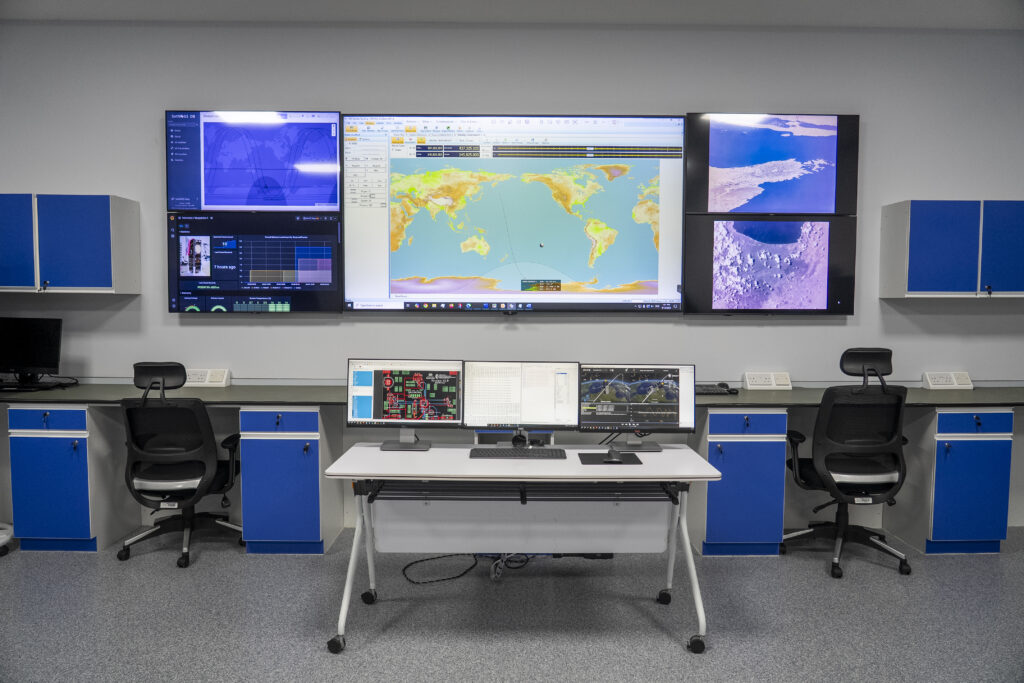
CubeSat missions at SAASST directly support the UAE’s national space strategy and long-term vision by building local expertise and strengthening national capabilities in satellite technology. These missions serve as a practical platform for hands-on training, research, and innovation, helping prepare a new generation of skilled professionals in the space sector.
With their lower cost and faster development timelines, CubeSats offer a more accessible entry point into space, enabling the testing of modern and experimental technologies, such as the iXRD, without the high risk associated with larger satellites. This approach supports local technology development, encourages experimentation, and supports the long-term growth of local space capabilities.
In addition, SAASST contributes to the global space community through scientific publications, conference participation, and engagement in regional and international space events, supporting the UAE’s National Space Strategy to expand advanced space capabilities, drive innovation in scientific research, and establish the UAE as a key player in the global space sector.

Alex Cresniov, Founder of SpaceTech in Gulf
About the author: Passionate in the Space industry with significant expertise in Policy Making, Global Socio-Economic Assessments, and DeepTech Analytics.
Email: alexei@spacetech-gulf.com