

Abdullah AlSalmani, Co-Founder and CEO of SpacePoint “SPACE,” shares insights into SatKit—a pioneering educational program designed to inspire the next generation of innovators. In this interview, we explore SpacePoint’s beginnings, its hands-on approach to STEM learning, and the journey it offers students—from unboxing components to assembling their own satellites. We also discuss how SatKit fits within SpacePoint’s mission and supports the UAE’s ambitious space agenda, nurturing tomorrow’s explorers and engineers.

What inspired the creation of SpacePoint, and how does your mission align with the UAE’s broader space ambitions?
SpacePoint was born from a personal challenge experienced by our co-founder and CEO, Abdullah AlSalmani. Early in his career, Abdullah experienced an unexpected shift in career direction, which revealed how difficult it is for students to explore real career paths without practical exposure. Later, during his master’s in space science, he realized how inaccessible satellite hardware was, expensive and limited, especially for students.
That challenge inspired us to create SatKit, a modular, hands-on educational kit that empowers students to build and understand satellites. Our mission is to bridge the gap between theory and practice, and provide youth with the tools to explore space, engineering, and technology at an early stage, perfectly aligning with the UAE’s ambitions to localize talent, accelerate innovation, and lead in the space sector.

How does SatKit differ from traditional STEM education tools, and what skills do students gain from your programs?
SatKit goes far beyond traditional STEM kits. While most kits focus on isolated skills like basic coding or robotics, SatKit delivers a full CubeSat development experience. Students work with real components and follow procedures that reflect actual aerospace practices, including electrical integration, mechanical assembly, software development, and mission testing.
Through this process, students gain technical skills in electronics, programming, and systems integration, alongside soft skills like teamwork, communication, and critical thinking. They also explore real-world applications like Earth observation and telemetry analysis, which expose them to future career paths in space and sustainability.
Can you walk us through what a typical SatKit workshop looks like—from unboxing to satellite assembly?
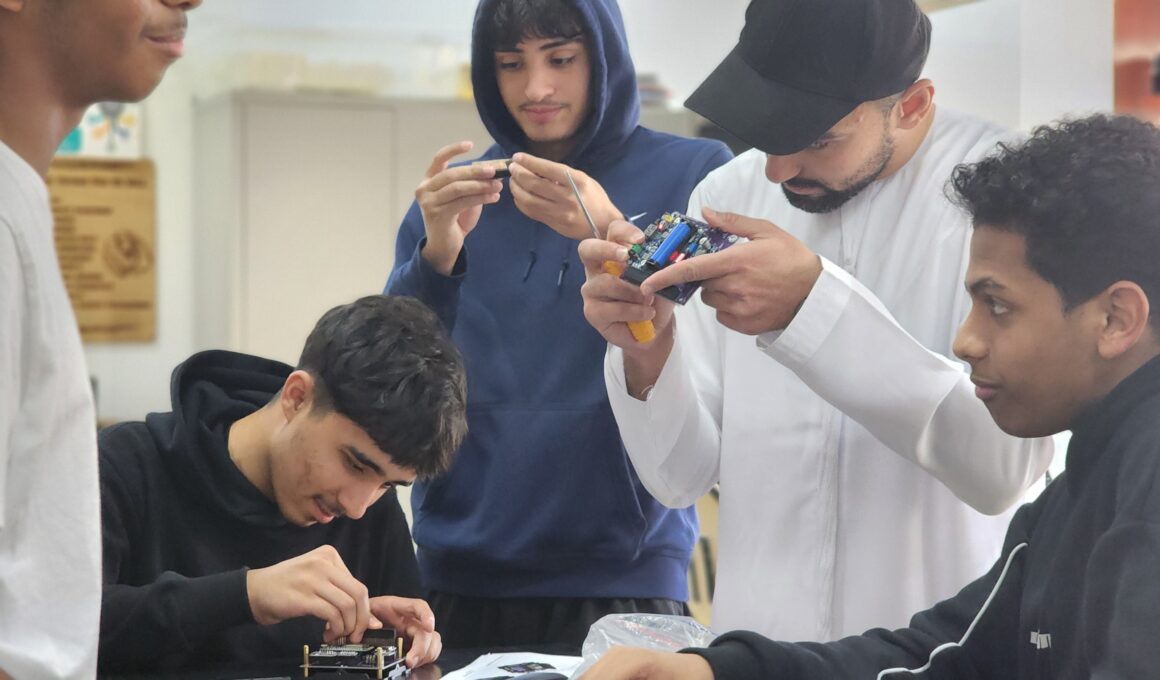
A typical SatKit workshop simulates the real-world journey of building a satellite. It begins with an engaging session where students learn about satellite subsystems, terminology, and mission goals. They then unbox their modular SatKit, review datasheets and manuals, and start the hands-on integration process.
This includes:
• Connecting electrical systems and sensors
• Assembling the CubeSat’s mechanical frame
• Writing and uploading basic software
• Testing system functionality and telemetry
In advanced sessions, students can capture images and transmit data to a simulated ground station, analyze real satellite data, and present their mission design to peers or mentors.
How do you ensure students with little or no engineering background can meaningfully engage with satellite technology?
SatKit was built with accessibility at its core. The entire experience is guided by step-by-step bilingual documentation, color-coded components, and real-world analogies. Students begin with simplified theory and are then introduced to hands-on exercises through visual guides and instructor support.
Our facilitators are trained not just in satellite systems, but in delivering content to mixed-skill-level classrooms. Most importantly, we encourage experimentation and learning through trial and error, allowing students to engage meaningfully without the fear of failure, turning complexity into curiosity.

What has been the response from schools, educators, and students across the UAE and wider MENA region?
The response has been overwhelmingly positive. Schools view SatKit as a bridge between classroom theory and real-world STEM innovation. Educators appreciate its cross-disciplinary structure and bilingual accessibility, while students frequently describe it as their first true exposure to engineering and satellite design.
We’ve delivered workshops to over 560 students across the UAE, Saudi Arabia, Oman, and Egypt, and trained more than 60 instructors. Several institutions now use SatKit as part of their innovation or STEM programs, with many requesting repeat workshops and even co-developing custom learning experiences with us.
Can you share any success stories of students who have gone through your program and pursued careers or studies in space?
Certainly, One of our proudest stories is Nour, a student who completed the SatKit program and later worked closely with us on a research paper in thermal analysis for satellite systems. She presented her findings at a UAE Space Agency conference and is now pursuing a PhD in Mechanical Engineering at Khalifa University, with a focus on thermal analysis in aerospace.
Another standout is Mariam, who began with SatKit and went on to intern at the Mohammed Bin Rashid Space Centre (MBRSC). She later secured a second internship at Dassault Aviation in France, gaining global exposure in the aerospace industry. These stories highlight how SatKit can serve as a true launchpad for students entering the space sector.

You recently partnered with Advanced Rocket Technologies in the UK—what are the goals of this collaboration?
Our partnership with Advanced Rocket Technologies (ART) is aimed at offering a complete mission lifecycle, from classroom to orbit. We’re working together to launch joint educational programs in Oman, where students can build CubeSats using SatKit and later integrate them into real launch campaigns using ART’s rockets.
We’ve already committed to launching two student-built satellites through ART’s upcoming missions. This collaboration marks a major milestone, providing students the opportunity to see their work deployed in space, not just simulated on Earth.
What role did the Mohammed Bin Rashid Innovation Fund Accelerator play in your growth journey?
The MBRIF Accelerator played a pivotal role in refining our business model, expanding our network, and strengthening our institutional partnerships. It provided us with expert mentorship and visibility within the UAE’s innovation ecosystem, which led to new collaborations and growth opportunities. MBRIF also helped us position SpacePoint as a key player in the EdTech and space innovation sectors.
Are you planning to expand beyond education into satellite testing or actual launches involving student-built systems?
Our core mission remains rooted in education, but we strongly believe in giving students real-world validation for their work. That’s why we’re now supporting in-orbit testing of student-built satellites, so they can experience the full impact of what they’ve created.
At the same time, we aim to be an ecosystem enabler, encouraging students to go beyond our programs, whether by joining the space industry or launching their own space-tech startups. We see ourselves as the first step in their journey into advanced technology and innovation.
What’s next for SpacePoint in terms of new programs, countries, or technological advancements?
We’re currently strengthening our partnerships in Egypt and Oman, with the goal of becoming the leading provider of satellite education in both markets. We’re also onboarding instructors in Turkey, positioning it as a launchpad for our potential European expansion. Additionally, we’re establishing a new partnership in Kuwait, further expanding our reach in the region
Technologically, we’re working on an AI-powered learning assistant and an interactive digital platform to complement SatKit with simulations, real-time satellite tracking, and climate-focused missions. These tools will make our educational offerings even more immersive and scalable.