

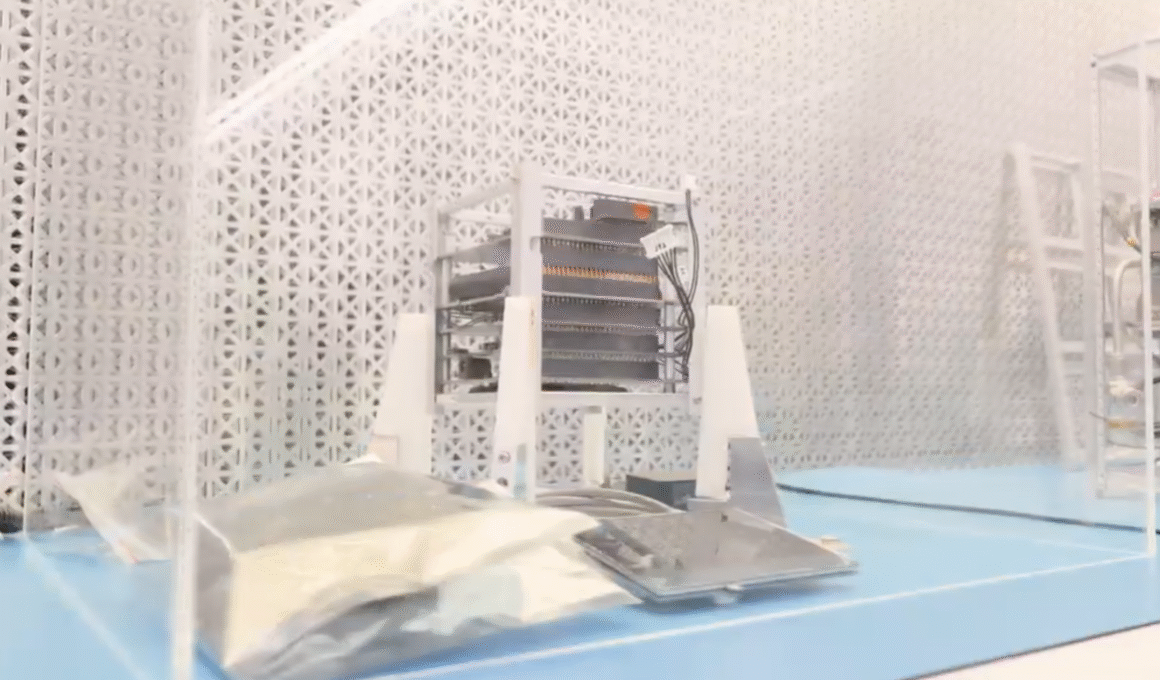
Khalifa University, in close collaboration with the UAE Space Agency, has achieved a major milestone in regional space innovation by designing, building, and testing the first eco-friendly micropropulsion system for a 6U CubeSat. The system, developed entirely in-house, represents a leap forward in sustainable satellite technology.
Fatima Alhammadi, an Aerospace Engineering Researcher at the university, highlights the significance of the innovation: the propulsion system replaces traditional chemical fuels with High Test Peroxide (HTP), a non-toxic propellant that safely decomposes into water vapor and oxygen—dramatically reducing environmental impact.
Despite occupying just 2U of space within the CubeSat, the module is equipped with five thrusters capable of five degrees of freedom (DOF) control. This advanced maneuverability is rarely achieved in satellites of this size, positioning the UAE as a leader in small satellite propulsion technologies.
This achievement reinforces the UAE’s broader strategy to build national capabilities in space and foster regional leadership in sustainable aerospace solutions.